Managing Expectations
Governments are not equipped for once-every-few-decades events.
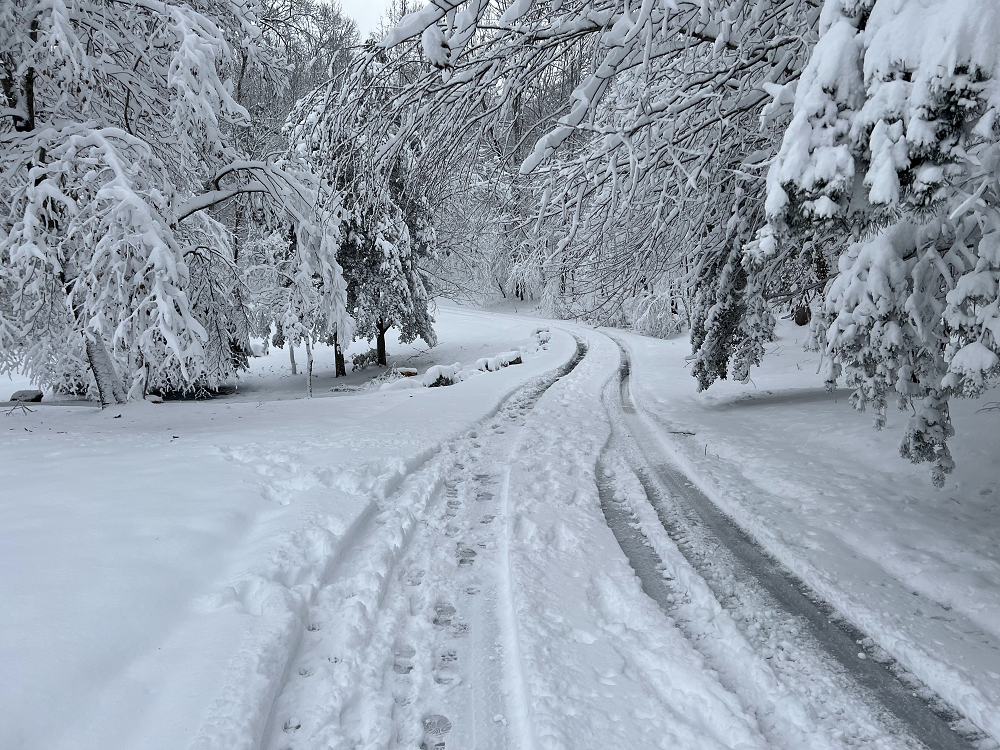
The WaPo report “Frustrated by city response, D.C. residents step up to help clear ‘snowcrete’” begins, as is apparently the law, with a longish anecdote:
Cindy Sherman didn’t want to take her chances on city plows making their way to her block, a tidy cul-de-sac dotted with colonial houses on the D.C. side of Chevy Chase. So after a monster storm left the Washington region encased in ice-crusted snow, she sent an email to her neighbors: would anyone want to go in on hiring a private snowplow?
The price she was initially quoted — $1,500 for the stretch of road bounded by 44 houses — struck her as steep. But as a 28-year resident, Sherman knew from experience that the little street would be low on the city’s list of priorities. And she wanted to see her grandchildren. Maybe her neighbors, who had doctor’s appointments and work to get to, would want to chip in.
Sure enough, 10 responses hit Sherman’s inbox within about a half hour. Others followed, bringing the price to a more reasonable level. It wasn’t long before a snowplow was rumbling down the street, clearing the layer of snow and ice until, by Monday night, the pavement shone through again. Later, when an advisory neighborhood commissioner noted in an update to residents that Stuyvesant Place NW had amazingly been plowed even as other streets were thick with snow, Sherman felt compelled to set the record straight.
“I thought, ‘I am not letting the city take credit for this one,’” she said in an interview. “I emailed her back and said, ‘I’m going to solve your mystery for you. We hired a private company to do it.’”
Ideally, of course, residents wouldn’t have to pay a private contractor to have public roads plowed, as they’re already paying for that service through taxes. But, if you live on a less-traveled road, you should reasonably expect to be a lower priority than if you live on a major road. (We live on a small, private road just off of a minorish public road. Our homeowner’s association pays to plow the private road and the county tends to get the other roads plowed pretty quickly.) So, yes, if you want to move to the head of the line, pooling funds to bypass the government is the way to go.
As mounds of stubborn snow remained on some residential streets, across national park land and piled on sidewalks that businesses or homeowners had neglected to clear, and around some Metro stops, many Washingtonians found their own ways of digging out, whether through charity, camaraderie or commerce.
Across the region, scenes played out of people taking their shovels to carve out pathways, banding together to push out stuck cars, sharing tips on the right equipment for the “snowcrete” — pickaxes, pitchforks, metal shovels and hammers, reported commenters on one Reddit thread — and helping each other get around. Others took the opportunity to make some hard-earned cash, toiling away at removing the snow for a price.
Which is pretty much how major snowstorms play out in these parts.
Many shared Sherman’s frustration with local governments, believing they should have taken care of the snow more quickly or effectively. That some major school districts remained shuttered all week left many parents reeling. “We know this objectively, empirically, from covid: It’s bad when kids aren’t in school,” said education researcher Liz Cohen, who lives in Chevy Chase, Maryland, and whose son attends a Montgomery County high school.
Officials in D.C. and its surrounding suburbs have stressed the extraordinary nature of the Jan. 25 storm, which began with 4 to 7 inches of snow and was followed by up to 4 inches of sleet. The amount of sleet — snow that falls, melts and refreezes into ice pellets before hitting the ground — was more than had hit the region in at least three decades, according to the Capital Weather Gang. Brutally frigid temperatures in the days since has kept things from melting.
I live in the DC suburbs of Fairfax County and we were pretty well forewarned. The quarter ended Wednesday, which was scheduled to be a 2-hour early release, with Thursday and Friday as “teacher work days.” We knew the week prior that, if the snowfall and freezing rain were anywhere near as bad as predicted, we would likely have the whole week canceled.
Is that annoying for parents who have to work and scramble to find childcare? Of course. But we still live in the South, not the Northeast or the Midwest, and our investment in snow clearing reflects that. If anything, I’m surprised how quickly we get roads cleared around here. (I do think it’s gotten better since I moved here in 2002.)
Beyond that, this was easily the worst winter storm since I’ve been here. We’ve had more snowfall a few times. But we’ve never had this much snow, combined with sleet and freezing rain, combined with single-digit temperatures for a week.
The snow started around midnight last Saturday, so accumulations were pretty significant by the time I got up at 7. I started shoveling right away, but soon got caught in the sleet. Combined with being rather sick from a bug that lingered for a couple of days, I pretty much gave up shoveling. By the next morning, the snow was too hard to shovel. “Snowcrete,” indeed. I finally broke out a metal garden shovel to break the ice into chunks. We finally cleared a path barely big enough to get a car out by Wednesday.
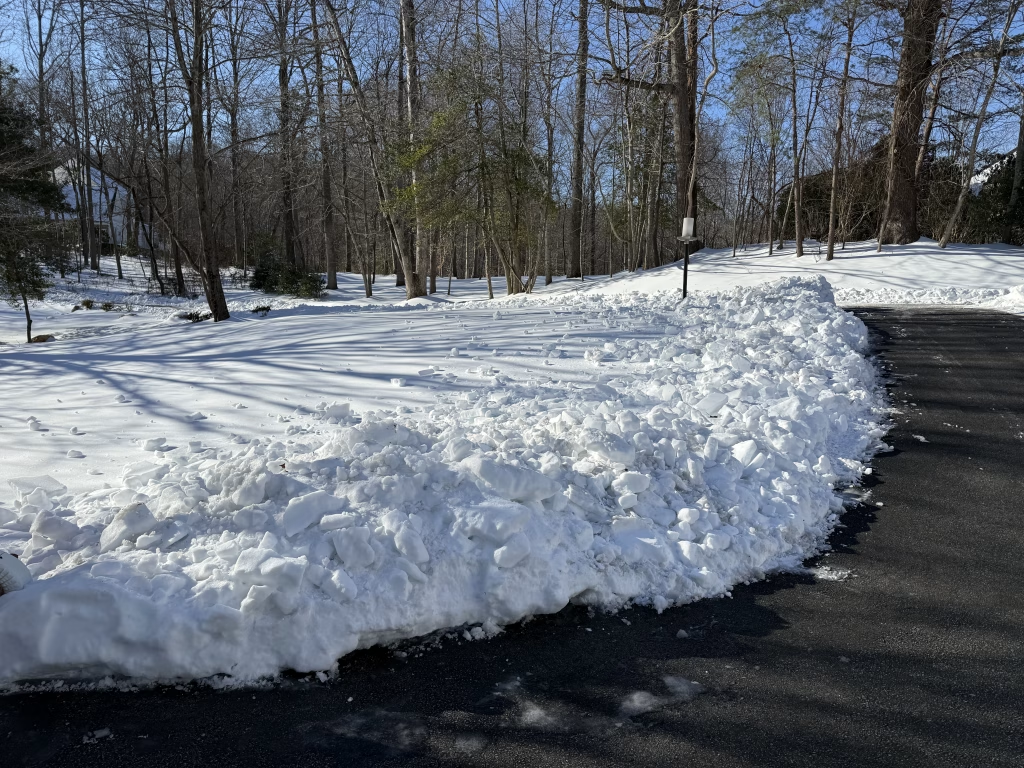
Thankfully, my wife and I were able to work remotely all week.
All of that is to say: it’s simply unreasonable to expect the government to get every community street plowed quickly in a storm event that happens maybe once every three decades. That’s especially true in urban areas or anywhere where people routinely park in the street, making it nearly impossible to plow.
Lee Stillwell, who plowed Sherman’s street estimated he had received about 100 calls. He won’t be able to get to all of them, he said, even as he’s spent full days in his truck, heated seats and massager switched on. He slept two to three hours a night until Thursday, when he got six.
The snow-ice combo is so impervious that it has been “tearing up equipment left and right,” said Stillwell. He’s been in this line of work for more than 40 years, since he got his driver’s license, and sees this storm as one that will “definitely go down in the books.” Given that, he thinks people should be a little more patient about snow-removal efforts.
“Until you do it, I don’t think you understand how hard it is,” he said. “I’ve been in my truck since Saturday, basically.”
I understand people’s frustration at not being able to get to work, medical appointments, grocery shopping, and the like. But, again, this wasn’t the usual six inches of powdery snow we tend to get in this parts (see the photo atop the post from 2022). And I suspect many of the doctors’ offices, and the like, were closed or woefully understaffed, anyway.

I don’t disagree, but it is time to go back to school, kids! Grew up in FFX Co and reside in PWC. Last week PWC made the call around 3pm Wednesday to be 2 hours late for Thursday. I was on board for sure. I believe the Super is from Chicago area….likely did not realize what she unleashed lol. Sure enough 8pm they sent out update and closed for Thursday as well as closed Friday. I understand there are safety issues with this type of storm and cold, but does not stop these kids from going out in 20 degree weather to sled down dangerous icy cold hills. Most kids can maneuver unclear sidewalks and or bus stops. If people don’t want to risk that, they can drive them to school or keep them home and if worried about lack of daylight, make it 2hrs late. I honestly was impressed with how well they have cleared the main roads and sub main roads in the area.
Oh, the same adventures up here in PDX and Seattle. Always has been. A combo of “We don’t want to pay for infrastructure,” “SOMEONE must fix this NOW” leavened with a hearty dose of “Eh, hold my Hot Toddy, I’ve got this.”
Except for playtime, I hope everyone stays in, enjoys their view out the window, and cools it. And gives thanks for those who working on the fix.
ETA, For those with the emotional bandwidth, give a thought/prayer for your brothers and sisters who have no home to be sheltered in.
We’ve been here for 22 years and this is by far the worst experience clearing out after a snowstorm.
We live in an end-unit townhouse right at a 90-degree bend in the road. When the plows come through and make the turn at that bend, snow comes off the plow and creates a multi-foot berm of plowed-up snowcrete. It took us nearly seven hours to clear out our cars well enough to be able to drive anywhere. It was the hardest work I’ve ever done shoveling snow. The saving grace was our long-handled garden spade–the square end was perfect for driving down through the inches of snowcrete to the actual snow below. But man, it was rough.
As far as school tomorrow, I doubt it. A lot of the side roads in my part of Fairfax are OK for cars but not for school buses–too much plowed-up snowcrete still impinging on travel lanes. Lots of the buses haven’t been cleared around yet, which means they’re basically stuck, and a driver won’t be able to safely pre-trip check them because it’s all snowcrete with ice on top and the pre-trip requires multiple walks around the bus.
I was in the DC area (Alexandria – Fairfax County) for the President’s Day Snow Storm, AKA North American blizzard of 2003 I was in Virginia Beach and decided to high tail it home. I stopped off at a brewery in Richmond but left as the flakes were starting come down. I awakened Saturday morning to 1.5 ft of snow. Nope, never happened before! I think I’ve posted similar after another DC snowstorm. Concur, it would be a waste of dollars and personnel (and training) to be ready for every event (does Tampa need snow plows?)
@Mikey: As you’re aware, they indeed closed schools tomorrow. I was expecting a two-hour delay. Roads are pretty good in Burke and Fairfax, but there are a lot of street-parked cars that got plowed in. But they had plows deployed and ready to go ridiculously early Saturday. I was shocked that they were wasting the fuel and man hours. But the sleet and freezing rains crushed us. We’ve had heavy snow since I moved to the area in 2002, but never anything I needed metal shovel to hack through.