Economic Crisis: What Could Government Have Done Better?
With the advantage of hindsight, it’s clear that more creative strategies were needed. But they probably couldn’t have been passed.
With the advantage of hindsight, it’s clear that more creative strategies were needed. But they probably couldn’t have been passed.
My latest for The Atlantic, “Romney’s Realist Foreign Policy Is a Lot Like Obama’s,” has been posted.
Ahead of his big foreign policy speech, Mitt Romney has unveiled his “Foreign Policy and National Security Advisory Team” which “will assist Governor Romney as he presents his vision for restoring American leadership in the world and securing our enduring interests and ideals abroad.”
The Occupy Wall Street protests look more like a temper tantrum than a substantive protest movement.
Where should we look to understand the failings of the government?
Is money the only thing that matters in post-Citizens United American politics?
Judging them by their own manifesto, the Occupy Wall Street protesters are pretty silly people.
A meme is emerging that the Occupy Wall Street protests are America’s version of the Arab Awakening. That meme must die.
Last night’s speech at the Reagan Library did nothing to stop people from speculating about Chris Christie’s Presidential plans.
President Obama explained his position on the Palestinian statehood resolution today, but one wonders if anyone listened.
Rick Perry’s speech criticizing the President’s policies in the Middle East raised more questions than it answered.

Far from being an existential crisis, the recent rise in public distrust in government is easily explained.

A book could be written on this subject, but let me suggest the following as a good place to start
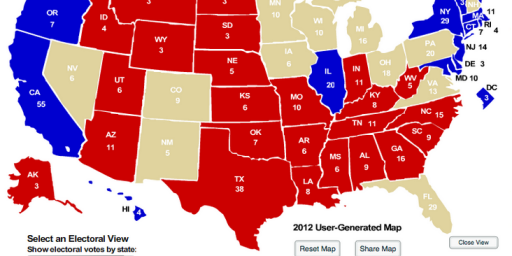
Allocating Electoral Votes by Congressional District is an idea whose time has come.
What does the apparent outcome of the war in Libya mean for the so-called “Responsibility To Protect” doctrine?
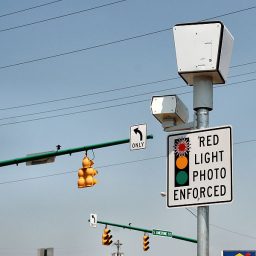
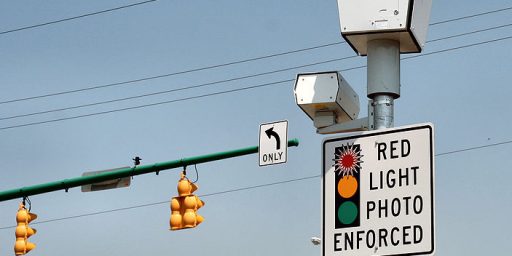
WaPo humor columnist Gene Weingarten doesn’t think DC’s speed cameras are funny.
Political journalists aren’t like you and me. Well, you, anyway.


The US came a lot closer to something resembling a parliamentary system than most people think.
My first piece for CNN has been posted at Fareed Zakaria’s Global Public Square.
In the book he released last year , Rick Perry advocated far reaching changes to the Constitution.
Sarah Palin’s paranoia about the media was on full display during her recent visit to Iowa.
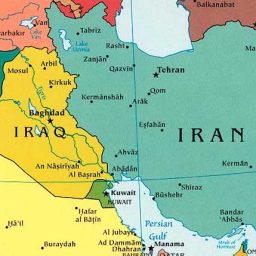

Iraq has become so dependent on Iran for its survival that it is endorsing the brutal tactics of Bashar Assad.


The world is starting to denounce the crackdown in Syria, but the reaction seems unlikely to go much beyond strongly worded statements.
Condi Rice’s speechwriter thinks Huntsman can appeal to the Tea Party.
Now that America’s political leadership have probably averted a self-inflicted global economic calamity, it’s time to assess the winners and losers.


Charles Krauthammer claims we are in the midst of a great debate. I am not so sure.


A European anti-Muslim blogger observes, ‘It is clear that Anders Behring Breivik is one of us.'”

Does the 10th Amendment contain the answer to the same-sex marriage debate? Not really.
Illegal immigration from Mexico is down substantially, and it has nothing to do with all those anti-immigration laws.
Another major campaign finance case from the Supreme Court.
President Obama came close to endorsing same-sex marriage last night, but stopped short yet again


For the first time since the end of World War II, the GOP is wrestling with two diametrically opposed visions of foreign affairs.
Is it reasonable to state that countries with less guns are more likely to become tyrannical than countries with more guns?

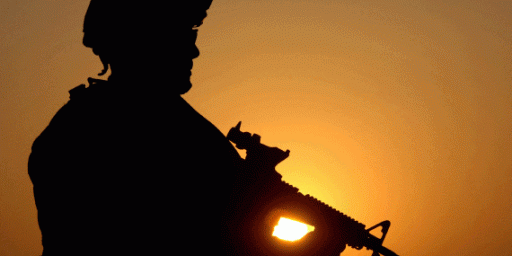
Contrary to what Senator McCain, seeking realism in military policy does not make one an isolationist.


States are racing to put obstacles in front of voters in the name of fraud prevention.

The vast majority of the seats in the Virginia legislature will not even be contested this November.
Trevor Phillips, chairman of the UK’s Equality and Human Rights Commission, says fundamentalist Christians are a far bigger problem than Muslims. And, no, he’s not anti-religion.

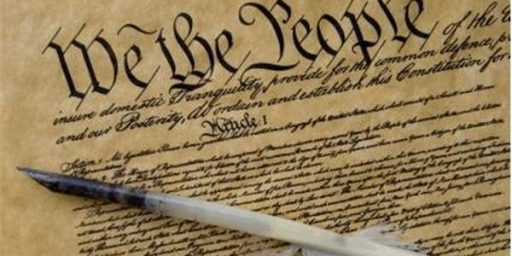
Sandy Levinson suggests that there is a key lesson from the Founders that we ignore.