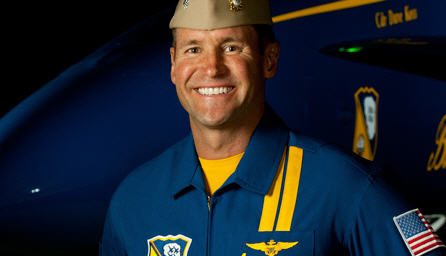
Blue Angels Chief Relieved
Commander Dave Koss, the head of the Navy’s Blue Angels, has “voluntarily” resigned after repeated unsafe maneuvers.
Commander Dave Koss, the head of the Navy’s Blue Angels, has “voluntarily” resigned after repeated unsafe maneuvers.


Allen West says Congressmen who oppose the war in Afghanistan should go over and “get shot at a few times and maybe they’d have a different opinion.”
While President Obama has had some amusing gaffes on his trip to London, including getting the year wrong in the guest book and an awkward toast to the Queen, his speech to Parliament today hit all the right notes.
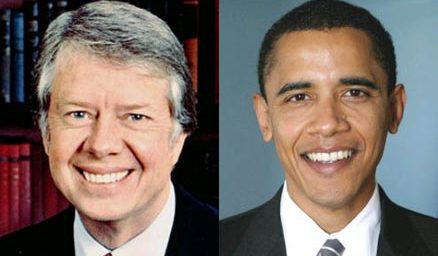
Comparing Obama to Carter on foreign policy (especially in terms of electoral politics) doesn’t make sense.


“Our records indicate that your annual income for the 2011 taxable year was $2,170,000,000,000. You have requested a credit limit of $17,000,000,000,000. These figures exceed the American Public’s guidelines for credit issuance”
If former President George W. Bush has any bitterness that Osama bin Laden was finally killed under his successor, he’s not showing it.


Elias Isquith proclaims my Atlantic essay “How Perpetual War Became U.S. Ideology” to be “a total disaster.”

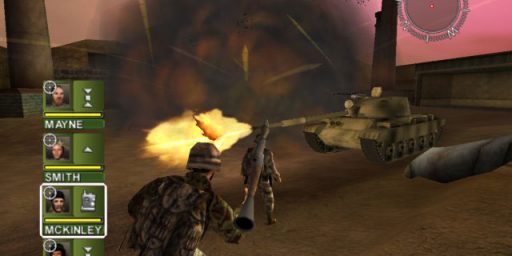
Technology has saved the lives of countless American soldiers. But it’s made going to war easier.
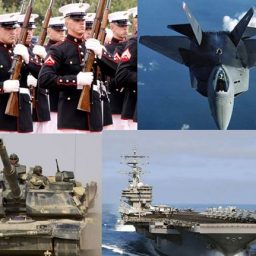

I’ve begun to wonder about the future of U. S. security policy. This isn’t a serious analytical post; it’s just what I call “musing”—committing disorganized thoughts to writing.


A lot of people appear confused at to what the debt ceiling is and why it has to be raised.
Did a deal between the U.S. and Pakistan during the infancy of the war against al Qaeda play a role in the raid against Osama bin Laden?
Pakistan is trying to explain how the world’s most wanted man was able to hide in plain sight for six years, and failing badly.
Why would David Petraeus take the thankless job of running the CIA?
Last night’s Presidential Debate in South Carolina was interesting, but, in the end, not very important.
There has been some buzz on the national security backchannels that a heretofore secret “stealth” helicopter was used in the SEAL raid on Osama bin Laden’s Pakistan hideout.
There’s not much movement in the President’s job approval numbers.
The debate over “enhanced interrogations” has been renewed by the bin Laden mission, but whether it “worked” or not isn’t the question.
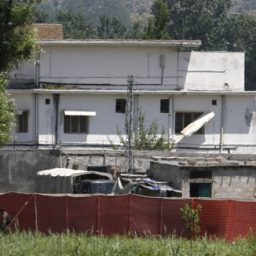
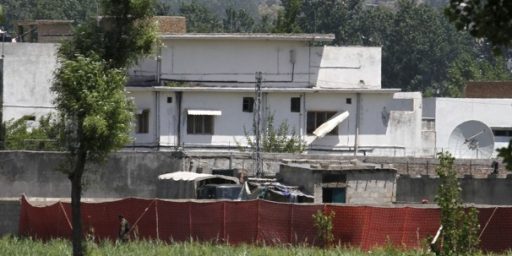
The question of how the world’s most wanted man could’ve hidden in plain sight in Pakistan continues to be asked.
The myth that the U.S. armed and trained Osama bin Laden in the early 80’s is rearing its ugly head again.
Americans are rallying around the President in the wake of the mission against bin Laden, but it’s likely to be short-lived.
Osama bin Laden is dead, but he’s succeeded in changing America for the worse.
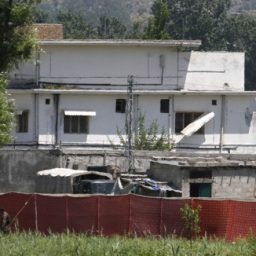
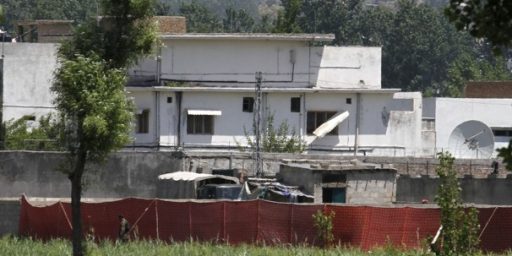
How exactly was the most wanted man in the world able to hide in this house without anyone in Pakistan knowing about it?

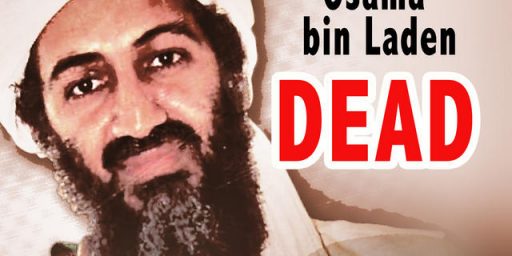
I don’t feel the jubilation that came with Saddam Hussein’s capture in December 2003. Sadly, I know better this time.


A comedian-turned-Senator makes some strong points about how America goes to war.
President Obama chided the media for paying too much attention to the birther issue, but his criticism was unwarranted.


The NYT says it’s time for U. S. advisers and military air traffic controllers on the ground in Libya.
Events in Syria, and the world’s response to them, are revealing the moral bankruptcy of the justification for the war in Libya.
The Pentagon is frustrated that the Obama administration doesn’t “seem to understand what military force can and cannot do.”
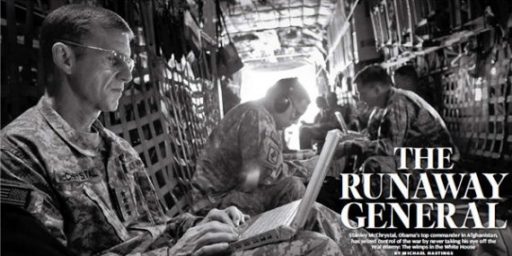
A Pentagon investigation was unable to verify some of the comments attributed to General Stanley McChrystal in Rolling Stone last year. That doesn’t mean he’s been cleared, though.
It may be time to change rules keeping women out of combat roles. But “fairness” isn’t the right question.