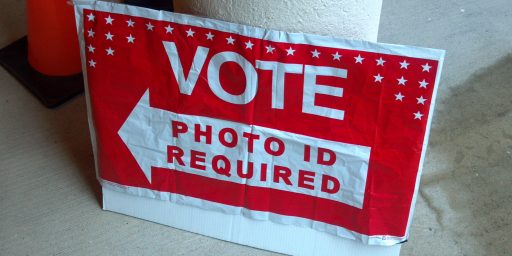
Federal Judge Strikes Down Texas Voter ID Law
A victory for opponents of Voter ID in Texas, but it’s not likely to stand up on appeal.
A victory for opponents of Voter ID in Texas, but it’s not likely to stand up on appeal.


Opponents of Voter ID laws should not get too excited over the fact that the Supreme Court has stayed Wisconsin’s law from going into effect for now.
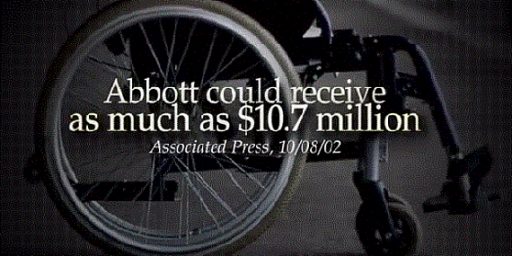
The nastiest campaign ad of the 2014 cycle is here, and Wendy Davis should be ashamed of it.


Individual polls are likely to be volatile, so don’t pay too much attention to them.


Will the President back track on his promise of further action on immigration if the GOP wins the Senate?
A Federal Court has given legislators in Richmond a complicated job.
An unsurprising decision from the Seventh Circuit Court of Appeals.
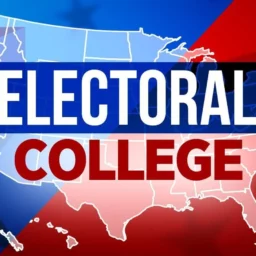
If the GOP wins the Senate in November, their majority could prove to be fleeting.


Combining politics, an incessantly sensationalist news cycle, and a virus that scares a lot of people can’t end well.

After a disappointing August, the jobs report for September showed the same good numbers we’ve seen for much of 2014.


In the current situation, speaking out forcefully as some are demanding can only do more harm than good.
While the battle for the Senate remains up in the air, the Republican majority in the House remains secure.


The Supreme Court has issued a stay that will allow changes to Ohio’s early voting law to remain in effect for this year’s election. That was the correct decision.
Speaker Boehner wants to delay a vote on the ISIS war until January, but any such debate will be meaningless because Congress has already abdicated responsibility.
The streets of Hong Kong have been filled with protesters upset over China’s efforts to control the city’s political future.
Third-party candidates in several states could end up having a big say in the battle for control of the Senate.
A strong rebound for the economy from the downturn at the start of the year.
The next Attorney General will likely see their nomination taken up by Senators who will not be in office past December. That’s somewhat disturbing, but it’s become all too common in Washington.
One of last members of President Obama’s original cabinet is stepping aside.

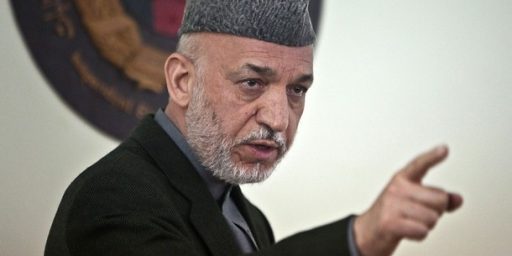
Before leaving office, Hamid Karzai is once again biting that hand that has fed him for the past decade.
Once again, Justice Ginsburg is telling people she has no plans to resign, but her explanation is a bit different this time.
A majority of Americans don’t care very much who controls Congress.
After success in Scotland, it may be time to consider allowing at least some teenagers to vote.
A Federal investigation of lane closures on the George Washington Bridge appears to vindicate Governor Chris Christie.


The United Kingdom will stay united, but it may never be the same again.
The GOP has bounced back significantly from the lows it experienced after last year’s government shutdown.
President Obama hits new job approval lows, while the GOP seems poised for success in November,


The Affordable Care Act is playing almost no role in the midterm elections.
A number of factors unique to 2014 make it likely that control of the Senate could be up in the air for months after Election Day.
Republicans still have an advantage, but Democrats seem to be holding their own in the battle for Senate control.
Self-described socialist Bernie Sanders is contemplating an independent run for the presidency.
The fact that a candidate like Mike Huckabee could win the Iowa Caucuses is the reason to end the Iowa Caucuses.


A set back for opponents of Voter ID in Wisconsin.
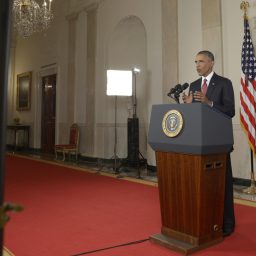
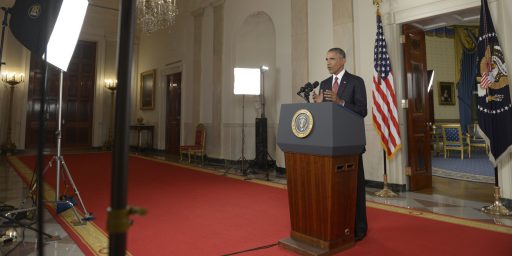
The Obama Administration’s legal justification for war against ISIS is laughably flimsy.
Congress seems ready to avoid having to vote on expanded attacks against the Islamic State
With just nine days to go, it’s anyone’s guess how the Scottish Independence vote will turn out.
A Federal Judge in Ohio has issued a very troubling ruling on that state’s early voting law.
For purely political reasons, the Administration is delaying the announcement of new executive action on immigration.
Cowardice, or politically prudent?
Chris McDaniel’s meritless, quixotic challenge to the Mississippi GOP Senate Primary is reaching it’s expected conclusion.


Two prominent Republican groups point out the blindingly obvious.


As talk begins of expanding the war against ISIS into Syria, it is becoming long past time for Congress to exercise its Constitutional function.
Some have argued that there is an historical bias against political parties holding on to the White House for more than two terms. As with most commonly held ideas, that simply isn’t true.
If Republicans win the Senate, what we’ve seen for the past three years could end up seeming tame by comparison.