Americans Support The Substance Of Obama’s Immigration Policy, Not How He Implemented It
A new poll shows that a majority of Americans support the President’s changes to deportation policy, but don’t like that he acted unilaterally.
A new poll shows that a majority of Americans support the President’s changes to deportation policy, but don’t like that he acted unilaterally.


Some points on the immigration debate that need constant (it seems) reinforcement.
The fact that Republicans lack anything approaching a coherent immigration plan makes it hard to take their criticism of the President seriously.
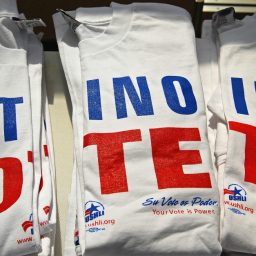
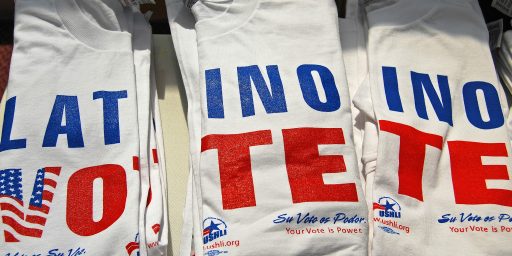
Top Republicans worry that their party’s response to the President’s executive action will alienate Latinos. However, there’s little they can do about that.
A critic of the imperial presidency becomes an imperial president.
On a preliminary examination, the President’s executive action on immigration appears to be within the boundaries of applicable law. However, as with other exercises of Executive Branch authority, it raises some important concerns about the precedent that it sets.


The Office of Legal Counsel told the president Wednesday he couldn’t do what he did on Thursday.
On substance, the President’s immigration actions aren’t very objectionable. How he is implementing them, though, is problematic and seems needlessly confrontational.
In the end, there appears to be very little, if anything, the GOP can do to stop or roll back the executive actions the President will announce Thursday evening.
A new poll provides some interesting context to the political context to the President’s expected executive action on immigration.
If the President now believes he can act unilaterally on immigration reform, why did he spend the last five years saying that he couldn’t?
A new poll shows that Americans would prefer President Obama to wait to act on immigration until after the new Congress has had a chance to act on the issue.
Republicans don’t really have many options if the President pulls the trigger on immigration reform via executive action.
The White House is now leaking out details of what seems like an inevitable decision by the President. How it plays out politically, though, is the big question.
The GOP’s big wins last week seem to be just guaranteeing that this year’s battle between the Tea Party and the “establishment” will continue.
President Obama’s threat to take action on immigration if Congress doesn’t act by the end of the year ignores political reality,
Republicans performed better among Latino voters this year than they did in 2012, but that doesn’t mean they’ve solved their problems.
Despite the conciliatory language after Tuesday, it’s unlikely that much will change in Washington in the next two years.
Rebranding alone isn’t going to fix what’s causing the GOP to lose ground among a whole host of demographic groups.


Polls continue to show that most Americans are largely tuning the midterms out.
Despite conventional wisdom, there remains little incentive for the GOP to change its position on immigration reform.
Will the President back track on his promise of further action on immigration if the GOP wins the Senate?


The death of the Tea Party is greatly exaggerated.
It has nothing to do with winning, but it does have a lot to do with the foreign policy debate inside the Republican Party.
The GOP has bounced back significantly from the lows it experienced after last year’s government shutdown.
For purely political reasons, the Administration is delaying the announcement of new executive action on immigration.
Cowardice, or politically prudent?
If Republicans win the Senate, what we’ve seen for the past three years could end up seeming tame by comparison.
Tea Party backed candidates may have lost most of the GOP primary battles, but they’ve won the war for control of the Republican agenda.
Republicans in the House seem determined to make life difficult for whomever wins the GOP nomination in 2016
According to some reports, President Obama may be about to make an end run around Congressional inaction on immigration reform.
The American people don’t want to turn those migrant children from Central America away after all.
The Texas Senator is threatening to block any bill dealing with the border crisis that doesn’t defund the relief President Obama granted to children of illegal immigrants last year.
A lot of Republicans dislike the President enough to think that he should be removed from office, but will that make impeachment more likely to happen?
Jose Antonio Vargas was brought to the U.S. at the age of 12 and never left. Now, some are suggesting he should be deported as soon as possible.
That ball is in your court, Congress.


Led by Speaker John Boehner, Republican leaders are trying to placate calls for impeachment.
Trying to make sense of a very complicated issue.
The current Congress is on course to be the least productive in decades.
There are legitimate issues regarding Presidential overreach and separation of powers that President Obama’s actions while in office have raised. But none of that will be discussed in our hyperpartisan political culture.

A piece at Foreign Policy provides a chance to give some thought to institutions.
Republican overreach could end up helping the President and his party.
The sad truth is that the bipartisanship that led to the passage of the Civil Rights Act of 1964 no longer exists today.


The people with the biggest voices in the GOP seem to be leading it to positions that most Americans disagree with.