A Magic Formula for Gas Prices?
Is there a magic formula to fix soaring gas prices? A Washington Examiner editorial claims to have found it.
Is there a magic formula to fix soaring gas prices? A Washington Examiner editorial claims to have found it.


Standard & Poor’s didn’t believe the Obama Administration’s argument that Washington would be able to fix the deficit. There’s no reason they should have.
President Obama’s signing statement on the allocation of funds to Presidential “czars” sets a potentially dangerous Constitutional precedent.
We’re approaching the point where those job approval numbers start to matter, and President Obama’s are heading down again.
Stephen Walt doesn’t expect Obama’s foreign policy to change along with the names on the org chart.
Paul Krugman is disappointed with the President, but it’s really his own fault for being so naive.


The Obama Administration is resisting efforts to expand Fourth Amendment protections to services like Gmail. That’s unfortunate.
There are still three days left, but it’s looking less and less likely that a budget deal will be reached in time to avoid a government shutdown.
The Obama Administration has given up on the idea of trying the September 11th suspects in a civilian court. Considering how much that trial would have perverted the justice system, that’s a good thing.


Since November, the Unemployment Rate has fallen a full percentage point, a sign that this is more than just a minor recovery.
Like all Presidents before him, Barack Obama is asserting the right to virtually unfettered discretion when it comes to military matters.
The U.S. seems to be on the verge of changing war strategies in Libya, even as it becomes clear that these rebels aren’t necessarily our friends.
Ten days after sending American forces into kinetic military action in Libya, President Obama addressed the nation to explain “what we’ve done, what we plan to do, and why this matters to us.”
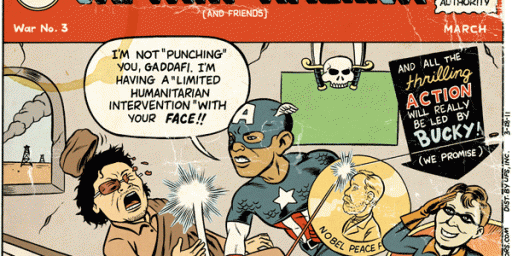
Obama Captain America parody: I’m not punching you Gaddafi I’m having a limited humanitarian intervention with your face.
The public, and Congress, are skeptical of the mission in Libya, and the reason for that is because the President has failed to tell us exactly why we’re there and what we’ll be doing.


When America’s leaders make the decision to engage in military action abroad, has the time for debate ended, or is it more important than ever that those with doubts about the policy speak out?
Palin thinks Israel apologizes too much and it would seem that some find this to be a profound statement.
Operation Odyssey Dawn has resurrected the eternal battle over what limits there are, and should be, on the President’s ability to use military force without Congressional authorization.
The uneasy coalition that coalesced around action in Libya will be strained by decisions to come.
U.S. officials are making clear that the current mission in Libya may not lead to the end of Muammar Gaddafi’s rule. If that’s the case, then why are we there in the first place?
Did President Obama pull off a diplomatic masterstroke? Or is he muddling through?


The NPR vote was nothing more than political theatrics–and it violated a GOP campaign promise to boot.
America is about to enter a third war in the Muslim world with no clear idea of the end game.


With minor exceptions, all of the potential candidates for the GOP nomination in 2012 seem to have accepted the idea that defense spending, and the Bush-era interventionist foreign policy, are off the table when it comes time to talk spending cuts.
The Obama Administration is asking the U.N. Security Council to authorize direct military intervention in Libya. The question is, why now?


The Federal Government has filed its response to Virginia’s request for an expedited review of Virginia v. Sebelius, and they’ve got an compelling argument against rushing things.


Philippa Thomas has a fascinating take on how she broke the news of (now former) State Department P.J. Crowley’s condemnation of the Obama administration’s treatment of Bradley Manning.


Can the massive destruction caused by the Japanese earthquake, tsunami, and nuclear meltdowns stimulate the economy?