Trump Imposes New Sanctions On Iran. They Won’t Work.
The Trump Administration unveiled new sanctions against Iran yesterday. They’re unlikely to accomplish the entirely unrealistic goals the President claims to have in mind.
The Trump Administration unveiled new sanctions against Iran yesterday. They’re unlikely to accomplish the entirely unrealistic goals the President claims to have in mind.
President Trump’s foreign policy has largely been a failure, and there are specific reasons why.
While he campaigned on a message of restraint, Donald Trump has largely adopted the interventionist foreign policies of his predecessors.
The ongoing apparent attempted coup in Venezuela is already leading to talk of American intervention in the event of a crackdown. That would be unwise and unjustified.
The Trump Administration’s policies toward Iran aren’t going to work, but that’s because they aren’t supposed to work.
Former Massachusetts Governor Bill Weld is preparing for a primary challenge against Donald Trump. He won’t win, but he could still have an impact.
The President’s second State of the Union began and ended with calls for unity. In between, it was filled with the divisive partisanship that has marked his Presidency.
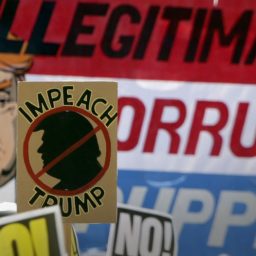

The President is an ignoramus and a blowhard and a petulant child but he’s operating within the Constitutional limits of his office.

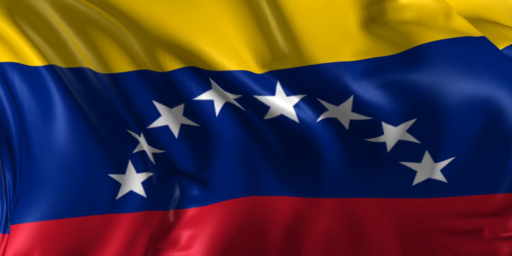
The situation in Venezuela entered a new stage yesterday as opposition leader Juan Guaidó claimed the nation’s Presidency.
Hawaii Congresswoman Tulsi Gabbard is the latest Democrat to throw their hat into the Presidential ring.
The fact that American officials talked with Venezuelans plotting a coup against the government of their country is a dangerous turn of events.
The Trump Administration has taken the latest step in a process that began in May with the withdrawal from the JCPOA. Where it takes us is anybody’s guess, but the probability of something going wrong is quite high.
The President and the Secretary of State had some oddly contradictory statements this week.
Secretary of State Mike Pompeo delivered a bombastic speech on Iran yesterday that reveals just how empty and dangerous the Trump Administration’s policy toward Iran actually is.


Does the administration know what it is doing?
For better or worse, Mike Pompeo will be confirmed as the 70th Secretary of State by the end of this week.

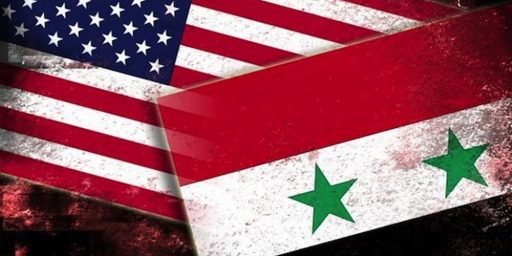
There is no obvious strategy and even the expressed rationale makes no sense.
From Europe to the Middle East, to Asia, America’s allies are concerned about what the selection of John Bolton as National Security Adviser means going forward. They should be, and so should every American.
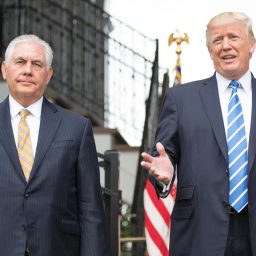
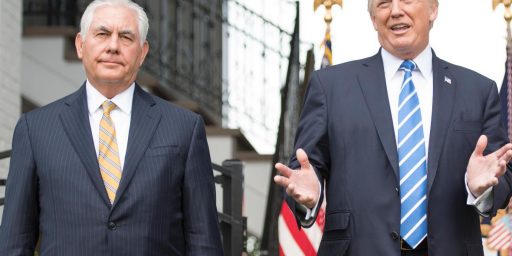
It appears that Rex Tillerson’s days at the State Department may be numbered, but his proposed replacement leaves a lot to be desired.
The apparent assassination of Kim Jong-Un’s eldest brother has raised red flags in China.
A controversial member of George W. Bush’s foreign policy team is up for a post in Donald Trump’s State Department.


Kentucky Senator Rand Paul is speaking out against several of President-Elect Trump’s proposed Cabinet nominees.


Libertarian Party Presidential candidate Gary Johnson doesn’t get much national press attention, and it doesn’t help when he flubs an answer like he did this morning.
If you were looking for evidence that the race for the Democratic nomination is basically over, you need look no further than last night’s Democratic Debate.
Donald Trump’s speech yesterday at a meeting of the Republican Jewish Coalition was as bizarre as anything else we’ve seen from him.
A Saturday night debate wasn’t likely to get much attention to begin with. A Saturday night debate in the wake of a major terrorist attack, and a major football game for Iowa’s premier college football team, likely got even less attention. That’s probably good news for Hillary Clinton, and bad news for her two remaining rivals.
Like most Republicans, Jeb Bush either fails or refuses to recognize what an utter, unjustifiable disaster his brother’s decision to invade Iraq actually was.
Two potential candidates for the Republican nomination in 2016 traded barbs this week over the President’s new policy toward Cuba.
A little round of Qs and As on US-Cuban policy.
Rand Paul is one of the few Republicans who seems to be evaluating the new policy toward Cuba through something other than an outdated Cold War perspective.
For a year that started out with regaining long-lost territory in Ukraine, 2014 is not ending so well for Vladimir Putin’s Russia.
The United States is, in fact, doing the exact opposite.
Benjamin Wallace-Wells wonders with some irritation “Why Henry Kissinger Never Goes Away.”
If you’re still not convinced that we lost the war in Iraq, this should settle the argument.
The opponents of the temporary deal reached in Geneva have been making some ridiculous historical analogies.
A proposed Syria authorization being considered in the Senate places several limits on Presidential authority to act, but it’s unclear if those limits can actually work.
The president’s public dithering on Syria is drawing jeers from friend and foe alike.
The White House confirmed today that the goal of any military intervention in Syria would be very limited. Which makes one wonder what the point of doing anything actually is.
We’re almost certainly going to launch punitive strikes against Syria. They’ll almost certainly be ineffective.
As President Obama’s red line has been crossed more brazenly, he continues to sound reluctant to intervene in Syria while positioning forces to do just that.

A decade ago. a certain New York Times columnist was more right than your humble host.
While the military was ousting Egypt’s democratically elected president, the US Secretary of State was on his yacht.
Would a formal guarantee of Israel’s security deter Iran from whatever nuclear weapons development program it has?

Recent comments from Russian officials suggest that the nation may be preparing to cut its longtime ally loose.