On Billionaires
We have a problem, but we aren't even trying to address it.
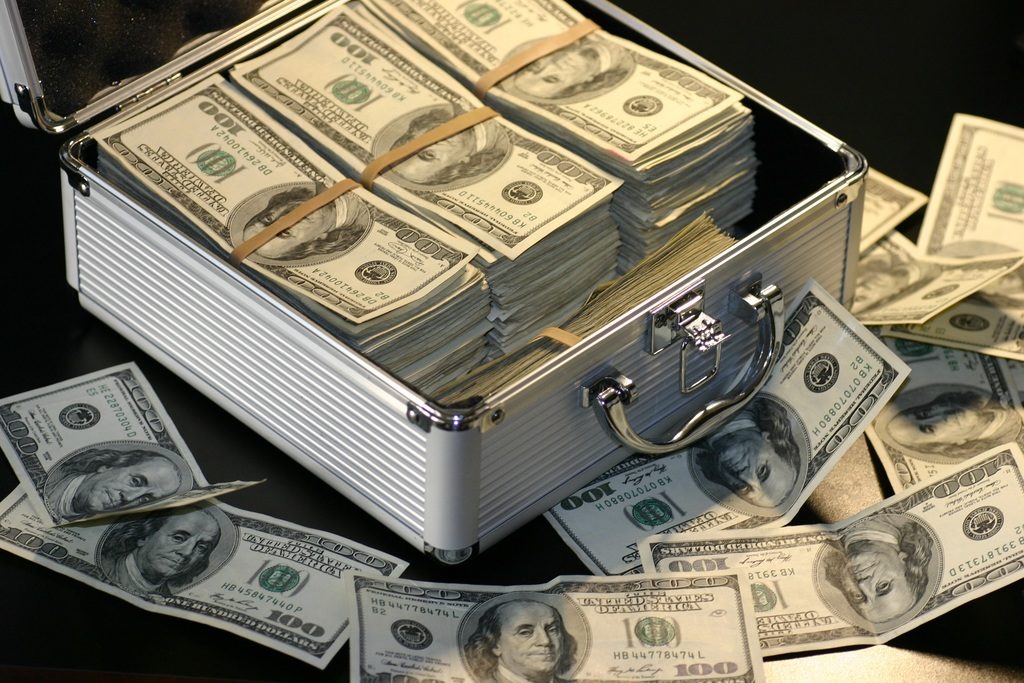
As the formulation goes:
Shot: The Ezra Klein Show, Our Tax System Should Make You Furious.
Chaser: Noah Hawley writing in The Atlantic, What I Learned About Billionaires at Jeff Bezos’s Private Retreat.
I was going to recommend the podcast regardless, and then this morning I read Hawley’s excellent piece that distilled a number of things I have been thinking of late about the billionaire class.
The podcast delves into something that I already knew, but was helpful to have fully discussed: the way in which people like Jeff Bezos can keep their wealth in stocks, leverage that wealth to take out ongoing loans, and pay no income taxes.
See this piece from ProPublica as cited by Klein in the interview: The Secret IRS Files: Trove of Never-Before-Seen Records Reveal How the Wealthiest Avoid Income Tax.
Klein notes, correctly in my view, in his discussion with Law Professor Ray Madoff, that this is more than just about tax revenue.
wealth creates power.
It creates a tremendous amount of power, and we’re operating in this era when the superrich were not necessarily shy about using their wealth to wield power.
And that thought brings me ot Hawley’s piece:
The closer I’ve gotten to the world of wealth, the more I understand that being truly rich doesn’t mean amassing enough money to afford superyachts, private jets, or a million acres of land. It means that everything becomes effectively free. Any asset can be acquired but nothing can ever be lost, because for soon-to-be trillionaires, no level of loss could significantly change their global standing or personal power. For them, the word failure has ceased to mean anything.
This sense of invulnerability has deep psychological ramifications. If everything is free and nothing matters, then the world and other people exist only to be acted upon, if they are acknowledged at all. This is different from classic narcissism, in which a grandiose but fragile self-image can mask deep insecurity. What I’m talking about is a self-definition in which the individual grows to the size of the universe, and the universe vanishes. Asked recently if there is any check on his power, President Trump—himself a billionaire, and by far the richest president in American history—said, “Yeah, there is one thing. My own morality. My own mind. It’s the only thing that can stop me.” Not domestic or international law, not the will of the voters, not God or the centuries-old morality of civic and religious life.
The following summary is perfect and echoes things I have said in private to more than one friend discussing this situation:
When you can buy your way out of any mistake, when you can fire anyone who disagrees with you, when your social circle consists entirely of people who need something from you, the basic mechanism by which humans learn that other people are real goes dark.
We all know that this is true. If you have no money and crash your car, and you only have liability insurance (or no insurance), you might find yourself unable to get a replacement, which might then lead you to lose your job and your home. But if you are moderately well-off, you can probably get that replacement vehicle. If you are Jeff Bezos’ son, what’s the big deal?
Consider the following: a teenager gets in trouble for drugs, vandalism, or whatever. In one case, a single mother cannot afford an attorney; in another, a whole firm is employed. Whose life prospects are more likely to be derailed at that moment in time?
And these are comparisons between the poor and the middle to upper-middle classes.
Then think about the assets of someone who is truly wealthy.
Then think about having Bezos money.
It would be bad enough if these billionaires simply weren’t paying their fair share, or if they simply could get away with things that us poors (by comparison) can’t. But, as Klein noted, they have a lot of power over the rest of us.
Hawley expands this notion:
When Peter Thiel said, “I no longer believe that freedom and democracy are compatible,” he wasn’t talking about your freedom. He was talking about his own. You don’t exist. When Musk took a chainsaw to the federal government as part of the inside joke he called DOGE, he did so with the air of a man who believed that nothing matters—poverty, chaos, human suffering. He was having fun. It didn’t even matter that the entire destructive exercise ultimately yielded no practical financial gains. For him, the outcome was a foregone conclusion: He could only win, because losing had lost its meaning.
Since the 2024 election, there has been a philosophical shift on the right, and especially among tech billionaires, to vilify the idea of empathy. Musk has called empathy “the fundamental weakness of Western civilization.” He sees it as a weapon wielded by liberal society to bludgeon otherwise rational people into operating against their own interests. Empathy is something done to you by others—a vulnerability they exploit, a back door through which they gain access to your resources and will. This rejection of empathy as a human value gives cover to people who don’t want to feel anything at all. If empathy is the problem, then lack of it isn’t a deficiency—it’s an advantage.
Yeah, that’s not concerning at all, now is it?
The bottom line is this: in any society, this much power concentration is unhealthy. And it is antithetical to the core notions of democracy (and hence Thiel’s allergy to the concept). Wealth is one thing, even substantial wealth. I have no philosophical problem with the notion that if you build a successful company, like Amazon, you should be financially rewarded for that success.
Google tells me that Bezos is currently worth between $254 billion and $259.5 billion.
To do a little math that my friend and co-blogger, Michael Bailey, noted in a phone conversation, if there were a 99% tax on Bezos’ wealth (something that will obviously never happen), we would still have (using the lower estimate from above), he would still have $2.54 billion net worth.
If that math leaves him mega-wealthy, I have a very hard time seeing some kind of modest wealth tax.
Note that it is projected that by the end of 2026, Elon Musk may have a net worth of $1 trillion.
And for those who would say that taxes would stem innovation, I simply don’t buy it. There is no way in the world that Jeff Bezos’ main motivation for building Amazon was that he would become a centibillionaire. There is no way in the world he even thought that was possible.
I agree, certainly, that people should be compensated for successfully building businesses and other ventures, but it is quite obvious that human psychology is such that people are motivated to do certain tasks for reasons far more complicated than just “Me want money.” And there is also the fact that there is a point at which accumulated wealth earns more wealth passively. If income from work is taxed, it is irrational for wealth acquired from things other than actually working to be not similarly taxed.
As we rush headlong into the AI era, it seems like it would be a good idea to be mindful of how much power we are allowing tech billionaires to accumulate.
Sure would be nice if we had a functional Congress.
Plus, maybe electing a member of the billionaire class to the White House wasn’t such a good idea.

The French had the right idea, sharpen the guillotine. We know who our royalty are.
Musk has called empathy “the fundamental weakness of Western civilization.” He sees it as a weapon wielded by liberal society to bludgeon otherwise rational people into operating against their own interests.
This is such a lame and loserish belief. From a conservative perspective, all of Western civilization was built upon the opposite. The aristocracy were desperately curious about the world and spent their wealth in support of what was not in their interest. That’s why we have civilization.
The real take is that actual conservatism is dead and there’s nothing left between democratic socialism or whatever you want to call it and libertarian endgame slop.
Also, someone like Musk clearly craves being liked. He’s just a zero and he can’t handle rejection. I get the sense that a lot of these guys are like that. That they’re the ultimate incels, and desperately need to believe that they are emotionally invulnerable.
Klein’s interviewee, Ray Madoff (no relation), goes on to explain that the inheritance tax was supposed to tax those unrealized capital gains at death. Remember all the talk some years ago about the “death tax”? You don’t hear much about it anymore. Why, because they’ve managed over the years to neuter the inheritance tax.
Madoff explains there’s always been a dance between the tax avoidance industry and the legislature, new avoidance schemes are created and laws are passed to close them. The rich are now way ahead in that game. Huge fortunes are passed on, not only with little or no tax, but resetting capital values to prices at inheritance, wiping previous capital gains off the books.
The 90% top marginal rate was done to provide wartime revenue. But it also served the laudable purpose of reducing the number of people rich enough to ratfrack with governance. Those who did took a long term view. The Koch network started the process of buying the 2020s SCOTUS in the early 80s. Along the way they had enough influence to not only cut their tax rates, but also to chip away almost all the barriers to money in politics.
Who was it (plural) that observed politics is, everywhere and always, at root, the fight of the masses to prevent the wealthy and powerful from scooping up everything? We’re losing.
Had the grandchildren over the other evening. Put on the Disney channel. And lo and behold, we watched the 1973 Disney animated feature Robin Hood. And my poor mind went “huh?” and immediately noted (which I had not thought about before), here’s a cartoon extolling just the opposite of most of our society believes: taking from the rich and giving to the poor.
People love the story of Robin Hood. And yet when it comes to reality we, as a society, enable just the opposite.
I’ll repeat this visualization:
If you were paid $5,000 daily 365 days a year, it would take you 200,000 days to accumulate $1 billion. That’s aprox. 547 years and six months to get there.