Eastern Orthodox Schism Grows Wider
The dispute over Ukraine between the Russian Orthodox Church and the Orthodox Patriarch is widening and nearing the point of a complete break.
The dispute over Ukraine between the Russian Orthodox Church and the Orthodox Patriarch is widening and nearing the point of a complete break.
The Ukrainian branch of the Russian Orthodox Church is pushing for independence. Church leaders in Moscow are not too happy about this.
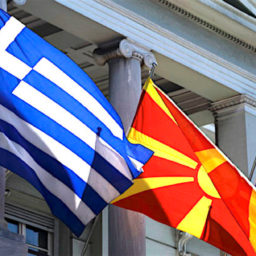

The three-decade-old name dispute between Greece and the former Yugoslav state of Macedonia remains unresolved after Sunday’s referendum.
Last week, the Polish President floated the idea of a permanent U.S. military base in Poland. It’s a bad idea no matter how you look at it.

British authorities have charged two members of Russian military intelligence in connection with a poisoning attack on British attack.


There’s no real plan and nobody appears to know what waits on the other side, but the United Kingdom continues to meander towards Brexit.
A new study finds that a majority of the UK population—and of UK Parliamentary seats—support remaining in EU.

President Trump and the President of the European Commission announced an agreement late yesterday on trade issues, but it’s long on promises and short on results.
We still don’t know what President Trump and Vladimir Putin talked about or agreed to during their two-hour meeting on Monday.
The Office of Special Counsel Robert Mueller has issued indictments against twelve Russian intelligence officials for election-related hacking, and in the process has shown most of the arguments made by the President and his surrogates regarding the Russia investigation are nonsense.


Not surprisingly, the President’s visit to the United Kingdom wasn’t exactly diplomatic, or even borderline polite.
The NATO Summit is going about as well as can be expected.

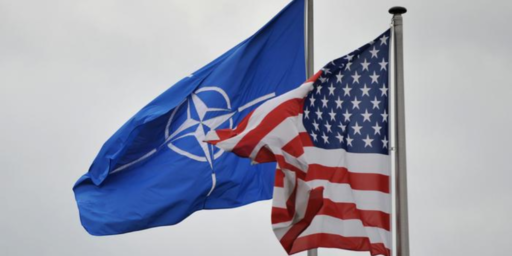
On the eve of the NATO Summit, President Trump continues to engage in tactics that seem to serve no purpose other than to undermine America’s most important and successful alliance.


With Brexit negotiations proceeding slowly, Theresa May loses her Brexit Minister and, more significantly, Foreign Secretary Boris Johnson, who is likely to become one of her leading critics inside the Conservative Party going forward.
The right-wing government in Warsaw has purged more than one-third of the members of the Polish Supreme Court in a crackdown on political opponents.
The Polish Government has amended a controversial law that sought to punish people for discussing the role that some Poles played in the Holocaust.
Turkey’s authoritarian leader is going to be around for a long time.
Greece and the former Yugoslav Republic of Macedonia have apparently finally settled a three-decade old name dispute.
Thanks to Donald Trump, the happiest man in the world right now is Vladimir Putin.
Trump’s suggestion to include Russia again in a new G-8 makes me wonder about a couple of things.
The actions of the Trump administration are helping Russian-EU relations (to the detriment of the US).
The arguments in favor of a permanent U.S./NATO base in Poland are not very convincing.
The new American Ambassador to Germany is making what clearly seem to be inappropriate statements about domestic politics in Europe.
The overwhelming success of the abortion referendum in Ireland is leading to calls for similar action in Northern Ireland, but it won’t be easy.
Poland makes the U.S. and NATO an offer they might want to consider refusing.
Just as they did three years ago when they legalized same-sex marriage, Irish voters turned out in record numbers to repeal the nation’s ban on abortion.


American companies are struggling to comply with the EU’s new privacy regulation, with many outlets choosing to simply block access abroad.
Tomorrow, Irish voters will head to the polls to decide whether or not to scrap a Constitutional Amendment that bans abortion in essentially all circumstances.
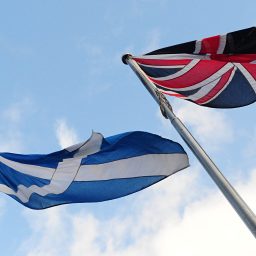

Scottish First Minister Nicola Sturgeon is hinting she might try to revive a Scottish independence vote in the wake of Brexit. That’s easier said than done.
President Trump’s decision to violate the terms of the nuclear deal with Iran could be a turning point in relations between the United States and its most important allies, and not in a good way.
Seven years after deactivation, the U.S. Second Fleet will be patrolling the North Atlantic again.
President Trump’s on-again, off-again visit to Great Britain appears to be on again.
Andrew Sullivan wonders, “Will there always be an England?”
To nobody’s surprise, Vladimir Putin has won re-election to another term as Russia’s President.
Theresa May’s government has not hit Russian oligarchs nearly as hard as they deserve because the UK benefits from turning a blind eye.
A contest with no serious challenger will make him the longest-serving Russian leader since Stalin.
Not unexpectedly, Russia has retaliated for Great Britain’s retaliation for Russia’s apparent assassination attempt on British history.


The Treasury Department has designated five entities and 19 individuals tied to the Russian government for cyber espionage.
Theresa May has expelled 23 Russian diplomats and convened the North Atlantic Council.
The British prime minister and outgoing US Secretary of State declared a red line crossed. There’s no reason to think this White House will follow through.
After six months, Angela Merkel has apparently succeeded in forming a coalition government.


The latest, and most grave, example of the current tide of right-wing populism can be found in Italy.
Shots fired: European Commission president Jean-Claude Juncker threatens to fight back if President Trump imposes tariffs on steel and aluminum.
Yet more absurdity from Brussels, where regulators seemingly don’t understand how the Internet works.
Few Western democracies have anything quite like our First Amendment. This is a case where the United States gets it right.
Pork barrel politics is complicating Germany’s replacement of its 1970s fighter jet.
Poland’s new Holocaust legislation just keeps sounding worse and worse.