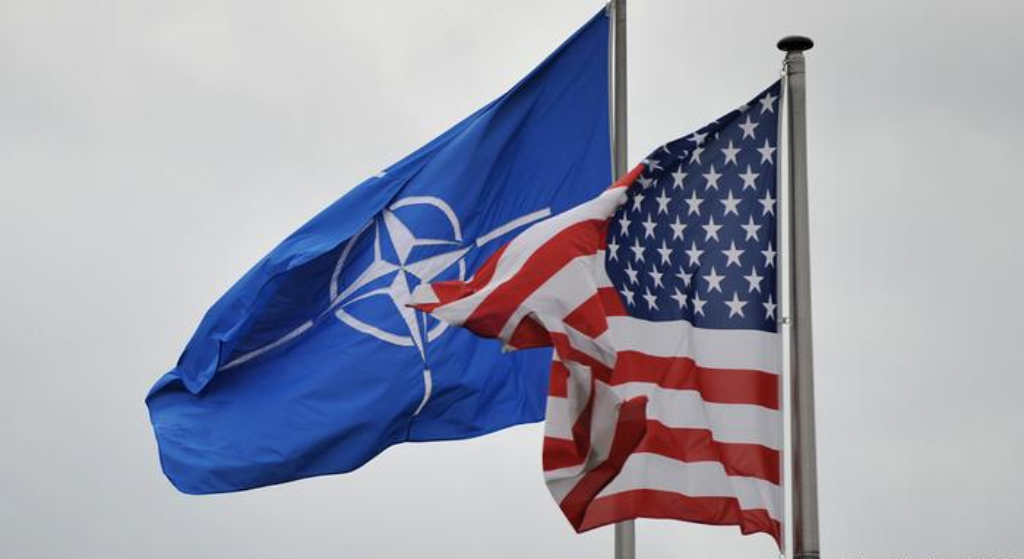

With President Trump set to leave for the NATO summit at the end of the week, the editors at The New York Times endeavor to remind him, and us, of what makes the NATO alliance so valuable to the United States:
As Lord Ismay, NATO’s first secretary general, somewhat cheekily observed, the trans-Atlantic alliance was created to “keep the Soviet Union out, the Americans in and the Germans down.” Seven decades later, those goals have largely been met (yes, the Germans have risen, but in the right ways), and many people — including, evidently, the president of the United States — wonder whether the alliance still has a purpose.
It does. It remains the most successful military alliance in history, the anchor of an American-led and American-financed peace that fostered Western prosperity and prevented new world wars. No one has proposed anything credible to improve upon it. But as the allies gather in Brussels this week for their annual meeting, many are wondering whether the American president is intent on wrecking it.
(…)
During its existence, NATO has often been strained as the security and political environment evolved. After the Cold War, it found a new purpose, defending Muslims in the Balkans, and after 9/11, helping the United States fight terrorists in Afghanistan, Iraq, Africa and elsewhere.
Former Communist countries swelled the alliance from 12 members to 29, with others knocking on the door even now, concerned about an aggrieved and aggressive Russia.
Across seven decades NATO has invoked its Article 5 mutual defense commitment only once: to rally to the defense of the United States after the attacks of 9/11. Even today, the armed forces of 39 countries are serving, and sometimes dying, with American troops in Afghanistan.
More than 70 (NATO and non-NATO) countries are part of the U.S.-led fight against the Islamic State; two dozen countries have joined a global counterterrorism initiative.
In short, NATO remains central to major American national security initiatives in a world shaken by the rise of an increasingly assertive China, the expansion of competing power centers from India to Saudi Arabia, the surge of migration from the Middle East and Africa and the dislocations caused by globalization.
Coincidentally, this Editorial comes on the same day that the President took to Twitter once again to repeat a frequent, and false, criticism that he’s made about the alliance and our European partners in the past:
The United States is spending far more on NATO than any other Country. This is not fair, nor is it acceptable. While these countries have been increasing their contributions since I took office, they must do much more. Germany is at 1%, the U.S. is at 4%, and NATO benefits…….
— Donald J. Trump (@realDonaldTrump) July 9, 2018
…Europe far more than it does the U.S. By some accounts, the U.S. is paying for 90% of NATO, with many countries nowhere close to their 2% commitment. On top of this the European Union has a Trade Surplus of $151 Million with the U.S., with big Trade Barriers on U.S. goods. NO!
— Donald J. Trump (@realDonaldTrump) July 9, 2018
As I’ve said before, this is a criticism that the President has made before and, to be fair, it’s been one that President’s before Trump have also made. For many years after the end of the Cold War, American Presidents complained publicly and privately that the United States was bearing a disproportionate share of the financial burden when it came to defense spending among NATO members, although it was recognized that, in many cases, there were practical reasons why some NATO members were not spending more on defense. In any case, at the 2014 NATO Summit in Wales, it was agreed among the members that each member would seek to spend at least 2% of their respective Gross Domestic Product on defense, at least some part of which would be intended to be utilized as part of the alliance in the event that it was necessary. It’s important to recognize that this agreement was reached only four years ago and that it was understood at the time that it would take many members some time to reach the 2% goal due to domestic political and other considerations. Additionally, it was recognized that some NATO members, such as Iceland, would find it hard to meet this goal given the fact that they have no military, and thus no defense budget to speak of. In those cases, it was understood that these smaller member nations would contribute to the alliance in other ways. In Iceland’s case, for example, the island nation serves as an important mid-Atlantic location for alliance air assets and as a port for American and other naval forces. The President, however, continues to either not understand what the NATO alliance is all about and what was agreed to at the aforementioned 2014 summit meeting. Contrary to the manner in which the President continues to frame the issue, the 2% spending goal is not part of the NATO Treaty nor is it some kind of “dues” that each member owes to either the alliance or to the United States.
In addition to not understanding, or deliberately misstating, what the defense spending goal is all about, it’s also clear that the President either does not understand what the alliance is all about or the value it provides to us because of its existence. Leaving aside the fact that it has helped to keep Europe, which was the site of two of the bloodiest wars in human history over a span of just thirty-one years, at peace, the alliance and the American presence in Europe serve several important purposes for the United States and the rest of Europe. The primary purpose, of course, is the role it has played in checking Soviet and now Russian adventurism in Europe over the past seven decades, but its role goes far beyond that. The air, land, and sea bases that the United States is able to take advantage of in Europe thanks to the alliance have provided us with a significant advantage in moving both men and material during the Persian Gulf War, the war in Afghanistan, and the Iraq War. This has helped to save significantly on transportation and other costs In the same respect, military hospitals in Germany and elsewhere in Europe have proven to play an important role in treating wounded American servicemen and servicewomen in all of these conflicts. Finally, as has been pointed out numerous times, it’s worth remembering that the NATO Treaty’s collective defense provisions have been invoked only once, and that was done by the United States in the wake of the September 11th attacks. In response, our NATO allies responded as they committed themselves to do, with many nations provided personnel, material, and financial support to the fight against al Qaeda and other terrorist organizations and their soldiers have fought alongside American troops in Afghanistan and elsewhere for the past seventeen years. For the President to trash them now is both short-sighted and stupid.
As the Times editorial goes on to note, the President’s attacks on the alliance ignore the value that the alliance brings to the United States and the indespinsible role it plays for us:
NATO is not a golf club, and money, the only thing Mr. Trump prizes, is just one, narrow measure of the costs and benefits of belonging. This president has shown no understanding of the power of partnership, and the reciprocal nature of its bonds, in an alliance that stands for something far bigger than paying your dues on time.
Mr. Trump is burning up all the credit the United States has accrued with our allies across decades by attacking the basis of this alliance, if not the very idea of any alliance — thus, deliberately or not, doing the bidding of Mr. Putin in his quest to divide the West.
“NATO can withstand four years under Trump,” one former NATO ambassador said in an interview. “I don’t think we’ll withstand eight.”
Given the legacy of Republican support for national security and democratic allies, one might expect that Republican congressional leaders would speak up. But, cowering before Mr. Trump, they have been virtually silent as he has undermined America’s alliances.
The NATO meeting is expected to approve significant new steps to contain Russia, which most of the allies, and most of Mr. Trump’s senior advisers, recognize as a threat, even if the president does not. These measures include establishing two new military commands, expanding cyberwarfare and counterterrorism efforts and approving a new plan to speed the reinforcement of troops and equipment to Poland and the Baltic States to deter Russian aggression.
(…)
At this week’s gathering, the result that matters most is a firm and convincing commitment to a strong NATO, ready to contribute to stability today, and to adapt to future challenges. With no coherent vision of his own to make Americans, and democracy generally, more secure in a world without NATO, Mr. Trump would do well to make that commitment, and honor the friends we have.
Given the way the President has acted, I have no confidence that Trump will recognize this and that the odds are pretty good that this week’s summit will end up being as much of a trainwreck as the G-7 Summit meeting was last month. If that happens, the only person who will be happy is the President of Russia.