The New York Times, “Judge Richard A. Posner Has Died. His Influence in Law Was Beyond Compare.”
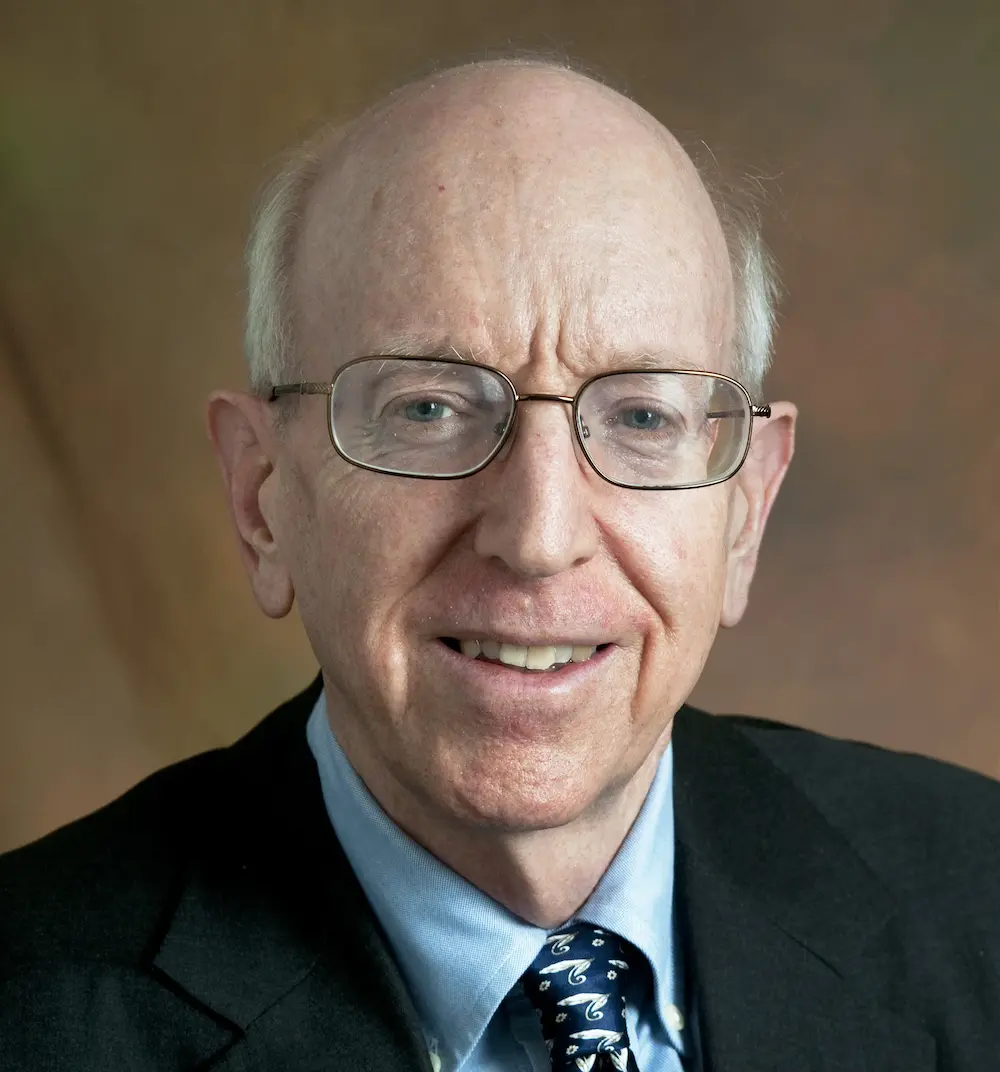
Judge Richard A. Posner, whose protean intellect, relentless work ethic and startling candor made him a towering figure in the law, died on Tuesday in Chicago. He was 87.
[…]
Judge Posner, who served from 1981 to 2017 on the United States Court of Appeals for the Seventh Circuit, in Chicago, wrote thousands of judicial opinions and more than 50 books on a vast array of topics, along with countless scholarly articles, essays, book reviews and blog posts.
He was, the journalist Gary Rosen wrote in The Wall Street Journal in 2002, “a one-man think tank.”
Judge Posner was the most-cited legal scholar in the second half of the 20th century, according to a 2000 study conducted by Fred R. Shapiro, beating the runner-up, Ronald Dworkin, by a factor of almost two.
In the casebooks that collect excerpts from judicial opinions and are the basis for much of legal education, Judge Posner’s work was featured for many years more often than that of any other judge. “The differential in terms of total influence on the casebooks between Posner and almost all the other judges is staggering,” the authors of a second study, Mitu Gulati and Veronica Sanchez, wrote in 2002.
When Professor Gulati and Stephen J. Choi updated the study this year, they found that little had changed. Judge Posner’s lead remained “astonishing,” they wrote.
Only two other American judges who did not serve on the Supreme Court had his stature: Judges Learned Hand and Henry J. Friendly, who both sat on the federal appeals court in New York.
Judge Posner’s admirers said he had no real competition in the annals of American jurisprudence. They regarded him as a superb writer, with a limpid, conversational style and a sure command of tone. He wrote with self-confidence and authority, qualities his critics said were not always entirely deserved. Most important, in a field that overvalues tradition and formalism, he was known as a brilliantly original iconoclast.
“Posner was the greatest and most skilled judge in American history,” Saul Levmore, a former dean of the University of Chicago Law School, wrote in an email. “Part of his influence was his willingness to think aloud, and in print, about what law may be trying to accomplish and how it might go about it.”
Judge Posner called his approach to judging pragmatic. His critics called it lawless. “I pay very little attention to legal rules, statutes, constitutional provisions,” Judge Posner said in a 2017 interview. “A case is just a dispute. The first thing you do is ask yourself — forget about the law — what is a sensible resolution of this dispute?”
He was among the leading figures in the movement to analyze legal problems using economics. In looking to social utility rather than abstract moral values like fairness or equality, he gained a reputation as a cold, calculating conservative.
[…]
President Ronald Reagan appointed him to the Seventh Circuit in 1981, at the age of 42, and there was occasional talk of a Supreme Court nomination. Some of Judge Posner’s more extreme thought experiments — applying free-market principles to adoptions, or, as his critics would have it, “selling babies,” was the example most often cited — made other candidates more attractive.
In person, he was mild, a little distant and sometimes seemingly indifferent to ordinary social niceties. He was the first to acknowledge his own oddities. “I have exactly the same personality as my cat,” Judge Posner said in a memorable New Yorker profile. “I am cold, furtive, callous, snobbish, selfish and playful, but with a streak of cruelty.”
Judge Posner had no patience for the formalism of most legal reasoning and the jargon in most legal writing. Nor was he a fan of originalism, the mode of constitutional interpretation that seeks to unearth the original public meaning of the text of the Constitution. He was more interested in the practical consequences of his decisions.
[…]
For most of his judicial career, Judge Posner’s opinions generally reached conservative results, though often through routes at odds with the interpretive methods preferred by the increasingly influential conservative legal movement. He was interested in finding the sensible answer to the dispute before him and in announcing an efficient and workable legal principle to govern similar ones.
In later years, he drifted left, issuing opinions on voter ID laws, abortion, same-sex marriage and workplace discrimination based on sexual orientation that were markedly liberal.
[…]
In 2007, he wrote a majority opinion upholding an Indiana voter ID law. In a 2013 book, “Reflections on Judging,” he confessed error. “I plead guilty,” he wrote, “to having written the majority opinion (affirmed by the Supreme Court) upholding Indiana’s requirement that prospective voters prove their identity with a photo ID — a type of law now widely regarded as a means of voter suppression rather than of fraud prevention.”
He elaborated in a 2014 dissent in a case on Wisconsin’s voter ID requirement, writing that such laws are “a mere fig leaf for efforts to disenfranchise voters likely to vote for the political party that does not control the state government.”
The Washington Post, “Richard Posner, influential and iconoclastic federal judge, dies at 87“
Richard A. Posner, an iconoclastic federal appellate judge and prolific author who was widely known for his provocative intellect and was ranked by many in the legal world as second in influence only to members of the U.S. Supreme Court, died Wednesday. He was 87.
[…]
Mr. Posner’s restless mind was on grand display both in the courtroom, where he at times flustered lawyers with his hectoring manner, and in his staggering output of published writings on topics ranging from esoteric antitrust law to sex and aging.
He embodied an “erratic genius, herculean work ethic and irrepressible ambition,” Yale Law School professor John Fabian Witt once wrote in the New York Times. “In the past half-century there has been no figure more dominant or more controversial in American law.”
During his nearly 36 years on the U.S. Court of Appeals for the 7th Circuit in Chicago, from 1981 to 2017, Mr. Posner wrote more than 3,300 judicial opinions. He wrote or co-wrote more than 40 books, some with updated editions, bringing total publications to more than 65 volumes during his life.
[…]
He wrote hundreds of law review articles, lectured regularly at the University of Chicago Law School and maintained an elaborate and widely read blog with Gary Becker, a Nobel laureate in economics, in which the two traded rapid-fire arguments on legal and economic issues.
He readily confessed to being a workaholic. “I don’t have a sharp sense of the difference between work and play,” he told the Times in 1999.
[…]
He viewed the Constitution as flexible and applied that mindset to controversies including torture in the wake of the terrorist attacks of Sept. 11, 2001.
“The greater the potential value of the information sought to be elicited by an interrogation, the greater should be the amount of coercion deemed permitted by the Constitution,” he wrote in his book “Not a Suicide Pact: The Constitution in a Time of National Emergency” (2006). “The Constitution contains no explicit prohibition of coercive interrogation, or even of torture, to block such an approach.”
Several of his books were sharply critical of his fellow jurists. At his retirement, he shocked the legal world by self-publishing a 300-page paperback entitled “Reforming the Federal Judiciary” that accused his own court of “massive indifference” to the “pro se” defendants, many of them indigent and incarcerated, who represent themselves.
The Chicago Tribune, “Richard Posner, eminent federal appellate judge and pioneering scholar, dies at 87: ‘He was a giant’“
Richard A. Posner, known for his storied career as a federal appellate judge and pioneering work in the field of law and economics, died Tuesday. He was 87.
[…]
“There has never been a legal scholar quite as prolific, influential, and endlessly curious as Dick Posner,” U. of C. Law School Dean Adam Chilton said in a statement. “(He) was a giant whose influence on our legal system, the field of law and economics, and on our law school cannot be overstated.”
[…]
Known as a conservative at the time of his appointment, Posner’s views skewed more libertarian through the years, and he often came down in favor of more liberal issues such as gay marriage and abortion rights.
Lawyers who regularly appeared before the 7th Circuit knew that when Posner was on a panel, they had to be ready for a line of questioning that could come out of left field. The salty judge was known to abruptly cut off lawyers whom he thought were off point, often with a dismissive “No, no, no!” delivered in his trademark nasal tone.
Posner’s biting and often brilliant written opinions, as well as his unrelenting questioning from the bench, made him an icon on the court.
When he retired in 2017, Posner, in a statement, said he had written more than 3,300 opinions in his time on the bench. At the time, he said he was “proud to have promoted a pragmatic approach to judging.” He said he spent his career applying his view that “judicial opinions should be easy to understand and that judges should focus on the right and wrong in every case.”
While I’m generally skeptical of Posner’s view that judges should not be overly bound to Constitutional and statutory text and intent, both because it makes judges too powerful and because it essentially frees them to legislate from the bench, I’ve come more around to his way of thinking in recent years. First, because it’s become clearer to me that many self-professed Originalists and Textualists cherry-pick history to reach their desired outcomes. Second, because Posner is absolutely right that there has to be due consideration of the practical impact of the ruling.
As discussed in previous posts, for example, I’m sympathetic to a soft version of the Unitary Executive theory. The degree to which Congress has delegated its rule-making powers to executive agencies while attempting to hamstring presidential authority over them seems rather clearly at odds with both the text and spirit of the Constitution. At the same time, it seems obvious that a modern state—let alone a continental superpower—simply can’t function under the strictures of 1787.
Similarly, I’m sympathetic to the notion that money enables political speech in the modern world; but that surely has to be balanced against the appearance of corruption and a system rigged against the common citizen. And while the Constitution gives state legislatures near-plenary power to draw Congressional districts, there has to be some sort of check against rank self-dealing by the party in power. So, judges need to balance legal theory with practical consequences of their rulings.