Of the Court and Independent Power Centers
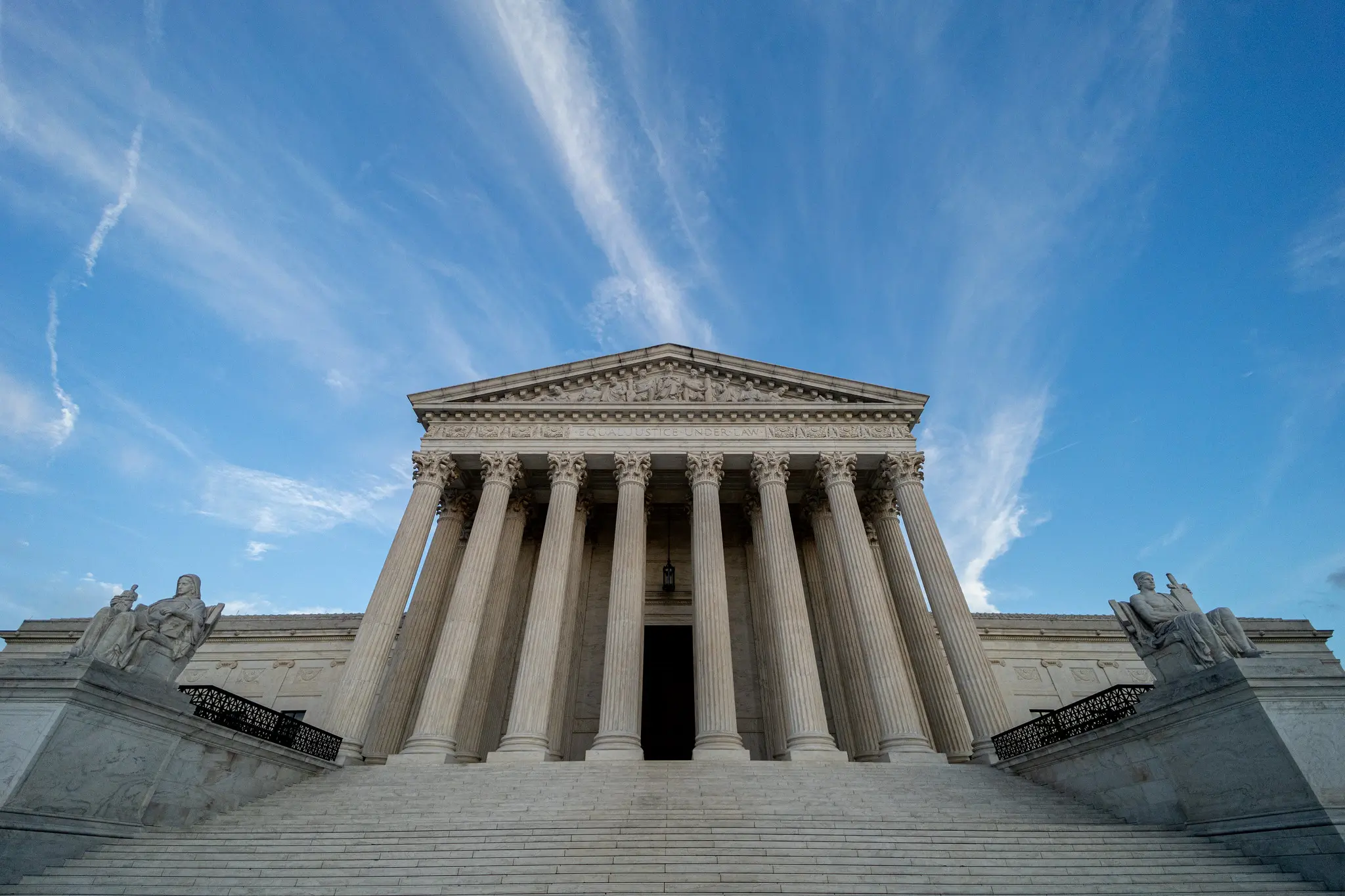
As James Joyner notes this morning, the Supreme Court of the United States stands on the precipice of granting even greater powers to the executive branch to ignore Congress. While we do not know for sure what they will do, their ongoing (and unprecedented) string of deference to the executive via the shadow docket, coupled with things like the 2024 immunity ruling, and their ruling on section 3 of the 14th amendment, suggests that the majority of the Court is willing to continue pouring power into the presidency.
Many commenters have understandably opined that if a Democrat ever wins the presidency again, the Court would conveniently start reversing itself. Perhaps, but I have my doubts that that will be as easy as it sounds.
For one thing, these things are not all switches that can be easily flipped. The Court, for example, needs a case to rule on. If SCOTUS established, for example, that the president can impound funds and then a Democratic president does so, a district court is going to abide by existing interpretations of SCOTUS. Sure, someone can sue, but it will be harder (granted, not impossible) for SCOTUS to immediately change their position in some new shadow docket case that would end up back before them, where they would then have to issue a pretzel-logic opinion.
But let’s assume that they do, in fact, brazenly contradict themselves and do the exact opposite for a hypothetical Democrat than they did for Trump. Such brazenness will simply erode public trust in government, even further, and in the Court in particular. This will provide a potential pathway for some hypothetical Democrats to simply say they are ignoring the Court. It will induce the whole “They have made their ruling, let them enforce it” gambit.
What I am noting here is that the more the system is broken, the easier to becomes to break it further. It is why I keep arguing that we aren’t going back to “normal” and why we seem headed to, at best, a muddled authoritarianism.
Keep in mind that the Supreme Court has no independent power source of its own. It runs off perceived legitimacy in the context of a functioning constitutional order wherein all members of the federal government acquiesce to its rulings. One of the sins of the Roberts era is that the Chief Justice has already allowed a situation in which it is quite clear that the Justices are partisan actors. As such, public confidence in the Court has eroded. A brazen enough set of actions will break public trust and will allow some future president to ignore the Court (and be cheered for doing so by enough of the public).
The Court has no independent source of power outside of the public acceptance that they are acting in good faith within the constraints of the Constitution. They have no guns. They have no direct authority over the populace nor over the government.
They aren’t even elected, so they can’t even make an abstract appeal to some voting constituency, as Congress can.
They rely, as does Congress, on the executive to put their rulings into practice. As such, part of why they can more easily get away with ruling as they are is that it reinforces the desires of the executive.
However, if in some hypothetical future they start ruling against the executive, and in a way that is utterly partisan in its contradictions, who are they going to have rely on to enforce their will?
Put another way: we already have the executive ignoring the legislature, with the judiciary being complicit in allowing that to take place. It is only the arrogance of the Court that seems to be blocking them from seeing that they are teeing up the executive to ignore them next.
The Court’s conservative majority really does seem high on its own supply of arrogance and self-importance. They seem to be forgetting why anyone listens to them in the first place and are proving that an overreliance on an understanding of politics that is based in the mythology of American Exceptionalism is a really bad idea.

Further? Than it already has? I submit that these assaults on the credibilty of our judicial system and government has been built upon a longer term momentum of intentional effort to decouple the American people from trust in their own systems of governance and intellectual process.
We are not in a process “of arriving,” but we have long arrived at this point. Awarding Newt Gingrich & Co. a platform of power from which to indecently twist and distort elemental truths, values, meanings should have been a warning four decades ago.
Understandably however, we all have different “sensitivity” as to how “hot the bath water.” To some of us it felt scalding a good while back.
Going forward we have a choice: acquiese or fight.
Can’t we just admit what this is? We have the legislature controlled by two groups who won’t / can’t / don’t work together and the controlling party is allowing an out of control executive to proceed as a dictator, implementing an agenda that they have always wanted. The other branch of government – the technogarchs – are doing their part for the controlling party. And we have the Supremes assisting with the implementation of the controlling parties 2025 agenda. We are in a civil war that is being fought differently than civil wars of the past. It’s that simple, and the Democratic party is losing. I really do not think you will see another democratic president because the democrats do not seems to see what myself and a few others see.
Edit: maybe civil war is the wrong term. It’s a take over, coup. Am I being too dramatic?
I would suggest that at least a few of the Supremes are imperial presidency fanboys who have made themselves comfortable with the idea that an American king shouldn’t be constrained by the courts, even SCOTUS.
Isn’t the whole idea of the Supreme Court a norm established by Marbury v. Madison where they asserted their power of judicial review? Since norms are being busted left and right how long will it be before that norm is destroyed?
And I asked a couple of weeks ago, what stops the Trump administration from replacing a Supreme Court justice that they don’t like? The logic of their position is still out there and supported by the votes of the Justices.
@Scott F.:
Through conservative psychology, Federalist Society selection, FS grooming, and FS handlers, they’re just fine with idea of a
dictatorUnitary Executive.@Rob1:
Well, I did link to a Pew poll that shows there is still more ground to lose.
Things are not yet as bad as they could get.
@Scott:
a. Why would they? They are getting what they want.
b. It would be easier to just pack the Court.
@Steven L. Taylor: Well, I was asking a theoretical but you don’t deny that is out of the range of possibilities. Trump can do what he has done with any number of agencies but was stopped for some mysterious reason at the Fed. Why not claim the power to remove Sotomayor, for example.
Rather than the whole tying themselves in knots to reverse all of these decisions should a Democrat win the Presidency, it seems like it would be much simpler for them to plan ways to install a Republican, regardless of the electoral outcome.
@Scott: I think if he was willing to try and remove, he would be doing so at the district level.
But as much as I am clearly critical of and concerned by the Trump administration, it is important to note that he has engaged in at least plausible areas of over-reach (such as firing executive branch employees). Firing members of the judiciary is a whole different ballgame.
A better weapon would be cutting their funding, btw.
@Michael Cain: Sure. If that happens, we are then playing a new game.
Steven,
I haven’t seen much in terms of the SCOTUS really caring that much. IMHO, they feel that one layer of paint gives them enough deniability. Therefore, in reversing, they’ll just say (in legalese) ‘this is different’. Remember that they had no problem switching from ‘Biden can’t move a few hundred million’ to ‘Trump can move countless hundreds of billions’.
As for trust, why bother? Most of the press will cover for them and very, very few Americans follow SCOTUS.
Also, the whole point of the ‘shadow docket’ is that they allow Trump to do as he pleases, under the excuse that a decision will come later. I’ve seen it said that the reason for this is specifically to unwind them at the end of Trump’s term.
@Scott:
In that view, laws are nothing more than norms written down. That would extend to the Constitution as well.
[ETA clarification: it should read “little more” because laws create a basis for the legitimate use of coercion. In short, an enforcement mechanism via threat of punitive action carried out by government as a proxy for society as a unit.]
Not sound all Marxy, but it conceives of law as a reification.
Gold, silver, fiat money—backed by blockchain or government—all require some sort of agreement to function.
Laws only work to the extent that people follow them, and how to achieve broad compliance is the source of many a political fight throughout history.
It seems to me that this dovetails nicely with the bottom line Taylor has expressed during the explanations of competitive authoritarianism.
In the same vein, over the same issue, think back to Wallace at the University of Alabama. What finally ended his stand in the doorway?
It took federalizing and deploying the national guard (to use Taylor’s phrase, people with guns). This was 9 years after the SCOTUS decision that ruled segregation unconstitutional, 8 years after a second SCOTUS ruling was issued because the initial decision was widely ignored, and 7 years after Eisenhower had to deploy the national guard in Little Rock to enforce those decisions. In those cases, we had the Executive Branch, the one with coercive power, fulfilling its duty as defined by the Constitution—faithful executing the law of the land.
Note that even the second ruling was crafted with some deliberately vague language. For example, an undefined timeline, because the Court feared widespread violence and unrest in response to it.
And yet, we are still having the same goddamn conflict. CRT developed, in part, to explain the limitations of law. It’s not that the Brown decisions or the subsequent CRAs did nothing. Over time, social relations and norms of behavior did change at the ground level in a broad sense.
Trumpism is the latest iteration of backlash to those ground level changes. It continues the path of preceding movements that used the underlying logic of desegregation—colorblindness—to claim discrimination against white people. Ironically, that path proves the fucking premise of CRT.
This requires a little more unpacking, because the key thing that makes the backlash seem reasonable to many is that the widespread view of racism conceives it as characteristic of individuals. The solution that subsequent generations adopted was the logic of colorblindness.
This allows Rufo and Trump to strip quotes of their context to imply that CRT is calling every white person racist, which many people find to be an attack on their character and/or intelligence. That’s why they focus on the actions of individual actors—professors, judges, writers. They choose individual actions that can be described as absurd and outlandish, because the majority have internalized a different model of racism.
—
Aside about Wallace: a Democratic President federalized a state’s national guard to force compliance of two federal court decisions ignored by a governor of his own party. How quaint.
@HelloWorld:
I am glad you added this. I started a response that was going to come across as antagonistic. I bagged it because I didn’t want to put you on the defensive nor did I want to be unfair to you.
Civil war is not an accurate description. And it is almost certainly unhelpful.
Coup is closer, but probably not persuasive to many outside Leftish anti-Trumpers. Nor is it accurate . . . Yet.
Damn, the best word ran across my brain, then hid in a fold. Maybe I will remember it later.
@Barry_D:
Caring is kind of irrelevant.
For example, I can say that I do not care about climate change, as I sit in my coastal Florida beach-front home. But when the foundation erodes and the house falls into the ocean, it falls into the ocean.
If SCOTUS continues down this path, it is eroding its own foundation of power, whether it thinks it is or not.
It is one thing to align with the group that you are giving all the power to; it is quite another to be at odds.
I am not predicting some immediate implosion, but the reality is that at some point, “because we said so” becomes irrelevant if all you have is paper and the other side controls the money (because you let them) as well as all the coercive apparatus of the state.
On this current road, I think that either we get a consolidation of power under one party, or an ongoing wrestling over exercising power with few constraints.
Maybe we take a step back, and I am being overly pessimistic, and while I have said the mid-terms are a major test of what pathway we are on, what SCOTUS this term decides will have a great deal of impact as well.
IMO, the supreme court (RIP) was over as a credible institution back when Moscow Mitch refused to allow a vote or even hearings on Merrick Garland. He compounded this by allowing such things for Ms. Covid Barret in 2020.
It’s El Taco’s Fixer Court now.
@Kurtz:
Indeed. This is part of the point of this post. Ideally, laws are followed predominantly because they are deemed legitimate by the population that follows them. We expect this to be the case in functioning democracies, for example. Laws can also be followed because the populace is afraid of being caned or shot in the head. This is the hallmark of certain kinds of authoritarian regimes.
We, by and large, listen to the Court because we, and more importantly, those in government, deem it to be legitimate.
If SCOTUS loses that deference, then the executive becomes all the more powerful.
And yes, the Brown case, all that you describe, is on point.
@Steven L. Taylor:
Yes, but that’s incomplete, no? They have to believe that they are likely to get caught.
I recall a @Kingdaddy entry that describes the persistent fear in authoritarian, particularly fascist regimes. Successful authoritarian systems are the ones that best create distrust via meany methods, but the concept of secret police seems to be a good lens. Your posts have described this in Latin America.
The description of torture and disappearances are the visceral headline-grabbers because we all understand pain. But for those of us fortunate enough to live in a relatively safe, free society, it is difficult to conceive what it is like to live in a place where any of our neighbors may either be a member of security forces or rats on it. No one dares speak for fear of being disappeared. This is one layer of meaning in The Matrix: agents can embody anyone within the system, requiring constant vigilance in the part of the members of the resistance.
It’s one reason why ICE agents cover their faces.
That is one of the reasons criminal organizations and intelligence agencies practice sophisticated OpSec. They operate in an environment wherein their opponents attempt to turn associates against the organization or plant double agents.
In fact, artifacts in pop culture often choose paranoia as a central theme in crime and spy thrillers. But most viewers/readers/listeners do not connect it to daily life in closed societies, because they are not criminals* or spies*. It can’t happen here.
*Yet.
Meant to close that second post with:
We are seeing in real time how easy it is to cow individuals, formal organizations, and groups once the threat of retribution appears likely.
@Steven L. Taylor:
They don’t seem to care. IMHO, they’ve already gone past what we all would have expected, with no qualms and no slowing down.
@Steven L. Taylor: “Caring is kind of irrelevant.”
It’s 100% relevant to what they *do*.
@Barry_D: I am now honestly confused as to what point you are trying to make.
@Kurtz: This much is sadly certain.
I don’t see why it would be hard for the Supreme Court to change its position. Some of the present members have demonstrated a willingness to justify their decisions with ludicrous reasons. Thomas recently announced that stare decisis was little more than a device for lazy judges to avoid having to think. And surely if there’s one thing lawyers are good at, it’s crafting arguments to distinguish one case from another.
It’s true that over time this diminishes the standing of the court, but Roberts & Co. might feel that is preferable to open confrontation with Trump, because that might be an even quicker way for the court’s authority to be undermined. It’s easy to assume, perhaps correctly, that the Republican members of the court bend over backwards to help the regime because they sincerely support its goals and the means it is using to achieve them. But craven cowardice might also be playing a role, as in they are desperate not to provoke Trump into openly defying an order because they’ve no idea what they would do if he did. That same apprehensive hesitation has been apparent in several district court proceedings, where the regime’s lawyers have been allowed to get away with conduct that would see anybody else punished for contempt.
We will not know how this all plays out in practice for years, of course. A lot depends on how effectively the regime’s opponents are in organising resistance. Based on the record to date, there are few grounds for optimism. The Republicans on the Supreme Court may well never have to face the dilemma of a Democratic administration relying on the precedents it is setting this year, because they might not live long enough to see another one. Certainly the regime’s senior officials are behaving as if they have no fear of ever losing government.
@Steven L. Taylor:
Can’t speak for Barry, et al. but:
I suspect that there is a disconnect of assumptions. You all are talking about different things.
You are of the opinion that SCOTUS is miscalculating the situation wrt the GOP turn toward authoritarianism. They think they can reign in Trump’s most dangerous impulses without him rendering them irrelevant one way or another.
-Barry and others are working under the assumption that they don’t care about legitimacy in any meaningful sense. A weak center-left press and a network of outlets engaging in apologetics. And that SCOTUS can craft decisions to maintain a veneer of impartiality.
-Barry suggests that SCOTUS is preparing to walk back their support for Unitary Executive as soon as Trump is out of office by crafting decisions carefully.
-Others have suggested that they will simply use the shadow docket to run out the clock then issue binding rulings to handcuff future admins, because they got what they wanted—FG small enough to strangle in a bathtub.
Or that SCOTUS do an about face the moment a future Democratic administration begins to use the same levers of power.
Your view on this last one is that any future administration would simply ignore the Court, daring them to enforce their ruling. Whereas the view expressed by commenters is that Dems will continue to behave as they generally have in the past—meekly work within the system, unilateral disarmament in the face of the opposition who will use or invent any weapon needed.
FWIW, I tend to side with the idea that SCOTUS is inappropriately sanguine. After all, they imagine themselves to be more expert than the actual experts in any given field. They think Trump will be okay with 90% wins. But that doesn’t even match the rhetoric coming from the administration. Many of the most powerful members have repeatedly to signaled that the Executive can do whatever it wants, and that any judge ruling to the contrary is engaging in insurrection.
They are foolish.
These conversations have been interesting. I’ve been chewing on them when I decide to. Among other things, they make me think of Lord Moulton’s notion of obedience to the unenforceable.
These conversations have also brought to mind a question that I’m not sure how to engage. Why haven’t Trump et al done more?
To be clear, they’ve done (and attempted) a lot. And still, they’ve not done all the things.
Why not? What is holding them back? The consensus seems to be that neither Congress nor the SC are holding them back. Quite the contrary.
So what is?
@Mimai:
Many reasons. I’ll spitball some.
-bandwidth. Yes, the federal government has more resources than any entity, but they can’t add hours to the day or days to the week.
-prioritization. No doubt there are individuals jostling to get their personal priorities to the front of the line. But some things they want to get done right way, others they are willing to wait.
-strategic ordering. Some thingss they likely think they can get away with no matter what. Others, they likely want to slip in while people and courts and Congress are distracted.
Also, some things they have to wait until time passes. For example, It would be an error to mess too much with electoral rules now. Better to wait until closer to Election Day and just do it.
-test balloons. Similarly, they probably can correctly guess the response to action X, so they can prepare their response ahead of time. But action Y, they may have less confidence in the response. I which case, they would likely take a smaller or similar action to gauge the force of any pushback
-contingencies. If they miscalculate how a policy change lands, they have to regroup.
-they are also likely trying to induce Dems to overreach.
@Steven L. Taylor: “I am now honestly confused as to what point you are trying to make.”
Perhaps we are both speaking in strange directions.
Here is my belief of what’s going on:
I feel that you think that SCOTUS will be constrained in the near future by longer-term concern for their reputation and effects on them.
I feel that there is not much evidence on that; I believe that they figure that they are not accountable, and that they don’t worry about legitimacy. I also believe that the ‘shadow docket’ is a deliberate attempt to have their cake and eat it too. I believe that they will both turn against the next Dem, and settle the shadow docket cases to do so.
@Kurtz: I agree with your characterization of my opinion.
@Kurtz:
This is a good list, if a bit moist.
It does seem in tension with the oft expressed sentiment (not necessarily by you) that the administration can do whatever they want now — sanctioned by Congress and the SC, and supported by media powers and an unwavering base. In this context, the longer one waits, the less time one has to throw things at the wall.
It also grants the administration a level of strategic logic that is tough to square with many of their other actions, as well as the people who’ve been appointed leaders (though I appreciate that these people may be mere mannequins).
To be clear, I don’t disagree with your list in the abstract. I’m just wanting a more coherent theory of this administration. I should stop wanting this.
@Mimai:
@Mimai:
When I wrote “spitball”, I definitely meant it.
I think to have a less abstract list for such a specific question, one would have to have a clean window into the administration that we do not have. Emphasis on “clean”.
@Kurtz:
Re clean window: this is an excellent point. I think it’s important to remind ourselves that we do not have this. Hell, we don’t have clean windows into anything, least of all ourselves.
ps, Hope the universe has returned to ignoring you so that you can get on with whatever you are wanting to get on with.
@Mimai:
I love being ignored.
I co-sign your first paragraph, as well.
@Barry_D:
No. That’s not my point. My point is that they are allowing power to concentrate in the executive, which they need to enforce their rulings. They have no independent power source to enforce their rulings. At some point if they give the president too much power they will find themselves in a position of having cut their own throats, metaphorically speaking.
Public opinion only matters insofar as the executive might feel constrained by it. The more the public thinks the Court is being guided by partisan hacks, the easier it will be for the President to ignore the Court.
@Kurtz:
It is less about Trump and the short-term and more about the longer term consequences of allowing so much federal power to reside in the executive.
SCOTUS seems to think that they have actual power that cannot be taken away or ignored. But if they aren’t careful, they will wake up one day and realize no one cares about their docket, shadow or otherwise. This is not inevitable, but is a pathway they are flirting with.
@Steven L. Taylor:
Ah. Thank you for catching that error.