
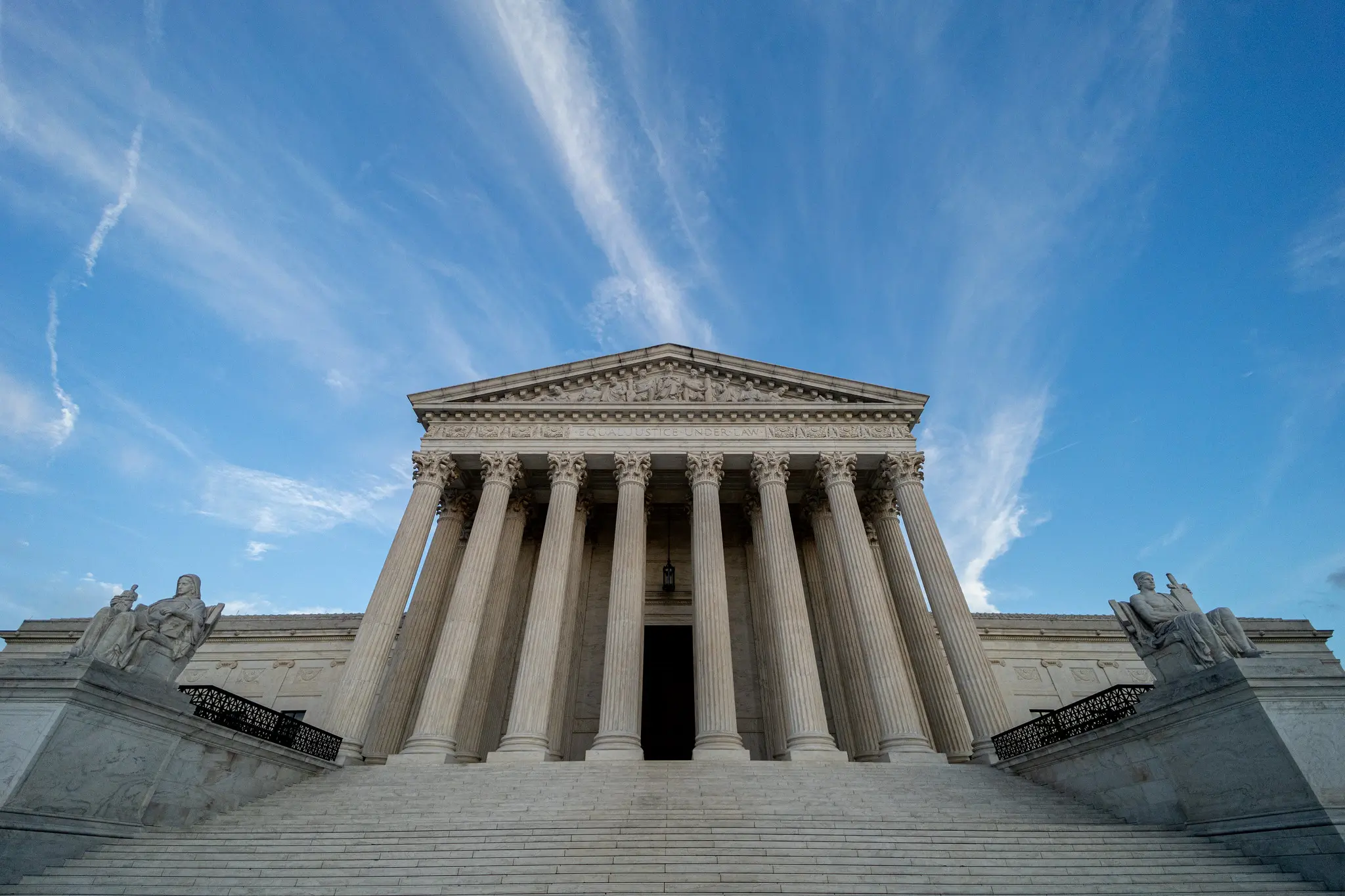

As James Joyner notes this morning, the Supreme Court of the United States stands on the precipice of granting even greater powers to the executive branch to ignore Congress. While we do not know for sure what they will do, their ongoing (and unprecedented) string of deference to the executive via the shadow docket, coupled with things like the 2024 immunity ruling, and their ruling on section 3 of the 14th amendment, suggests that the majority of the Court is willing to continue pouring power into the presidency.
Many commenters have understandably opined that if a Democrat ever wins the presidency again, the Court would conveniently start reversing itself. Perhaps, but I have my doubts that that will be as easy as it sounds.
For one thing, these things are not all switches that can be easily flipped. The Court, for example, needs a case to rule on. If SCOTUS established, for example, that the president can impound funds and then a Democratic president does so, a district court is going to abide by existing interpretations of SCOTUS. Sure, someone can sue, but it will be harder (granted, not impossible) for SCOTUS to immediately change their position in some new shadow docket case that would end up back before them, where they would then have to issue a pretzel-logic opinion.
But let’s assume that they do, in fact, brazenly contradict themselves and do the exact opposite for a hypothetical Democrat than they did for Trump. Such brazenness will simply erode public trust in government, even further, and in the Court in particular. This will provide a potential pathway for some hypothetical Democrats to simply say they are ignoring the Court. It will induce the whole “They have made their ruling, let them enforce it” gambit.
What I am noting here is that the more the system is broken, the easier to becomes to break it further. It is why I keep arguing that we aren’t going back to “normal” and why we seem headed to, at best, a muddled authoritarianism.
Keep in mind that the Supreme Court has no independent power source of its own. It runs off perceived legitimacy in the context of a functioning constitutional order wherein all members of the federal government acquiesce to its rulings. One of the sins of the Roberts era is that the Chief Justice has already allowed a situation in which it is quite clear that the Justices are partisan actors. As such, public confidence in the Court has eroded. A brazen enough set of actions will break public trust and will allow some future president to ignore the Court (and be cheered for doing so by enough of the public).
The Court has no independent source of power outside of the public acceptance that they are acting in good faith within the constraints of the Constitution. They have no guns. They have no direct authority over the populace nor over the government.
They aren’t even elected, so they can’t even make an abstract appeal to some voting constituency, as Congress can.
They rely, as does Congress, on the executive to put their rulings into practice. As such, part of why they can more easily get away with ruling as they are is that it reinforces the desires of the executive.
However, if in some hypothetical future they start ruling against the executive, and in a way that is utterly partisan in its contradictions, who are they going to have rely on to enforce their will?
Put another way: we already have the executive ignoring the legislature, with the judiciary being complicit in allowing that to take place. It is only the arrogance of the Court that seems to be blocking them from seeing that they are teeing up the executive to ignore them next.
The Court’s conservative majority really does seem high on its own supply of arrogance and self-importance. They seem to be forgetting why anyone listens to them in the first place and are proving that an overreliance on an understanding of politics that is based in the mythology of American Exceptionalism is a really bad idea.









