One of the aspects of the current administration that is disturbing and antithetical to the notions of liberal democracy is that the president and his cabinet clearly do not see themselves as public servants who hold their jobs as a public trust. Instead, they see themselves as personally possessing their positions and therefore treat their offices as personal property with which they can do as they please. There is little consideration about the deep responsibilities they hold, nor that they come into service only for a time in a system that preexisted them for centuries and that is supposed to persist when they leave.
James Joyner’s post on the way Russ Vought had handled grants to states that did not vote for Trump is a key example of this. There is no consideration for a broader process, nor for fairness or the public good. There are simply the petty goals of petty men who have finally found their way into power.
A less dramatic story along these lines is the following from the NYT: F.D.A. Panel Supports Lifting Restrictions on Four Peptides, Despite Scientists’ Objections.
So, what are peptides?
Peptides are chains of amino acids that prompt cells to perform actions like decreasing inflammation or increasing collagen production. Some peptides that have been fully vetted by the F.D.A. include drugs like insulin or GLP-1s.
What is the controversy in question?
A panel of advisers to the Food and Drug Administration, several of them sellers of experimental peptides, dismissed the concerns of the agency’s scientists on Thursday, voting in favor of allowing broad production of poorly understood peptide treatments.
By the end of the first day of a two-day meeting, votes on four different peptide products ended in favor of allowing specialized pharmacies to produce and sell the treatments. Votes on three more peptides are scheduled for Friday.
The votes were nonbinding, but they were a rebuke to F.D.A. scientists, who said the risks and benefits of the peptide drugs under consideration had not been sufficiently studied.
[…]
…unproven peptides with names like BPC-157 and MOTS-c have gained a foothold on social media, where users show off their “stacks,” or combinations of peptides, and extol their virtues for weight loss, muscle building and glowing skin. They are often referred to as “peppers” to avoid content moderation.
Some are backed by studies in rodents or in a petri dish suggesting that they could help with wound healing, osteoporosis or inflammation. But a similarly limited set of studies suggests they could cause harm, such as severe allergic reactions or the potential to enhance tumor growth.
There is little to no data on how these peptides work in humans.
“We’re missing safety, we’re missing efficacy — we’re missing the critical evidence,” said Dr. Eric Topol, a cardiologist and the founder of the Scripps Research Translational Institute.
“I don’t have a bias that the peptides are bad, necessarily,” he added. “I just want to see the evidence, and we don’t have any.”
The write-up is full of quotes from prominent medical experts who are opposed to approving these treatments at this time.
Who is in favor?
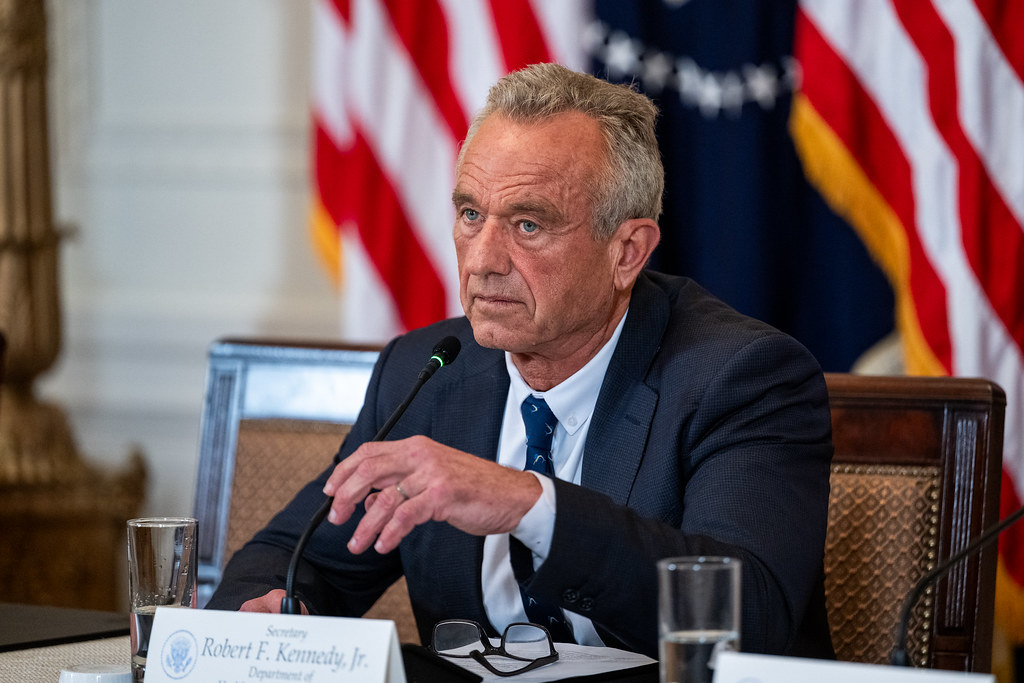
Health Secretary Robert F. Kennedy Jr., who oversees the F.D.A., has long supported lifting restrictions on peptides. In the weeks before Thursday’s hearing, his office nominated eight new members to the committee of academics and doctors that would review the issue, six of whom have sold peptide products, some banned, with health claims backed by minimal science.
[…]
The products, mostly injections, some of which Mr. Kennedy has used and trumpeted, are currently sold as “research grade” products not meant for widespread use. Despite the restriction, they are marketed online for a wide range of claimed benefits, from tendon repair to brain health.
[…]
F.D.A. records show that the six committee members who sell peptides include self-described longevity physicians who market peptides for overall health, and even for some specific diseases. Some of their clinics also offer other unproven treatments such as ozone therapy and energy healing.
[…]
One member, Dr. Gabriel Alizaidy, is the scientific director at Maximus, a telehealth company that sells growth hormone peptides for about $200 per month. The company received a warning letter from the F.D.A. over its claims about compounded weight-loss medications.
Ok, so the proponents include RFK, Jr. (who has no medical training, has admitted to steroid use, and is a big supplement proponent, and once seriously contemplated taking a dead bear back to his house to butcher for the meat), committee members with clear conflicts of interest, and online influencers.
So I will admit, while I was aware of the term “peptide” and could have told you it was a term linked to human biology, and I might have conjured their association with amino acids, but I could not have done much more than that. Indeed, I did not know, or at least did not remember, that insulin and GLP-1s are peptides. I claim no expertise in the science of peptides. I have no personal argument to make about BPC-157 one way or the other.
What I do know about, however, is how government ought to work, as well as something about the generation and propagation of knowledge. Hence, I can readily say the following.
- Policy should not be set based on the personal whims of the Secretary overseeing a department.
- Committees charged with making key policy decisions should not be self-interested in the outcome of their decisions.
- People with real expertise should be providing guidance for decisions about the public good.
- Online influencers should not be guiding or influencing science-based policy decisions.
Am I asking for blind acceptance of expertise? No. But, I am noting that the odds of coming to a good decision are increased when you assemble a team of true experts, and when in doubt, I would trust those with genuine expertise over snakeoil salesmen who make a living as health influencers.
Plus, it doesn’t take a huge amount of education to recognize that there have always been people willing to promise health outcomes beyond what medical science can provide, for a price. Magic elixirs and tonics have always been with us.
One of the things that is interesting to me about items like these peptides is that part of the core appeal is that they sound like super-science, but when the real scientists chime in, the proponents of the treatment don’t want to listen.
And it is worth noting that while Kennedy is willing to push these unproven treatments, he has actively discouraged research in mRNA treatment because he doesn’t like them (the same way he does like these peptides).
Last year, via the AJMC, RFK Jr Axes $500 Million in Funding for mRNA Vaccine Development.
Peter Hotez, MD, PhD, pediatrician and director of the Center for Vaccine Development at Texas Children’s Hospital, said the move advances a “pseudoscience agenda” and undermines the nation’s biosecurity. He emphasized that while all biotechnologies have trade-offs, mRNA is a critical tool during pandemics and in the development of cancer vaccines. Hotez warned that under Kennedy’s leadership, HHS is signaling that the federal government may no longer be a reliable driver of biomedical innovation.
Also via The Conversation: How RFK Jr.’s misguided science on mRNA vaccines is shaping policy − a vaccine expert examines the false claims.
HHS defended its cancellation of mRNA vaccine research based, in part, on a nonpeer-reviewed compilation of selected publications called the COVID-19 mRNA “vaccine” harms research collection. This document lists about 750 articles claimed to describe harms caused by mRNA vaccines against COVID-19. However, the vast majority of these articles aren’t about vaccines but about the harms of getting infected with SARS-CoV-2, the virus that causes COVID-19. And notably absent from it is the huge body of data showing mRNA vaccines actually prevent these harms.
But Kennedy doesn’t like them, so non-peer-reviewed publications are good enough!
What’s more, the mRNA vaccines have a superpower that no other type of vaccine can currently match: They can be quickly updated and manufactured within two to three months. To develop a whole-virus vaccine, researchers must first spend months isolating and propagating the virus. Conversely, making an mRNA vaccine requires just sequencing the virus’s genetic code – a process that today takes just hours.
If a new pandemic began today, mRNA vaccines are currently the only type of vaccine that could be developed quickly enough to disrupt its spread.
Thirty years ago, when scientists first started developing mRNA vaccine technology, they recognized its potential to overcome major limitations of whole-virus vaccines – namely, slow production time and more limited ability to protect from new viral variants. Today, mRNA vaccines are also being developed to prevent or treat diseases including HIV and cancer, as well as autoimmune and genetic diseases.
Of course, this technology can be further improved. New mRNA vaccine technologies are aimed, among other things, at making mRNA vaccines easier to store to allow for faster distribution and reduce their short-term side effects, eliminate the rare risk of myocarditis and more quickly block a respiratory infection.
So, because Kennedy doesn’t trust this technology (you know, for reasons), the US government is eschewing research that could help in future pandemics, as well as provide cancer treatments, among other things.
And, of course, we have already seen the effects of Kennedy’s general views on vaccines.
The lesson is obvious: don’t elect self-serving venal people to the presidency who don’t care about the solemn job they are seeking. Sadly, there are still too many voters out there who refuse to accept this fact (and too many media personalities whose checks are dependent on convincing everyone otherwise).