
Teaching the Federalist Papers
If we taught the Federalist Papers more rigorously would that lead to a shared view of the constitution?
If we taught the Federalist Papers more rigorously would that lead to a shared view of the constitution?
Obama has an advantage in what is likely to be one of the most important states in November’s election, but the race is far from over.
The biggest argument against Romney winning in November is the fact that there aren’t many ways for him to get to those pesky 270 Electoral Votes.
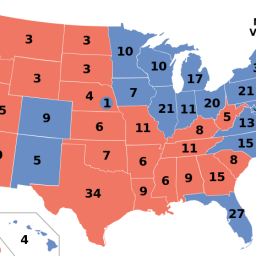

Six states are likely to decide the 2012 election.
Yes, the US Constitution has been the most successful such document in human history. That does not mean it is a good template for other countries.
Things aren’t all sunshine and roses for the Obama 2012 campaign.
A record number of Americans don’t consider themselves a member of either party.
The former Utah governor will almost certainly never be the GOP nominee. But someone like him will be soon.
Looking back at the Electoral College results of the modern era–and ahead to November.
Ohio voters overwhelmingly rejected a Republican law restricting the collective bargaining rights of public employees–and also rebuked the health insurance mandate central to ObamaCare.
The Electoral College doesn’t matter in the way pundits think it does.
Despite the seeming odds against him, the Electoral College map is very favorable for President Obama.
Based on the numbers, Barack Obama is an immigration hawk.
Rick Santorum: naked partisan. (Although, really, this is more a post about the EC than it is about Santorum).

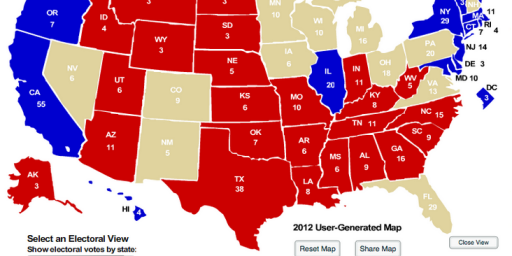
A book could be written on this subject, but let me suggest the following as a good place to start
Of the institutions designed by the Framers, the electoral college is the one that deserves the least amount of defense if one’s defense is predicated on assumptions of the genius of said framers.
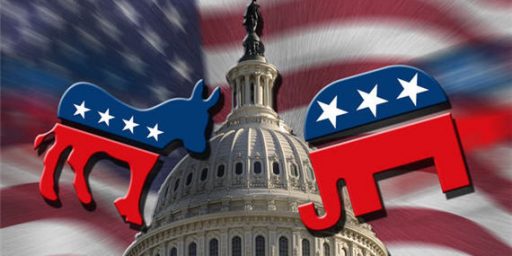
Allocating Electoral Votes by Congressional District is an idea whose time has come.
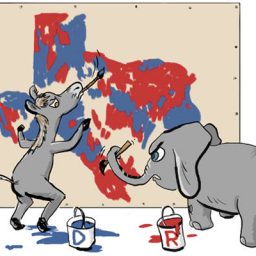

Republicans have a plan to wrest half of the Keystone State’s electors from Obama.
Is the GOP race really down to just two men at this point?
We often conflate intentionality with design. However, even designers may not fully understand how what they have created will work.


The US came a lot closer to something resembling a parliamentary system than most people think.
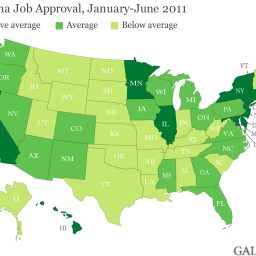

State-level job approval numbers seem to suggest that the President could have Electoral College worries in 2012.
Looking at the state-by-state map way too early.
The “super committee” created by the debt ceiling deal is already the subject of criticism, most of it unwarranted.
Condi Rice’s speechwriter thinks Huntsman can appeal to the Tea Party.
The electoral map should be making the Obama 2012 camp just a little bit nervous.
Steven Metz muses, “Scholars argue that too much political mobilization can make democracies dysfunction. Is that where the US is today?”
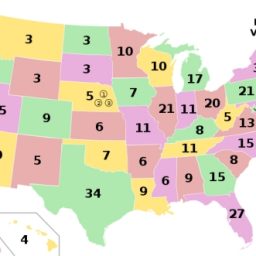
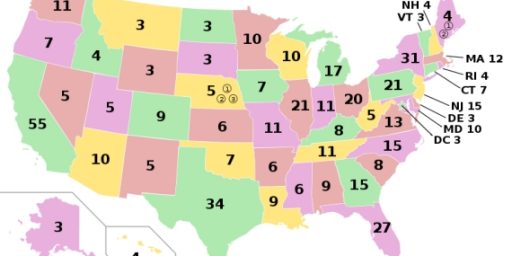
Sunday afternoon musings on an electoral college sweeps.

Sandy Levinson suggests that there is a key lesson from the Founders that we ignore.


Unemployment was high when Barack Obama took office and it’s gotten substantially higher. Does that mean he won’t get re-elected?
To the shock of no one, Mitt Romney announced his bid for the GOP presidential nomination today.
Erick Erickson questions Jon Huntsman’s loyalty to America.

Arizona’s so-called “Birther Bill” seems to violate several provisions of the Federal Constitution.
A new set of polls from Gallup show that President Obama is still looking good for re-election.
The Republicans are increasingly the party of white America. That’s short term good but long term bad for the GOP.
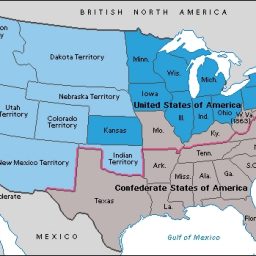
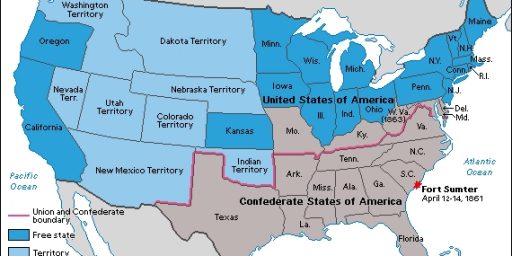
150 years ago today a group of men gathered in Charleston, South Carolina and made one of the gravest mistakes in American history. They should not be honored for it.
New York Mayor Michael Bloomberg says he isn’t running for President, but he’s sure acting like a guy who’s at least thinking about it.
Would returning to indirect election of Senators really have a significant impact on the growth of the Federal Government? Probably not.
Meg Whitman and Carly Fiorina didn’t lose because of corporate baggage or resentment over how much they spent on their campaigns but because they were Republicans.
New York City Mayor Mike Bloomberg thinks a President independent of either political party would be a good idea. Is he right?