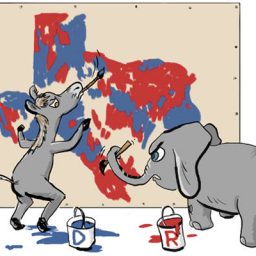

Supreme Court Agrees To Hear Case On Partisan Gerrymandering
The Supreme Court has agreed to hear its first case on partisan gerrymandering in more than ten years, but opponents of the practice shouldn’t start celebrating just yet.


Supreme Court Rejects Racially Gerrymandered Districts In North Carolina
An important redistricting decision was handed down by the Supreme Court today.
The Power of Primaries
As usual, an attempt to explain congressional behavior brings us back to the issue of our basic institutions. The way we elect congress matters.


Bureaucratic Insurgency
There are growing signs that the Deep State is seeking to thwart legal orders from President Trump. This is dangerous.
Republicans Maintain Control Of Senate
Defying the odds, Republicans held on in several traditionally Democratic states to keep control of the Senate.


Obama’s Lame Duck State Of The Union
President Obama’s final State Of The Union Address was largely a recognition of the fact that his time on the world stage is quickly coming to an end.


SCOTUS Accepts Virginia Redistricting Case That Tests Use Of Race And Politics In Drawing Lines
The Supreme Court has accepted for appeal a Virginia case that deal with the issue of using race and politics as a basis for drawing district lines.
The Party of Reagan on Immigration
A 1980 debate between Ronald Reagan and George H.W. Bush shows a different GOP.
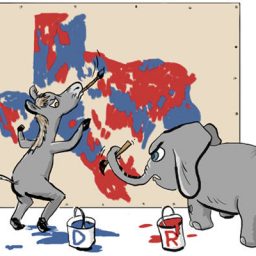

Supreme Court Approves States Outsourcing Redistricting to Commissions
SCOTUS has upheld the use of election commissions to draw Congressional district lines.

Supreme Court Upholds Campaign Finance Limitations In Judicial Elections
In a marked departure from recent cases, the Supreme Court rules that states can impose significant restriction on solicitation of campaign contributions in judicial elections.
Supreme Court Justices Skeptical Of Non-Legislative Redistricting
The Supreme Court seems likely to strike down state laws that take redistricting completely out of the hands of state legislatures.
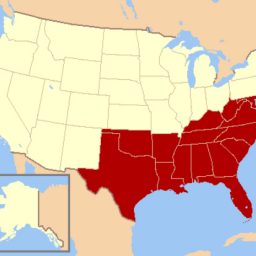

In The Wake Of Midterm Losses, Some On The Left Say Democrats Should Write Off The South
Some on the left are suggesting Democrats should write off the South for the foreseeable future, but that would be as foolish as Republicans assuming that their dominance in the region will last as long as Democratic dominance did in the century after the Civil War.
Republicans Have Little Incentive To Move Forward On Immigration Reform
Despite conventional wisdom, there remains little incentive for the GOP to change its position on immigration reform.
Noncompetitive House Elections
My ongoing crusade to spark thought and discussion on the quality of representation in the US Congress.
Federal Court Voids Virginia Congressional Map
A Federal Court has given legislators in Richmond a complicated job.
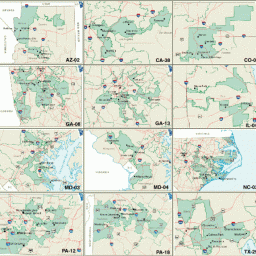
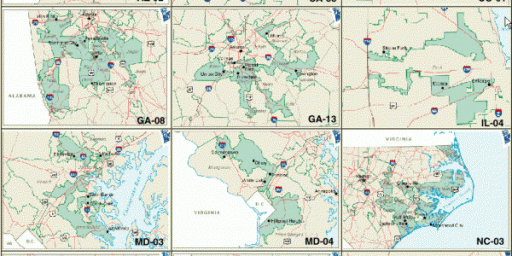
Why Debating Districts Misses The Larger Point
There are plenty of other factors that help our two major parties retain power.




Good Government Reforms Gave Us Bad Government
Recent anti-corruption measures have contributed to making American government worse.
Want To Understand The GOP Hardliners? Talk To Their Constituents
To borrow a phrase from Stephen Colbert, if you want to understand how Congress works, you better know a District.
More Evidence Of The Political Risk To The GOP In A Shutdown
With just hours to go, the Republicans on Capitol Hill seem prepared to take a big political risk.
If Everybody Hates Congress, Why Do They Keep Re-Electing The Same People?
Americans tell pollsters that hate Congress, but they never seem to do anything about it.


SCOTUS: ‘Can’t Rely on Past’ for Voting Rights Act
The Supreme Court today struck down the most controversial part of the Voting Rights Act of 1965.
Republicans Haven’t Learned The Lessons Of 2012
The GOP seems to be making the same mistakes that led to defeat in 2012.
John Dingell And The Problem With Long-Term Incumbency
As of today, John Dingell has been a Member of Congress for 20,997 days, a new record. That’s not something to celebrate.

Judging Presidents (and Thinking about Institutions)
Because sometimes poorly contructed observations can set a fellow to writing.

The Sequester, Moving Goalposts, and the 2012 Elections
Ezra Klein argues that the voters already decided how the sequestration fight should play out.
Allocating Electoral Votes By Congressional District Is A Bad Idea
Some proposed reforms just need to be ignored.
Institutions Matter: Just Look at the Congress
Representative democracy is a process of delegation of power to agents who act on behalf of citizens. The process of delegation matters.
Congressional Gridlock And The Disappearing Swing District
There are very rational reasons behind the current gridlock on Capitol Hill.


House And Senate Incumbent Re-Election Rates Top 90%
If you’re a Member of Congress, the odds are pretty good that you’re going to stay one.
A Map Is Worth A Thousand Votes
Democrats are approaching an “Electoral College lock.” Republicans are trying to pick it.




The Economy And The 2012 Elections
It isn’t just President Obama who should be worried about the economy next year.


Gerrymandering in Illinois
While Gerrymandering Congressional districts to benefit incumbents and the dominant party in the state legislature is an old game, they play it with especial intensity in Illinois.
Racial Gerrymandering and Idiots
Cynthia Tucker regrets her support for majority-minority districts.


Republicans Losing the Center?
Can a candidate appealing enough to the base to win the Republican nomination beat Obama?
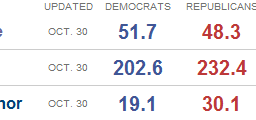
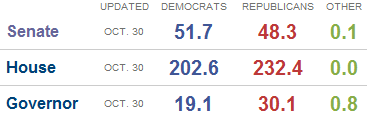
Redistricting and Race
While Republicans will likely take over some key governorships and state legislature after November’s midterms, America’s changing demographics will limit their ability to gerrymander safe districts.