
June Jobs Growth Slightly Above Expectations, But Not Spectacular
Total nonfarm payroll employment increased by 213,000 in June and the unemployment rate rose to 4.0 percent.
Total nonfarm payroll employment increased by 213,000 in June and the unemployment rate rose to 4.0 percent.


The Federal Government will borrow more than $1 trillion this year for the first time in more than a half-decade.
Barbara Bush, only the second woman in history to be the wife and mother of a U.S. President, has died at the age of 92.
We’re set to return to the era of trillion dollar budget deficits, and Republicans won’t do a thing about it.
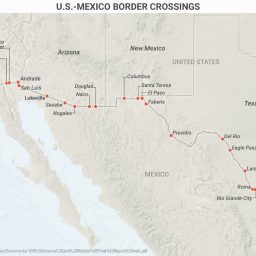
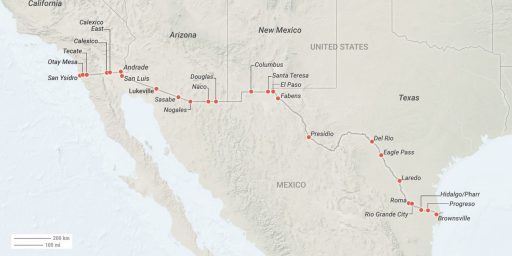
The answer is, of course, no. Really, this is a post about the wall as policy.


The DJIA (and other markets) are not too happy about all of this trade war talk.


A better than expected jobs report for February, but wage growth slowed for the month.
Congress seems likely to pass a budget deal today that will massively increase spending, putting to rest once and for all the rank hypocrisy of Republicans when it comes to claims that they are “fiscally conservative.”


Donald Trump spent much of the past year touting the rising stock market, now he’s getting a lesson in reality.
With Republicans fully in control in Washington, their concerns about the budget deficit seem to have disappeared.
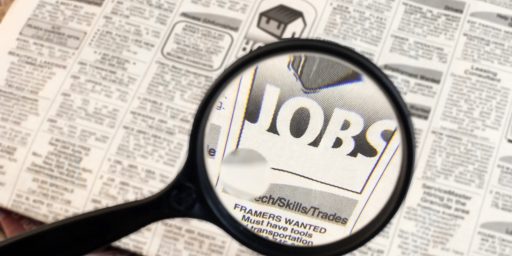
The first jobs report for 2018 beat expectation slightly, but the most positive signs came in the underlying data on wages.
The economy grew in the final quarter of 2017, but at a slower pace than earlier in the year and far slower than what the President has promised.
Contrary to expectations, jobs growth in December was relatively modest.
November’s Jobs Report was stronger than expected, but there are several caveats to keep in mind.

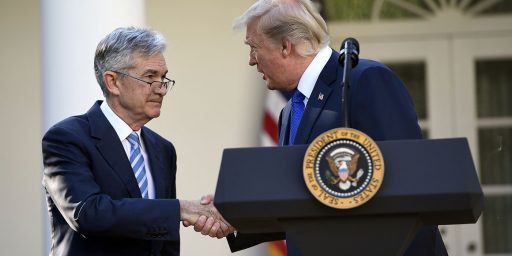
President Trump has selected Jerome Powell, a member of the Federal Reserve’s Board of Governors, to replace Janet Yellen as Chairman.

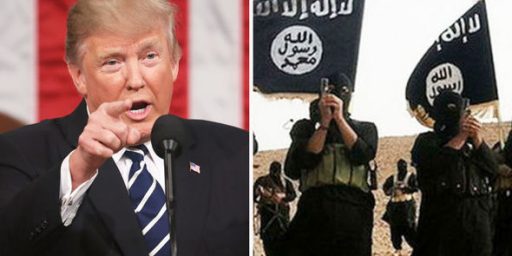
Another day, another Trump lie.
August’s Jobs Report came in below expectations.
The new GDP growth estimate shows healthy economic growth in the second quarter, but it’s unclear if it can be sustained.
July’s jobs report beat expectations, but the underlying numbers aren’t entirely positive either.
Donald Trump is the most unpopular incoming President in more than eighty years.
The first scorecard for President Trump’s first economic quarter in office isn’t exactly very good.
After starting the year with two good months, the jobs report for March was quite disappointing.
So far, there’s no sign that Donald Trump is having much of an impact on the economy.
For only the third time since the Great Recession ended, the Federal Reserve Board has raised interest rates.
At Congressional town halls across the country, there are signs of what could turn into a movement that would cause real headaches for the GOP in future elections.
The first Jobs Report of 2017 saw healthy jobs growth in January, but there are signs we may be reaching a point where hiring could slow down.
A movement motivated by hurt and fear turned into a political force eight years ago. Can another follow suit?
A speech traditionally used to unite was instead a continuation of a divisive campaign.
The economy grew strongly in the third quarter of the year, but it doesn’t seem likely to last.
Another month of solid but not spectacular jobs growth seems to guarantee that the Federal Reserve will increase interest rates this month.
Another month of resilient, but not noteworthy, jobs growth.
The September Jobs Report continues to show an economy that is growing to some degree, but hardly growing as fast as it should be.
An unsurprising decision from the Federal Reserve.
Another sign of a weak economy as the Federal Reserve considers rate hikes and the Presidential campaign moves forward.
The July Jobs Report was largely a continuation of the good news from June, but the question is how long that can last.


We’re further from a public option than we were in 2009. The need for it has become more acute.
Many pundits are arguing that the victory for ‘Leave’ presages good news for Trump in November, but there’s no reason to believe that.
The head of the Federal Reserve tells Congress that the economy is unlikely to enter recession this years, but isn’t exactly going to be booming either.
Once again, the Federal Reserve chooses to pass on the opportunity to raise interest rates.
The May Jobs Report was bad all-around. The question is whether this will come to be seen as an anomaly or the beginning of a worrisome trend.
After starting off the year strong, the jobs market seems to have taken a rest in April.
Primary turnout is not predictive of general election outcomes.
Both Donald Trump and Ohio Governor John Kasich face big tests in tomorrow’s Michigan primary.
February’s Jobs Report was relatively positive, but there are still shadows hovering over the economy as we head further into the year.
An anemic end to 2015 raises concerns about the health of the economy going forward.

