Barack Obama: Right About Iraq, Wrong About Syria
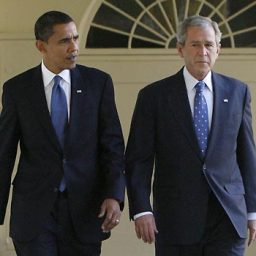
President Obama seems to have forgotten the words of a certain Illinois State Senator back in 2002.
President Obama seems to have forgotten the words of a certain Illinois State Senator back in 2002.


A proposed Syria authorization being considered in the Senate places several limits on Presidential authority to act, but it’s unclear if those limits can actually work.
Not surprisingly, Congressional leaders on both sides of the aisle are lining up behind the President in the debate over Syria.
The president’s public dithering on Syria is drawing jeers from friend and foe alike.
Will Congress now take some responsibilty?
Raymond Pritchett longs for the good old days of Tom Donilan, Hillary Clinton, and Leon Panetta.
Some questions that the Administration needs to answer before attacking Syria.
Presidents have gotten away with ignoring Congress when it comes to foreign military adventures for a very long time.


Could anyone have imagined a decade ago a scenario when the United States would go to war with France by our side and England on the sidelines?
Some Members of Congress are calling for a debate before any strikes on Syria. They’re absolutely right.
The United States will go to war without UN or NATO approval.
The White House confirmed today that the goal of any military intervention in Syria would be very limited. Which makes one wonder what the point of doing anything actually is.
There’s more than one way to look at the civil war in Syria.
We’re almost certainly going to launch punitive strikes against Syria. They’ll almost certainly be ineffective.
United States helped Saddam Hussein launch some of the worst chemical attacks in history against Iran.
John Kerry’s speech was the crossing of the Rubicon for US military action in Syria.
Western military action in the Syrian civil war now appears likely.
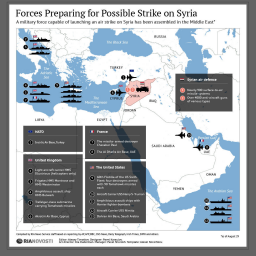
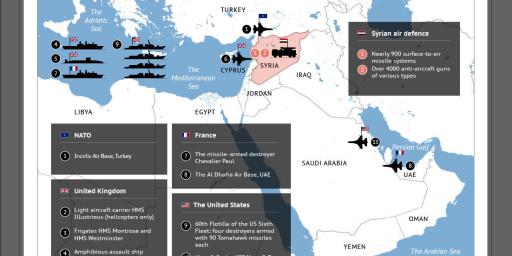
As President Obama’s red line has been crossed more brazenly, he continues to sound reluctant to intervene in Syria while positioning forces to do just that.
Walter Russell Mead explains why a well intentioned, carefully crafted and consistently pursued grand strategy failed.