

Of the bad ideas I’ve heard this week, this one ranks right up there with drinking household cleaning products to cure coronavirus.
NYT (“Trump Speech to Bring 1,000 West Point Cadets Back to Campus“):
For President Trump, who adores the pomp and precision of military ceremonies, this was the year he would finally get one of the special perks of being president — delivering the commencement address at West Point, the only service academy where he has not spoken.
But the graduation was postponed because of the coronavirus, the cadets were sent home and officials at the school were not sure when it would be held or even whether it was a good idea to hold it.
The Naval Academy, for its part, decided it was too risky to recall its nearly 1,000 graduating midshipmen to Annapolis, Md., for a commencement. Those graduates will have a virtual event. But the Air Force Academy, in contrast to the other schools, sent home its underclassmen, locked down its seniors on campus, moved up graduation, mandated social distancing — and went ahead with plans for Vice President Mike Pence to be its speaker.
And so last Friday, the day before Mr. Pence was to speak at the Air Force ceremony in Colorado, Mr. Trump, never one to be upstaged, abruptly announced that he would, in fact, be speaking at West Point.
That was news to everyone, including officials at West Point, according to three people involved with or briefed on the event. The academy had been looking at the option of a delayed presidential commencement in June, but had yet to complete any plans. With Mr. Trump’s pre-emptive statement, they are now summoning 1,000 cadets scattered across the country to return to campus in New York, the state that is the center of the outbreak.
[…]
He spoke at Annapolis in 2018, and when he addressed the Air Force Academy graduation last year, the president stayed and shook hands with all 1,000 cadets. But it is West Point that holds special significance to Mr. Trump, aides said. A graduate of the New York Military Academy, he looks upon the West Point graduates serving in his administration with the same admiration he has for anyone with Ivy League credentials.
It had been a longstanding plan that the president would deliver the commencement speech there in late May, White House officials said, adding that after the event was postponed, they were still in talks with the academy about finding a new date.White House officials said Mr. Trump left it up to the school to decide whether it was safe to hold a graduation ceremony in June, and pointed out that he could always reassess his decision closer to the date if the coronavirus crisis made it impossible for him to attend.
But his appearance at West Point, while not in any way unusual or unexpected, had yet to be announced.
Indeed, after all the West Point cadets were sent home for spring break in March, Lt. Gen. Darryl A. Williams, the West Point superintendent, ordered a working group there to draw up options — much like a battle campaign — for what to do about graduation, summer training and initiation day for incoming cadets.
One option included a delayed presidential commencement speech in mid-June, but nothing had been decided, academy officials said.
That is, nothing had been decided until last Friday, April 17, when, at a news conference, Mr. Trump was asked about Mr. Pence’s coming trip to the Air Force Academy in Colorado Springs.
Mr. Trump told reporters that he would be speaking at the West Point graduation in the near future, noting that he did not like the look of a socially distanced graduation and that he hoped the “look” of the ceremony would be “nice and tight.” He did not announce a date for the event.
[…]
West Point officials say the size and scope of the ceremony will be determined “by safety considerations for cadets and the entire West Point community.” Academy officials say they have not yet decided whether parents or other visitors will be allowed to attend.
General Williams said in a telephone interview that returning seniors would be tested off-campus for the coronavirus. Those who test negative will then be sent to the school, where they will be monitored for 14 days before graduation. While the campus has enough dormitory rooms for the 1,000 seniors, General Williams said that he was still deciding whether seniors would share bedrooms on their return.
“All 1,000 of them will not intermix,” he said. “They’ll be in their rooms. They’ll have their masks on. Groups will be segregated in the mess hall when they eat.”
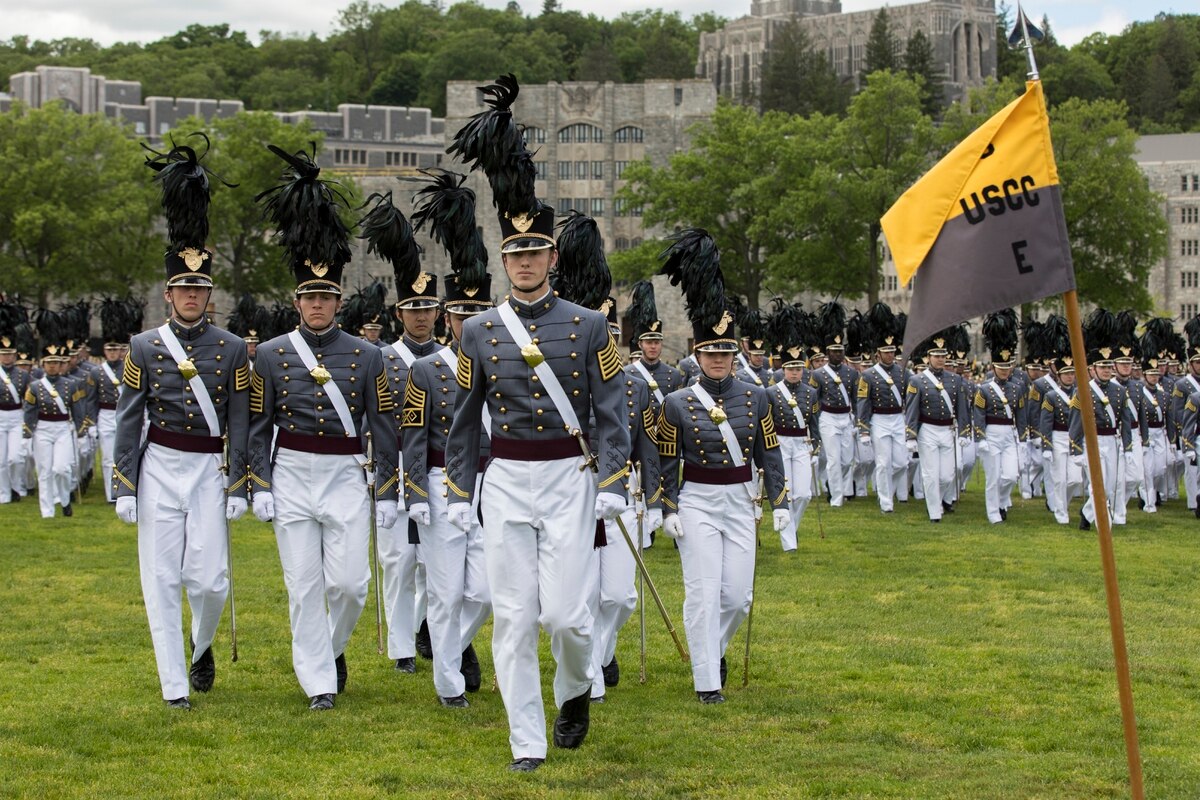
Graduation events hold special significance, especially at a place like West Point so steeped in tradition and ceremony. Wearing their full dress uniforms for one last time, tossing their hats into the air, and being commissioned as second lieutenants in the United States Army is a culmination of four years of hard work. And, certainly, being addressed by the Commander-in-Chief adds to the grandeur of the occasion, regardless of one’s feelings about any particular officeholder.
But this is a once-in-a-century crisis. Robbing the cadets of their special moment is terrible but hardly the biggest sacrifice they’ll be called on to make in the service of the country. And we’re doing it for pretty much every high school and college senior in the country.
The cadets, like all Defense Department employees, are prohibited from official travel until June 30. The report says they’ll need waivers, although one presumes an order from the President to report to work should suffice.
The report also quotes a spokesman saying the cadets would have needed to return to campus “at some point” to take final exams, pick up their belongings, and out-process. But every other college in the country is figuring out how to administer exams remotely. A team of people already there can box up their crap and ship it to them. And out-processing can be waived. Collect all of the Academy’s property, ask cadets to mail back library books when they can, and call it good.
The President loves pomp and ceremony and this could well be his last chance to address a West Point class. But, again, that’s hardly the biggest sacrifice that would be made during this crisis.








