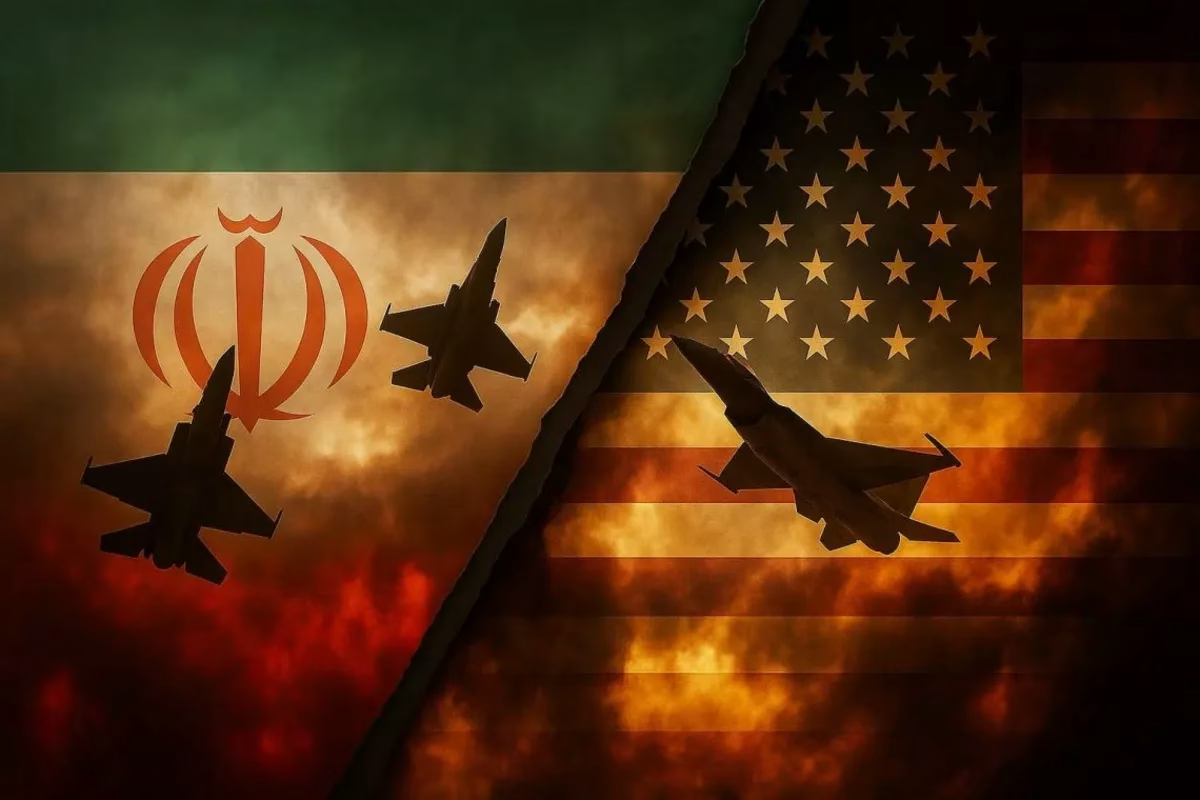
NYT (“U.S. and Israel Draw Up Plans for Renewed Strikes on Iran After Elections“):
The U.S. and Israeli militaries have developed specific plans for renewed strikes against Iran after the American midterm elections, according to U.S. officials and other people briefed on the deliberations.
The U.S. midterms are on November 3, twelve days from now. It’s worth noting that Israeli elections, which will determine not only Benjamin Netanyahu’s political future but possibly whether he stays out of jail, are on 27 October—just five days from now.
Leaking the possibility of an escalation may well help Netanyahu, who’s running as a wartime leader. An escalation after the U.S. elections, which are widely anticipated to be a rebuke of two years of Republican governance, including the disastrous war effort, would speak to the unaccountability of presidents—especially lame duck Presidents—under our system.
As planning for a short but intensive operation progresses, the U.S. and Israeli militaries have stepped up exercises, flying planes over Iraq to practice strike maneuvers. Defense Secretary Pete Hegseth met with Prime Minister Benjamin Netanyahu in Israel this week to discuss new strikes, U.S. officials said.
The targets would likely include Iran’s energy infrastructure, nuclear facilities, and missile and drone arsenal. Some officials say one more big round of attacks could push Iran’s economy over the brink and force the country to make diplomatic concessions after nearly eight months of conflict.
On the one hand, the war has been at a standstill for months, with the Strait of Hormuz barely open. Something has to be done to break the impasse. On the other, striking civilian energy infrastructure may well be a war crime. And there’s no reason to think limited air strikes will do what massive air strikes didn’t.
Still, there are reasons to be skeptical that a renewed war would be any more successful than the first phase of intense U.S.-Israeli strikes between February and April. Those rounds of fighting drove up energy prices and inflation around the world, eroded security in the Middle East and severely strained the Pentagon’s supply of missile interceptors.
It is also far from certain Mr. Trump will approve fresh strikes. Repeatedly this year he has vetoed plans for a return to major combat operations, including this month when the U.S. and Israeli militaries were nearly ready to attack.
Vetoing doubling down on a failed policy is a good thing. The opposite, I’m reliably informed, is the definition of insanity.
Iranian officials have promised to retaliate this time by expanding their targets beyond commercial ships and energy infrastructure in the region to data centers and underwater internet cables.
They say the fighting will neither be quick nor limited.
By definition, it will be limited. And there’s no reason to believe they haven’t exhausted their bag of tricks already.
While the United States is assembling a massive arsenal that will be fully in place by early November, diplomatic efforts have continued, as U.S. negotiators use the potential return to war as leverage with Iran to make progress on their demands on its nuclear program and control over the Strait of Hormuz.
So far, however, Iran’s negotiators have been unwilling to make concessions on the nuclear program, insisting on deferring that issue until later in the talks.
Some U.S. planners are convinced that an intensive three-day campaign could cause enough economic damage to change the Iranian position.
I’d be really interested in what could possibly make them believe that. It’s certainly possible that there is some intelligence that I haven’t been made privy to.
But U.S. officials have frequently predicted Iran’s collapse, and other Western officials noted that Iran’s government has so far weathered the pressures on its economy.
“At this point in the war, what is clear is that the conventional military campaign waged to date, and the current punishing economic sanctions and American naval blockade, have not brought the regime back to the negotiating table in a meaningful way,” said Dana Stroul, who served as the Pentagon’s top Middle East policy official in the Biden administration.
Neither Mr. Trump nor Mr. Netanyahu “has made a compelling case for how more war would change this strategic dilemma in an increasingly unstable and conflict-ridden region,” said Ms. Stroul, who is now with the Washington Institute for Near East Policy.
I am not a Middle East scholar, nor have I been asked to serve as a policy official by any administration. But I share that assessment.
This is an existential matter for the regime and merely a war of choice for the United States and Israel. They know we don’t care enough about the outcome to send in ground forces. And the decision-makers have proven quite willing to let the Iranian citizenry suffer.
So, our options are exceedingly limited.
Some officials say the targeting will avoid refineries and oil infrastructure because Mr. Trump is eager to prevent even higher gas prices.
Both the U.S. and Israel militaries are drafting plans for operations against Iran’s nuclear program, according to people briefed on the work. That could include an attack on Pickaxe Mountain, a deeply buried nuclear site that Iranians call Kooh Kolang.
Mr. Trump said last week that he was considering using a 22,000-pound GBU-43/B Massive Ordnance Air Blast bomb, or MOAB, against Pickaxe. Officials say Mr. Trump is enamored with the weapon in part because of its nickname, Mother of All Bombs.
But weapons specialists say that the MOAB explodes above ground, producing a wide blast, and would not likely destroy an underground site like Pickaxe, which is composed of granite. Military officials also warn that the bomb must be delivered by a slow-flying MC-130 transport plane that would be vulnerable to Iranian antiaircraft fire.
One presumes we’ll take out whatever integrated air defense capabilities they have. But a low-flying MC-130 would be vulnerable to man-portable systems.
Israel and the United States came close to striking Iran early this month, but Mr. Trump again decided at the last minute to postpone the attack, according to U.S. and Israeli defense officials familiar with the details. The decision came shortly before the operation was to begin, after both militaries had made extensive preparations and placed their air forces on the highest state of alert.
The repeated planning efforts followed by Mr. Trump’s decisions against new attacks has caused “day-to-day whiplash” among military planners, said one commander, who spoke on the condition of anonymity to discuss operational matters, as they try to stay poised to carry out whatever military option Mr. Trump decides in the coming weeks.
This is another advantage the Iranians have in this standoff. In order for military attacks to be a credible stick during negotiations, forces have to be postured. As the recent controversy with the U.S.S. Abraham Lincoln demonstrated, that can only be sustained for so long before forces are rotated. The months-long quasi-ceasefire, therefore, has redounded to Iranian advantage at a heavy toll on U.S. readiness.
In each round of the war so far, Iran’s leadership has become less conciliatory, convinced that the ultimate U.S. and Israeli goal is to topple its government.
Iran’s new supreme leader, Ayatollah Mojtaba Khamenei, remains an enigma to U.S. and Israeli intelligence officials. Some officials say he is not as powerful as his father, who was killed early in the war, and that hard-line members of Iran’s Islamic Revolutionary Guards Corps make key decisions.
Iranian officials say they are aware of the American war planning and have been developing their own new targets and tactics.
Peiman Salehi, a political analyst in Tehran, said that if Pickaxe is attacked, part of Iran’s plans to retaliate would be to strike major oil refineries in Saudi Arabia, including Aramco, because that would immediately spike oil and energy prices.
“The war has made us understand that the best leverage for pressuring Trump is increasing oil and energy prices because it will hurt the American people,” Mr. Salehi said.
The long standoff has also given Iran ample time to regenerate forces. And, again, our demonstrated desire to limit the fighting to standoff forces gives us limited options.