

Debating whether we should repeal the 17th Amendment — a moot topic that’s so two weeks ago — Ezra Klein asserts that,
The Founders didn’t wisely orient the Senate around states. They pragmatically oriented the Senate around states. But now that we’ve been the United States of America for a while and none of the states seem likely to secede, the fact that California has 69 times more people than Wyoming but the same representation in the Senate is an offensive anachronism, at least to Californians.
Bruce McQuain retorts that this is “silly” and that, rather than being a pragmatic compromise, “It was instead, a very carefully designed system of government.” He goes on to cite Madison’s eloquent arguments for that advantages of a Federal form of government over the existing Confederal form or the alternative National form. Brian Darling concurs, saying that Klein’s view “maligns” the Founders and that his being perplexed at the veneration for them “is truly outrageous.”
Neither the view that the Framers were purely pragmatic nor the idea that they were philosopher kings is quite right. They were, instead, politicians and statesmen very much steeped in the cutting edge philosophical debates of the Enlightenment.
Of course the Great Compromise (or Connecticut Compromise, as it’s sometimes known) was a pragmatic political position. It has Compromise right in the name, after all. The representatives of the more populous states naturally wanted a system that advantaged them and were able to marshal perfectly valid Enlightenment arguments in favor of their position. Conversely, the representatives of the smaller states rightly argued that they came to the table as sovereign equals, just as would be the case in an international treaty between France and England, and that the number of citizens in a sovereign state really had nothing to do with their equality. With neither extreme able to get the necessary votes to form something better than the fallback position, the Articles of Confederation, a compromise position carried the day.
This doesn’t mean that the bicameral system that the devised to make the compromise viable wasn’t grounded in brilliant political theory. Indeed, it was. Montesquieu’s tripartite theory of separation of powers, available in English only in 1750, was fresh on their minds.
But it’s a mistake to think of the Framers as a monolith. Again, they were politicians with different beliefs and representing constituencies with different interests. Even the authors of the Federal Papers, which were originally a series of newspaper editorials arguing for the ratification of the Constitution, differed substantially amongst themselves. Additionally, it’s fair to say that the arguments contained therein were a post hoc rationalization; that is, they defended the compromise document achieved in Philadelphia, not necessarily their ideal system of government.
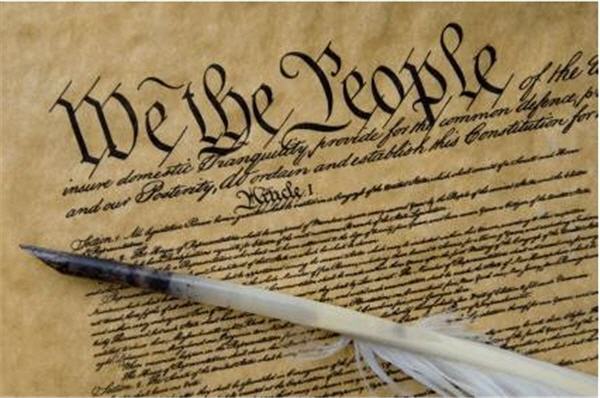
As to the idea that it’s “outrageous” to question the wisdom of continuing practices written onto parchment by the geniuses of 1789, it’s simply nonsense. Certainly, Jefferson, he of “refresh the tree of Liberty” fame, would scoff at the idea. They were very wise men crafting a political system to serve the needs of their time, not all-knowing oracles of the future.
We’ve already formally amended the document 27 times (18 times if one wishes to count the Bill of Rights as a single amendment) and informally amended the system created by the Framers thousands of times through judicial interpretation, neglect, and cultural change. We went, for example, from a system of appointed presidents to elected ones without amendment. We went from manhood suffrage reserved to white property owners to near universal suffrage for non-felons over 18.
As Steven Taylor correctly notes in “Repeal the 17th Amendment?” our society is radically different from the one the Framers knew. States are simply not the quasi-sovereign city states they were in 1789 and haven’t been since the Reconstruction Era. It really doesn’t make much sense for the citizens of Wyoming to have 69 times the per capita representation in the Senate as their countrymen in California. If we can get enough political support to get over the massive hurdles to amend the Constitution to change this — we can’t, by the way — then it’s no disservice to the Framers to do so.









