NYT chief White House correspondent Peter Baker (“For Trump and America, a Clear Election Verdict Leaves a Murky Future“) frames the moment perfectly:
If Donald Trump is still processing the election that swept his party from power in Congress last week, so too is Donald Trump’s America. Both parties are still absorbing the stunning reality of sweeping Democratic victories in states like Texas, Kansas and South Carolina that were long G.O.P. strongholds — and possibly even Mississippi.
But as clear as the midterm verdict was, the future is cloudier. After a decade in which Mr. Trump has dominated national politics, the country now faces a period of profound uncertainty, an interregnum between the time that Americans effectively decided that they were done with Mr. Trump and the time when he is actually done.
How does an unpopular, lame-duck president spurned by the electorate govern in his final two years in office? How does a shattered Republican Party rebuild itself for a post-Trump era while Mr. Trump himself is still around and unwilling to cede the stage? How do newly empowered Democrats use their new majorities in Congress and define themselves beyond simply being the anti-Trump party?
We are, effectively, in the post-Trump era. But there are still two years of Trump’s presidency ahead of us. And who knows how long he’ll continue to have sway with Republican primary voters.
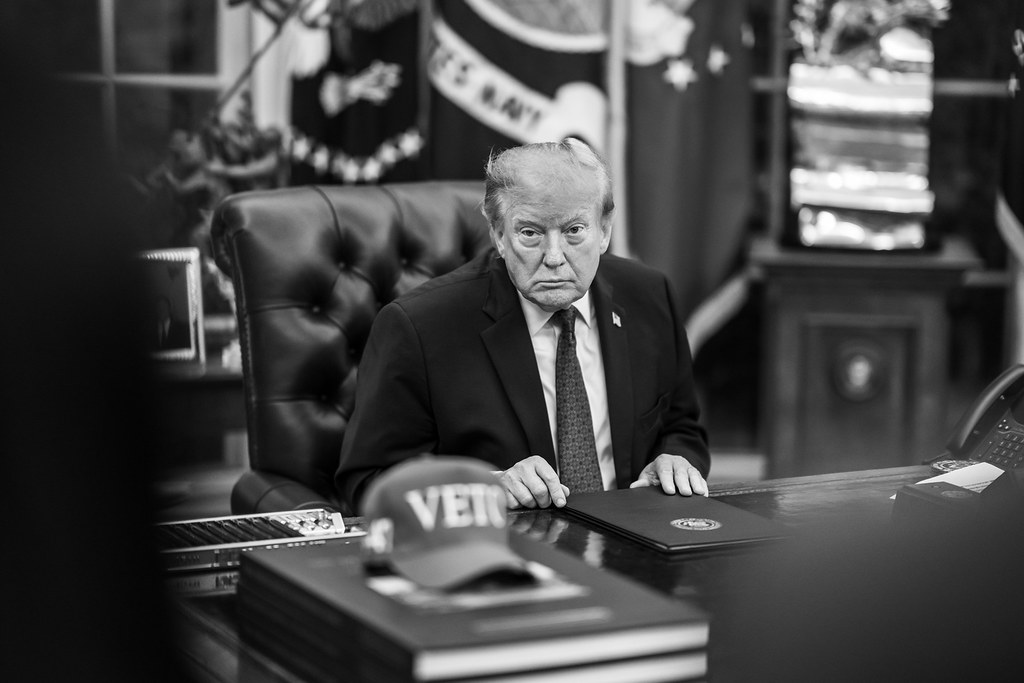
Mr. Trump may be wounded, but a wounded animal can thrash around powerfully.
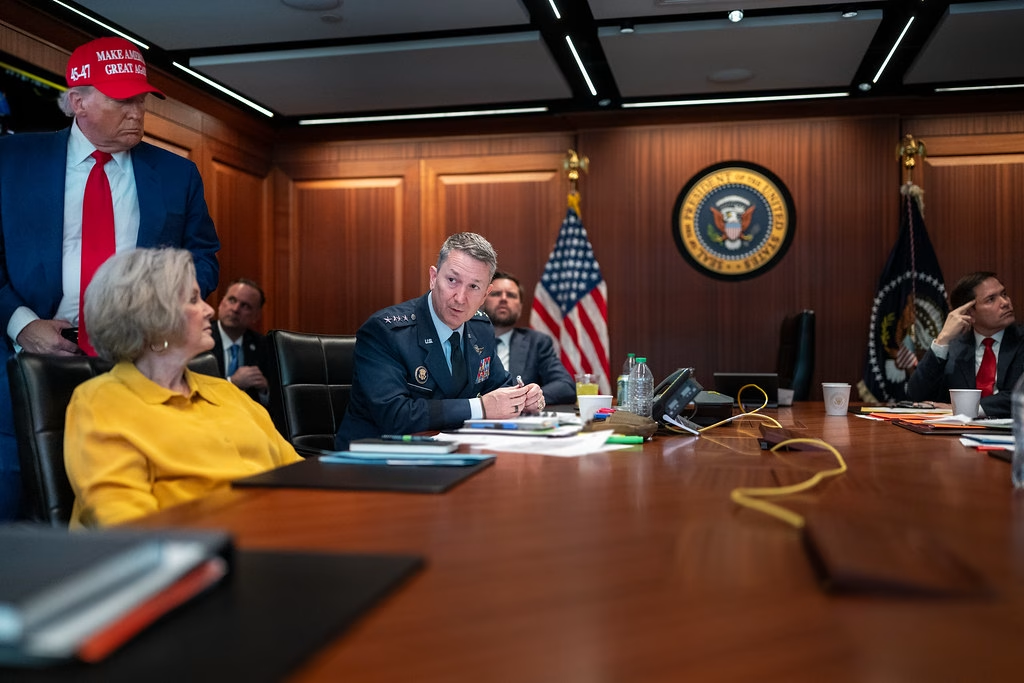
Yet those in his circle wasted no time looking past him. Two senior members of his team, Vice President JD Vance and Defense Secretary Pete Hegseth, quickly went public with sharply divergent views of the Iran war and the wisdom of prosecuting it. In effect, they began to set the parameters for a debate that will consume their party for the next year.
Those ambitious for another act are indeed in a strange position: how do they distance themselves from the unpopular parts of Trump’s agenda without earning his wrath?
One thing seems certain — the days of virtual one-man rule are over. In the nearly 22 months since Mr. Trump took office again, he has sought to impose his will not just over the executive branch but also over big business, the tech industry, major universities, law firms, the central bank, private banks, entertainment, sports, museums, the news media, national parks, the financial sector, the energy sector, the military and nonprofit foundations.
He has turned the prosecutorial power of the F.B.I. and Justice Department against his adversaries and, while he has been blocked at times by judges and grand juries, the Supreme Court has validated many of his assertions of authority. He has sent the National Guard into the streets of Washington and other cities, while turning ICE into a paramilitary force to haul away not just criminals but also otherwise law-abiding undocumented immigrants with deep roots in their communities.
While I strongly suspect tech CEOs and other business leaders will figure out how to cozy up to Democrats now, Trump still controls the levers of power. There’s no reason to think he’ll stop using them.
He can still be expected in these final two years to exert power in ways that previous presidents did not, but he will now face pushback from an opposition Congress armed with subpoenas and the power of the purse. Moreover, the fear that consumed private institutions in the early part of his second term and prompted them to buckle under to demands for money, policy changes and personnel decisions has certainly eased. If anything, some of them will now worry about offending the ascendant Democrats by appearing too deferential to Mr. Trump.
The power of the purse isn’t what it used to be. Trump has spent untold billions on a war Congress didn’t authorize and shuttered whole agencies that Congress explicitly funded. Yes, Democrats will have the ability to push back on come January, but it’s not clear what that actually looks like. Maybe they’ll charge appointees with Contempt of Congress?
“The spell is broken, and the veil of invincibility pierced,” said Daniel M. Price, a former international economic adviser to President George W. Bush. “The genuflection is likely to cease, and those who paid tribute — whether for ballrooms or meme coins or to settle frivolous lawsuits or to make ‘documentaries’ or to secure regulatory favors or government contracts — may well be called to account.”
I seriously doubt it.
Michael Beschloss, a presidential historian, said that no other commander in chief in the past 80 years had touched so many sectors of society, leaving many nervous about what would come next. “It’s hard to find any precedent for that kind of sweeping, unpredictable change in any other post-World War II administration,” he said. “As a result, you could see apprehension on more than a few faces in this capital.”
That, on the other hand, is a certainty.
No president since Franklin D. Roosevelt has dominated the national conversation for as long as Mr. Trump has. Even while President Joseph R. Biden Jr. occupied the White House, Mr. Trump was still a central focus of attention. He drove dinner-table conversations and drove wedges among families, friends and neighbors. But last week’s election suggested that the public has grown weary, even in places he won handily in the past in the South and Sunbelt.
It did indeed. But, again, he’s got two more years to wreak havoc.
Unlike other presidents who suffered midterm defeats, Mr. Trump has largely not acknowledged the setback. After Mr. Bush’s Republicans lost both houses in 2006, he admitted it was a “thumping.” After President Barack Obama’s Democrats lost the House in 2010, he admitted it was a “shellacking.” Mr. Trump, by contrast, has offered no expression of humility or much recognition of public discontent with him.
Quelle surprise.
Each of the five presidents who were elected twice and served two full terms since World War II — Dwight D. Eisenhower, Ronald Reagan, Mr. Bush, Mr. Clinton and Mr. Obama — had an opposition Congress in the final two years of his tenure.
Even so, presidents can still make a difference in that final stretch without Congress, especially in foreign policy, noted Mr. Troy. His old boss, Mr. Bush, after the 2006 midterm elections, surged more troops to Iraq and changing strategy there, helping to turn around the war. Mr. Clinton in his final two years successfully prosecuted the Kosovo war.
“They didn’t go away,” said Mr. Troy, who is now a senior fellow at the Ronald Reagan Institute. “They didn’t have huge legislative accomplishments — none of them had control of Congress. But they all did important things. Things can and do happen in the last two years.”
It is, honestly, a significant flaw in presidential systems. If the United States had a parliamentary system, the Democrats would now govern the country. Instead, they simply have more ability to confound Trump.
As Steven noted in his recent post, “The Messy Nature of America’s Democratic Structures,” we hold elections for national offices every two years but never for all offices at once. In presidential years, we indirectly vote for President and the whole House of Representatives but only a third of the Senate. In midterm cycles, we vote for the entire House and a different third of the Senate. So, no matter how angry the voters are with Trump, they can’t get rid of him for two more years. And, as much as they wanted Democrats to control the Senate, they only got to vote on 34 of the 100 seats. So, while Tuesday delivered the biggest electoral rebuke since at least 1974, it was only a partial one because of our systemic design.
Indeed, Mr. Trump in his second term has not sought to govern through Congress even when his fellow Republicans were in charge, so in that sense he has less to lose. Other than his tax cut bill, he has pursued his priorities largely through executive action.
Yup. And, ironically, voters will get mad at the Democrats for not doing more to stop him.
Still, time is short and with each passing day, the focus will turn relentlessly to the next presidential election. The first scheduled primary is just 441 days away. And it will be wide open, the first contest since 1976 without a Bush, Clinton, Obama or Trump on the ticket.
There’s no guarantee that there won’t be a Bush, Obama, or Trump on the ticket. But, yes, candidates are already positioning themselves for 2028. Indeed, Gavin Newsom and Rahm Emanuel have been more or less running for months.