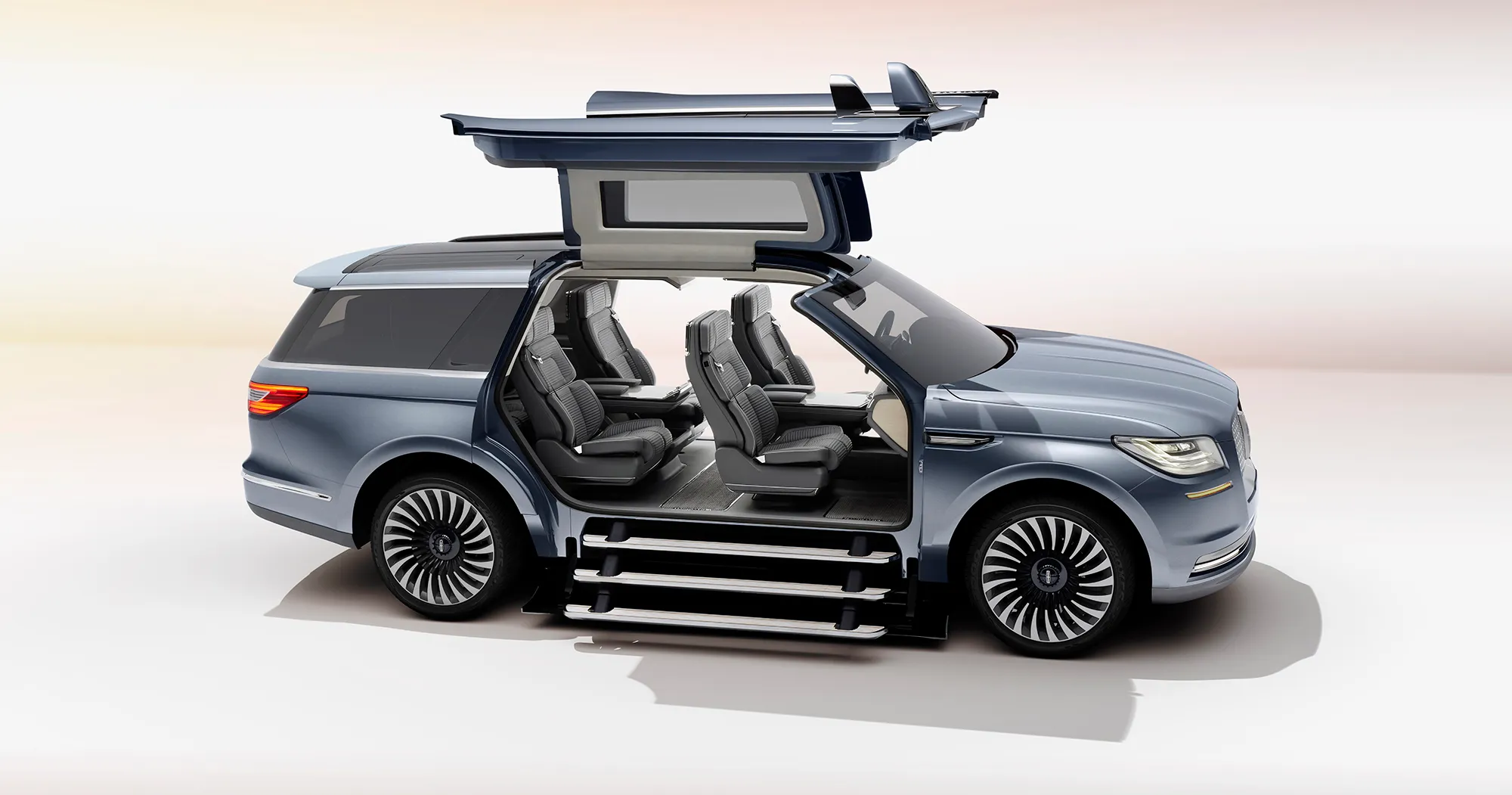

YahooNews (“Bigger cars are stalling progress on climate change, EPA study finds“):
American automakers and consumers are stymieing progress on cutting the carbon pollution that causes climate change, according to the findings from the Environmental Protection Agency’s 2022 Automotive Trends Report. Even though miles per gallon are gradually increasing within each vehicle weight class, the ongoing shift from sedans to trucks and SUVs, which are subject to lower fuel efficiency requirements — and to bigger trucks and SUVs than the ones that were popular in previous decades — canceled out much of the expected benefits.
Environmental and consumer advocates are expressing disappointment.
“The bottom line is fleetwide fuel economy didn’t improve,” Avi Mersky, a transportation researcher at the American Council for an Energy-Efficient Economy, said in a statement about the report, which analyzed data on cars sold in 2021 versus previous years. “That’s bad news for drivers at the pump and for the climate.”
“Some models got more efficient,” Mersky noted, “but with the automakers marketing large SUVs so heavily, they’re taking up more and more market share. The manufacturers are canceling out all the efficiency progress as they sell more large vehicles.”
This should not come as a surprise to anyone who has been on an American highway. Americans like big vehicles with lots of power and have for generations. Occasionally, when gas prices are very high for a sustained period, we’ll see a shift to smaller cars. But, when prices come back down, we go right back to bigger vehicles. And, as bigger ones become more fuel efficient, we buy even bigger ones!
The EPA sets average fuel-economy standards that require auto manufacturers to reach a certain miles per gallon for each class of vehicle. Partly as a result, since 1975, miles per gallon of cars sold in the U.S. have roughly doubled, cutting carbon emissions per mile in half. But the shift toward bigger models, which the agency allows to have lower average fuel-economy standards, has prevented those improvements from being even greater.
Last year, while the fuel efficiency in each weight category reached record highs, the shift toward heavier types of vehicles offset that progress. In 2021, all the new cars and trucks sold in the U.S. had the exact same overall efficiency, 25.4 miles per gallon, that was reached in 2020.
Again: vehicles are getting more fuel-efficient across all classes. We’re just offsetting that efficiency by shifting to ever-larger vehicles.
“In model year 2021, sedans and wagons fell to 26% of the market, well below the 50% market share they held as recently as model year 2013, and far below the 80% market share they held in 1975,” the EPA noted in the report. “Conversely, truck SUVs reached a record 45% of the market in model year 2021, and pickups increased to 16% market share.”
“Truck SUVs” refers to SUVs so large that they are classified as trucks, rather than light trucks, by the EPA, allowing them to meet a lower miles per gallon standard. As the Detroit Free Press reported in 2018, many new SUVs are often so big that they cannot fit into older houses’ garages. Their production increased by 6% in 2021, while sedan production declined by 5%.
Indeed, many companies are getting out of the car business altogether, shifting all of their energy to SUVs and trucks. I’m a longtime subscriber to Car and Driver and am amused at the constant stream of letters to the editor complaining that so much of the magazine’s focus has shifted to vehicles that aren’t cars at all.
But, again, the industry itself has shifted in that direction. Even venerable sports car companies are making SUVs nowadays. Porsche makes two of them, the small Macan and the larger Cayenne. Indeed, it’s been making the latter for 20 years now. Maserati, Lamborghini, Aston Martin, and Alfa Romeo make them as well. And Americans are snapping them up.
“The automakers are both making fewer cars, in favor of trucks, and making those trucks themselves bigger,” Mersky told Yahoo News. “It is also worth noting that even within these categories, vehicle footprint has been creeping upward. … There is no vehicle category where vehicle footprints (sizes) have remained steady or decreased. The average vehicle in all categories got larger. While most vehicle categories increased average [miles per gallon], the in-category rate of improvement was much lower than the standards would have required had there not been a large upsizing of the fleet.”
Most of my students drive four-door pickup trucks that extend far past a normal parking spot. That class of vehicle simply didn’t exist in my memory and was an extreme rarity even 25 years ago.
At the other end of the spectrum, even small cars like the Toyota Corolla or Nissan Sentra are quite a bit larger than their namesakes of 30 years ago.
While fuel efficiency regulation was started in 1971 to cut down on the conventional air pollutants like nitrogen oxide that come from tailpipes, it has become a key part of how the federal government attempts to reduce greenhouse emissions. Transportation is the single largest cause of U.S. emissions, and the United States has pledged in international climate change agreements to cut its emissions by 50% by 2030.
The Biden administration has finalized ambitious new increases in required fuel efficiency for model years 2024-2026, but climate experts and advocates are urging it to go further in the next round of standards, which will be proposed next March and will govern model years 2027 and beyond.
“The EPA could decrease the slope of the standards,” Mersky said, meaning that the difference in allowable fuel economy between larger and smaller cars would be reduced. And the agency could also create a minimum fleetwide average efficiency, so that if too many consumers switch to bigger classes of vehicle, the standards in that class have to be raised to meet the overall average.
“EPA would also be justified in adding a ‘backstop’ to these standards,” Mersky added. “This would be a minimum fleetwide fuel economy, which, if not met, would automatically tighten the fuel economy and emission standards on all vehicles.”
There is no magic wand that makes vehicles more fuel efficient. Probably the easiest solution is to raise gasoline taxes to levels comparable to those in EU countries, permanently making gasoline expensive. There is, of course, zero political will to do that.
I drove my late first wife’s Toyota Sienna minivan for years before trading it in on a 3-row SUV (a Mazda CX-9) three years ago. Both are reasonably fuel-efficient for what they are but there are certainly less gas-guzzling options out there that would suffice for my daily commute. But while driving alone is my modal driving situation, I often have as many as 7 people in the vehicle and, even if I didn’t, I’m over 6 feet and 200 pounds; small cars are not my friend. My wife drives a Mazda CX-30, which is a fantastic small SUV and more fuel efficient than mine but I find it uncomfortable for more than a short drive.
Rather than force Americans into cars they don’t like, the solution is rather obvious:
The Alliance for Automotive Innovation, which is the lobbying group for automakers, declined to comment for this story, but it pointed out that the industry is making progress in one key area: electric vehicles. There are now 83 electric-vehicle models available for sale in the U.S. Between 2020 and 2021, EVs’ share of U.S. new auto sales doubled, from 2% to 4%, and they are on pace to increase significantly again this year. In the second quarter of 2022, they accounted for 6.6% of new light-duty vehicle sales.
Americans actually want electric vehicles; they’re selling faster than manufacturers can put them out. There’s not yet a viable all-electric option in the 3-row SUV class—everything out there now or about to launch is too small and many are absurdly overpriced—but I’d probably be willing to take the plunge if there were. My daily commute is just under 30 miles each way and I only take road trips beyond the overnight charging range once or twice a year. And I live in a metro area with quite a bit of charging infrastructure already in place.
Pricing is going to be a problem for most people. For example, Mazda looks to be replacing the CX-9 with a slightly larger CX-90, expected to arrive early in 2023. It’s expected to be offered in a gasoline-only model and in an a plug-in hybrid. That’s an attractive option.
But here’s the problem:

The entry-level PHEV model is expected to be $2000 more than the most expensive gasoline-only model. The premium PHEV is projected to cost $8000 more than the premium gasoline-only model. It’d take a lot of driving to save $8000 in fuel costs!
There are federal subsidies available to help offset that—good!—but the levels are complicated and phase out based on household income—bad! Amusingly, they actually incentivize buying larger vehicles:
To be eligible for the credits under these provisions, vans, sport utility vehicles, and pickup trucks must meet the additional requirements of not having a manufacturer suggested retail price (MSRP) above $80,000, and all other vehicles may not have an MSRP above $55,000.
Which seems odd!