Americans Think Americans Are Bad People
A majority describe the morality and ethics of their fellow citizens as “bad.”
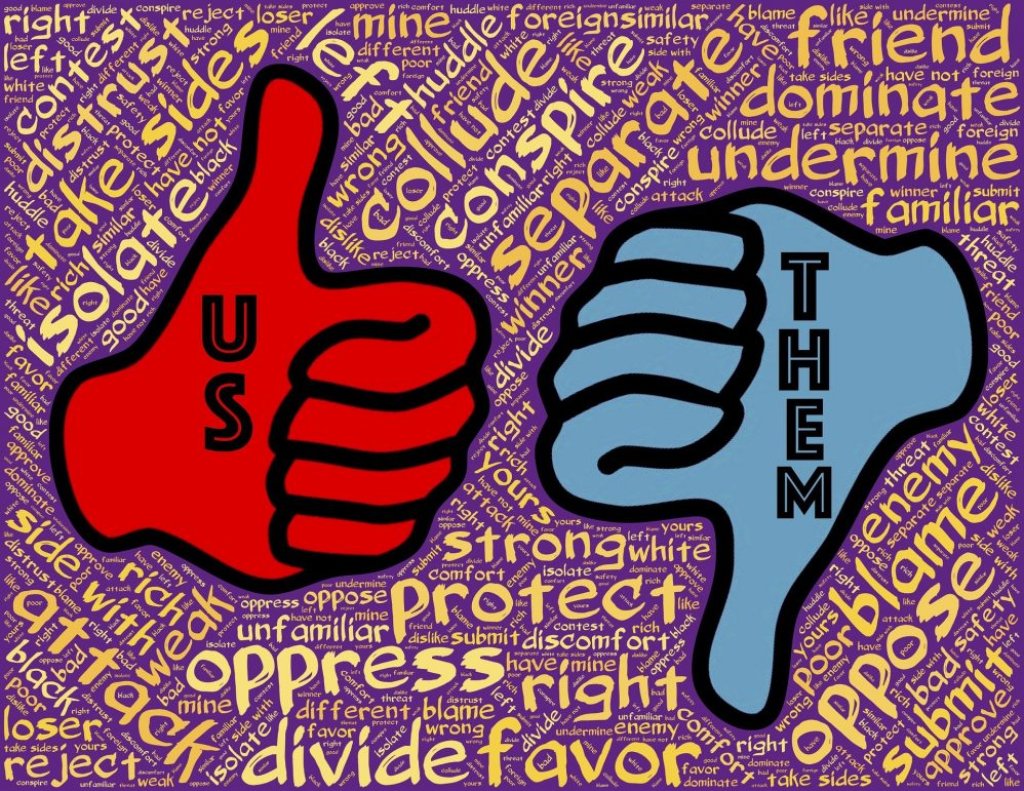
WaPo reports “Most Americans think their fellow citizens are bad people.”
From Indonesia to Nigeria to Greece, people around the world see some slice of their fellow citizens as immoral or unethical. But there is only one country where the majority of residents say their countrymen are “bad”: the United States.
A striking survey released Thursday finds that 53 percent of American adults describe the morality and ethics of their fellow citizens as “bad” (somewhat bad or very bad). In the 24 other countries polled by Pew Research Center, most people said other residents there are somewhat good or good.
At the opposite end of the spectrum is Canada, where Pew found that 92 percent of people say their fellow Canadians are good, while just 7 percent say they’re bad.
“Americans tend to think broadly that most other people are worse than they [themselves] are,” said Scott Schieman, a University of Toronto sociologist who studies the social psychology of Americans and Canadians. Whether people are asked to assess how happy the public is about their jobs, or the cost of living, or the government, he said, there is a “negativity bias” in Canada, but “it’s nowhere near as sharp as in the U.S.”
That’s a rather striking finding. But perhaps not shocking given the current level of polarization and demonization.
Pew has never asked this specific question, so there is no data over time and there weren’t follow-up questions to reveal why Americans assessed other Americans so negatively and if this is new.
However, more than half of the countries surveyed showed a partisanship bias, meaning that people whose preferred political party is out of power “are particularly likely to view their fellow citizens as immoral,” the report found.
In the U.S., Pew found, 60 percent of Democrats and those who lean Democratic saw their fellow citizens as morally or ethically bad, while 46 percent of Republicans did.
Now that surprises me a lot. Donald Trump has spent the last eleven years or so fanning distrust and disdain for his opponents, so I would have thought that this would make his supporters especially jaded. I suppose the counter is that Democrats figure that people who could possibly support Trump must the evil and, since he won the plurality of the vote in 2024, there must therefore be a lot of evil Americans.
Karen Swallow Prior, a Christian author who writes about morality and ethics, said today’s political leaders, along with algorithms and swarms of social media bots, fuel the idea that “bad” people are everywhere.
“Almost every moral issue has become politicized. We have two parties that cannot and will not work with one another and demonize one another, so it’s not surprising at all that our perception of one another’s goodness would be so low,” said Prior, whose most recent book is “You Have a Calling: Finding Your Vocation in the True, Good, and Beautiful.”
To be sure. Yet bots, algorithms, and demagogues exist elsewhere, too.
Indeed, the attitude seemingly long predates Trump and social media:
Though Pew hasn’t asked the question on ethics and morality before, Gallup has asked something similar. Since 2003, it has surveyed Americans on how they would rate the “overall state of moral values” in the country. Spoiler: not good. The number has been in negative territory the entire time, meaning many more said poor or only fair, compared with those saying good or excellent.
The explanation offered here is plausible, I guess:
Victoria Barnett is a scholar of the German theologian and anti-Nazi dissident Dietrich Bonhoeffer, whose name is practically a synonym for morality. She said trouble with finding shared morality is not new in America.
Bonhoeffer wrote in the 1930s that there were so many Christian groups in the U.S. that “they couldn’t ever agree that something was heretical,” she told The Washington Post. America, he thought, didn’t really have a shared creed. Instead, Barnett said, America is a political system in which religion and morality become used by political leaders, “which in turn can lead to great cynicism about … public morality and intense polarization.”
But, of course, the United States is among the most religious countries in the developed world.
Schieman said he wonders whether the U.S.-Canada split stems from American politics. “The United States has so many internal contradictions right now, more than I’ve ever seen,” he said.
Canadians tend to blame people in power and elites, Schieman said. But “it’s not directed at other Canadians” the way Americans are assessing one another, he said.
I haven’t studied Canadian politics and culture enough to have a strong opinion on the matter. But, certainly, Tip O’Neill’s old aphorism, “All politics is local,” hasn’t been true in decades.
Going back to at least the 1992 election, there has been a permanent campaign pitting the good guys against the bad guys. Whether it was the end of the Cold War, the rise of syndicated talk radio (Rush Limbaugh, et al.), 24-hour cable news, or some combination of factors, our politics has gotten increasingly ugly over the period I’ve been an observer.

Our siloed media, in which Blue America and Red America have their views reinforced and opposing views dismissed or vilified, certainly doesn’t help lift the esteem in which we hold each other. The question becomes whether the media fragmentation is a symptom or a cause of the partisan rancor. The symptom/cause issue certainly includes Trump, who is without a doubt the most divisive figure to ever darken the Oval office. When everything that comes out of the president’s mouth is divisive, dishonest, or delusional, and his fellow Republicans fall over each other to agree with him, it is certainly understandable that the morality of his supporters would be suspect.
At this point if you have voted for Trump, ego defense requires you to consider Democrats as evil. “YOU want to chemically sterilize children!” exists to reassure them that they are the good guys.
Reminder: I’m not the one saying that. It’s a classic “conversation ending statement” that keeps one from thinking about what one is doing or saying. People tend to dig in rather than admit they were wrong. And that’s where we are.
They also tend to drift away slowly and quietly when things aren’t working. That’s also where we are.
Trump supporters – ~40% of Americans – are objectively bad people. They put a rapist in the White House. They live on a diet of lies and hate. They enjoy seeing people suffer – brown people, black people, trans people, white liberals.
Which is not to say that ‘we’ are all shiny and sparkly. We are arrogant, superior, condescending, frequently much less knowledgeable or enlightened than we think we are, and often obnoxious. To quote Marc Maron, “We annoyed the average American into fascism.”
There is no moral equivalency there. They are, morally, a very dark shade of gray with a wide swath of genuine evil. We are morally a lighter shade of gray, with a wide swath of insufferable. My prog/lib friends are on-board with the first, and get very angry when I bring up the second. But we do not learn or make progress when we see ourselves as paragons. We do not take or hold power by refusing to address our own flaws. And regardless of the evil of the foe, a moral person must always see themselves as a work in progress, capable of, indeed in need of, improvement.
Only one side has gotten increasingly ugly.
This is also why the comparison with Canada doesn’t work. There is some ugly politics there as well, but nothing really comparable to the utterly depraved shit show that is today’s GOP.
I’m not exaggerating too much if I say that about half of Americans are indeed bad people, while the other half has to believe this as well in order to justify their own shitty behavior and attitudes.
You can’t submit a nation to talk radio and Fox News for at least a generation and expect that this doesn’t turn at least some people into raging assholes.
Propaganda works.
Reading comments on righty sites, I’d have to say the liberals in their heads are really evil people.
Is this, to some extent, a function of a first-past-the-post two party system?
There are two fundamental types of bad people.
One is those who want to do bad things. The other is those who don’t care if the first ones do.
@drj: Canada is the biggest majority English speaking country not infected by Murdoch.
Poles with broad questions are always a bad idea. If you narrow down “ethics” and “morality” to specifics I can almost guarantee we are mostly looking for the same thing. Fear of the “other” is the division that is destroying this country. I know right wing republicans that want freedom and liberty for all and I know left wing Dems who want law, order and fairness in society, but when I discuss that with said parties, unless I break down progressively why I believe that to be the truth either side is defensive when I point it out.
To my mind, this explains the poll results exactly. One party has successfully pushed to paint their opposition as crazy, radical, demonic, pedo-supporting, and corrupt, then that party turned around and anointed as their Dear Leader a man who is so blatantly all these things. I’m a little surprised you find those specific poll numbers surprising, James.
Also too, I think it is important to note a great number of Americans think Americans are bad generally based on fabrication and propaganda, while the other Americans think their fellow Americans are bad generally based on lived experience.
@HelloWorld:
Action speaks louder than words. Which means that, in reality, they don’t.
@drj: @drj: This is exactly what I mean. When you say “actions speak louder than words,” you’re talking broadly and not drilling into specifics. I’m saying when you get to concrete details between the opposing sides on an individual level, there is much agreement. You’ve fallen into the trap that keeps us hating each other – which is a way of thinking that has been cultivated into our society, sadly.
@HelloWorld:
Sounds good, not true. Each side has deal-breakers. For a very large swathe of the right it’s abortion. For us it may be LGBTQ rights.
Then there is the ‘reality’ disconnect. They say, ‘January 6 was peaceful,’ and we say, ‘look at the tape.’ See, there’s a problem that is not manufactured: they believe lies and reject doubt. We also believe some things that may not be entirely true, but are nothing but doubt. They cannot distinguish wish from fact, while we are essentially evidence-based. And on issues where our evidence is not strong we are able to accept reality.
If you say X and Y agree on the following six things, but the seventh is a deal-breaker, all that kumbaya gets flushed right down the toilet.
Boil it down and we have two competing systems of thought: faith vs. science. Faith cannot be challenged, science can.
@Michael Reynolds: Again, you are talking about large groups. For example, its widely known fact that if a straight person knows just 1 gay person, 2 out of 3 times they will change how they vote when it comes to gay issues (because I know people will insist on a source – Pew Research Center, “Changing Attitudes on Same‑Sex Marriage” (2019)). Also, since I lived in DC on J6 – it was a certified shit show, but a lot of people were not there to riot and overthrow the government.
I get your point that people draw all kinds of lines, especially the pro-lifers. I’m not saying EVERYONE agrees at the micro levels, but I do believe the vast majority of people will. Lets not forget, the people dictating like dictators right now are not supported by the majority. They have just managed to keep us divided enough to use it to get power.
On a certain level, Americans thinking Americans are bad, places them in agreement with much of the world 😛
Oh, you’re not all that bad, Americans.
Just most of you. 😉
More seriously, I wonder how much a combination of historical racial and religous animosity, and “zero sum” politics, can drive a basic social cleavage and hence distrust?
It would be intersting to get further data on the “why” of such responses.
Is there a reason for France being at 43%, and the UK at 17%?
Well, apart from us Brits all being lovable and cuddly, obvs. 😉