

The Atlantic‘s Jonathan Chait wants you to know that “Calling Trump a Tyrant Is Not a Call to Violence.”
To describe Donald Trump as a corrupt aspiring authoritarian is not to conclude that he should be murdered.
This ought to be a simple point to understand. Yet it is lost on a large swath of the American right, who insist that calling Trump what he is causes at least some of his opponents—among them, the accused shooter Cole Tomas Allen—to believe that violence is justified against the president.
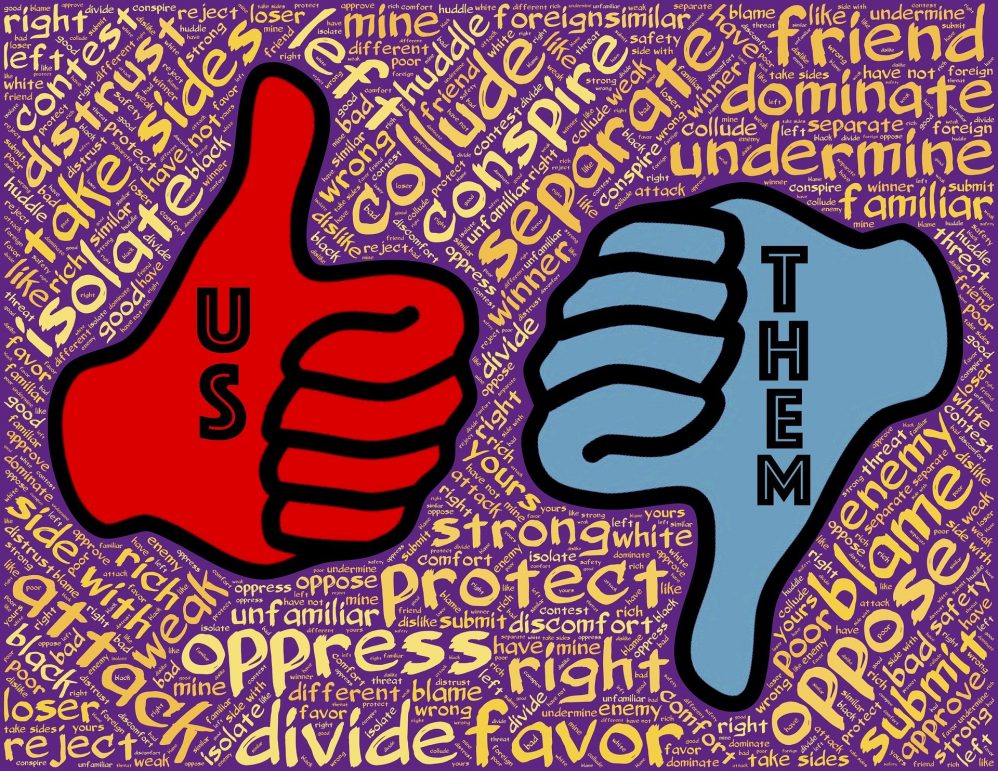
Offhand, this is an obvious non sequitur. Labeling someone or something as something odious is not inherently a call to destroy or otherwise do harm. But it may well nonetheless persuade someone that violence against that person or thing is justified.
But Chait is not being abstract.
In an interview with CBS following the White House Correspondents’ Association Dinner, Trump blamed the most recent attempt on his life on “the hate speech of the Democrats,” which he called “very dangerous.”
Leaving aside the degree to which we should presume Trump cares about analytical rigor, capitalizing on violent acts to delegitimize one’s political opponents is a time-honored tradition. The first instance that comes to mind was President Clinton’s blaming the Oklahoma City bombing on right-wing talk radio.
We hear so many loud and angry voices in America today whose sole goal seems to be to try to keep some people as paranoid as possible and the rest of us all torn up and upset with each other. They spread hate. They leave the impression that, by their very words, that violence is acceptable.
I’m sure you are now seeing the reports of some things that are regularly said over the airwaves in America today. Well, people like that who want to share our freedoms must know that their bitter words can have consequences, and that freedom has endured in this country for more than two centuries because it was coupled with an enormous sense of responsibility.
That was more than three decades ago. While Clinton’s framing was more nuanced, the messaging is identical. And we’ve seen this sort of talk just about every time an act of political violence occurs.
My view on this has been consistent: absent direct incitement, the only ones responsible for these acts are the perpetrators. At the same time, extreme language suggesting that a politician, organization, movement, group, or whathaveyou is an existential threat will naturally lead some to believe violence is an acceptable response.
The New York Post asked on Sunday, “Where did Allen get such ideas about Trump and the need to remove him, via murder?” It answered the question like so: “Almost certainly from the left, including from Democrats in positions of power. Barely a day goes by without some Dem calling Trump an autocrat, a king, a dictator, Hitler.”
Also on Sunday, CNN’s Dana Bash asked Representative Jamie Raskin to engage with the premise. “You and many of your fellow Democrats have used some heated rhetoric against the president,” she said. “Do you think twice about that when something like this happens?” And yesterday, Press Secretary Karoline Leavitt charged, “Those who constantly falsely label and slander the president as a fascist, as a threat to democracy, and compare him to Hitler to score political points are fueling this kind of violence.”
So, again: I see this mostly as an attempt to poison the well and put the political opposition on the back foot. Free speech—including especially the right to call the chief executive a tyrant—is literally a foundational principle of this country. But that doesn’t mean nuts or extremists won’t take the next logical step. Indeed, Sic semper tyrannis is emblazoned on my state’s flag.
This claim suffers three serious defects. First, it assumes that violence is the only logical response to an attempt to undermine democracy. In reality, Trump’s assault on democratic norms can be—and in fact, is being—successfully resisted through democratic means. In Hungary, Viktor Orbán had carried out a more advanced version of the same power-consolidation strategy that Trump is attempting now, and voters defeated him through peaceful organizing.
Not only is our political system considerably more convoluted than Hungary’s, it’s notable that peaceful organizing has twice failed to stop his election. The first time, despite his getting fewer votes than his opponent.
The second problem with a moratorium on calling your opponents authoritarian is that Trump himself routinely violates it. The president has spent a decade calling his rivals communists and traitors, among other hyperbolic insults. He has specifically claimed that Democrats rig elections as a matter of course. Taking violent steps to stop undemocratic political leaders follows much more closely from Trump’s rhetoric than from anything Democrats have said about him.
This would seem to buttress the opposite argument to the one Chait is advancing. The violent rhetoric of Trump and the broader MAGA-aligned movement has indeed precipated violence.
And third, the conservative principle would seem to rule out any criticism of authoritarian tendencies, however real they may be. If calling a politician an aspiring authoritarian is tantamount to inciting their murder, then doing so is irresponsible even if the charge is true. Republicans could nominate the reanimated corpse of Benito Mussolini for president, and Democrats couldn’t question his commitment to democracy without being accused of ginning up violence.
I suppose it depends on whether you think killing Hitler or Mussolini justified. But, yes, I agree that the communicative value of applying extreme (even if valid) labels to one’s opponents is worth the risk someone will take it to its (illogical) conclusion, especially in extreme cases. It’s also true that we have normalized that kind of rhetoric for a very long time, including in cases where the basis is considerably less valid—even absurd.
Ideally, critics of Trump’s threat to democracy would recognize that authoritarianism is on a dimmer switch, not an on-off switch, and that his opponents have ample space to oppose him through democratic channels. They would likewise acknowledge that even most dictators fall far short of the horrors of Hitlerism. That distinction is widely, if not universally, understood, which is why the rallies are called “No Kings,” not “No Führers.”
Indeed. Although I must admit amusement that I’m reading this on the day King Charles III spoke to Congress, extoling the virtues of limited government.
The ruling as out of bounds any discussion of Trump’s contempt for democracy is not merely some unfortunate by-product of the right’s rhetorical gambit, but its central purpose. Trump has been glorifying and stoking violence since he entered politics. He has urged his rally-goers to “kick the crap out of” counterprotesters; has fantasized about unleashing the brute strength of his supporters (“I have the tough people, but they don’t play it tough—until they go to a certain point, and then it would be very bad, very bad”); and, of course, mass-pardoned the insurrectionists who did precisely that on January 6, 2021.
Of course, this means that calling Trump a tyrant or worse is more likely to be taken seriously. Which is both useful in terms of its intended goal of mobilizing political support and more likely to generate unintended acts of violence.
There’s more to the piece, but that’s the gist. Chait and I fundamentally agree: calling out Trump’s illiberal acts, and labeling it appropriately, is fundamental to how our system is supposed to work. Attempts to poison the well by linking it to violence is illiberal. But, yes, raising the stakes can have unintended yet foreseeable consequences. We should own that trade-off rather than pretending it doesn’t exist.









