




Anti-Government Protests Rock Egypt
Anti-government protests raged in Egypt for a second day, and nobody seems to know where they’re headed.
The Debt Ceiling Will Be Raised — Get Used To It
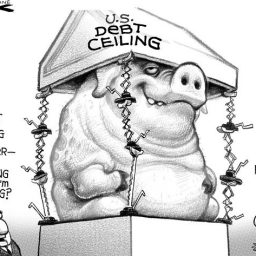
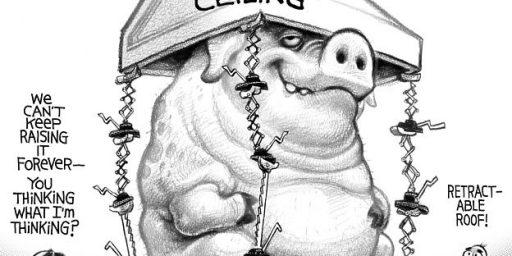
Demanding that the new GOP House hold the line at the current number is satisfying rhetorically, but all-but-impossible politically.

Tucson, Political Rhetoric, And Where We Go From Here
There is a problem with political rhetoric in this country, but telling people to be nicer to each other isn’t going to cool it down.
State Of The Union Seating: Phony Theatrics For Pointless Theater
Bipartisan seating at the State Of The Union is a pointless act of political theater. Then again, so is the State Of The Union Address itself.
The End Of Sarah Palin?
One columnist argues that Sarah Palin’s response to the Arizona shootings mark the end of whatever political future she might have had. He’s probably correct.


Obama Calls For Civility, Without Casting Blame
After five days of nonsense, President Obama’s address in Tucson last night struck exactly the right tone.

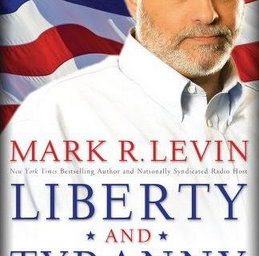
Blogging Liberty and Tyranny, Chapter One, Part One
I’m blogging Mark Levin’s Conservative Manifesto. Here’s part one…
Sarah Palin Blasts Media For “Blood Libel” Against Her Over Arizona Shootings
Sarah Palin released a statement today about the Arizona shootings and the debate that has followed. It’s unlikely to help her.
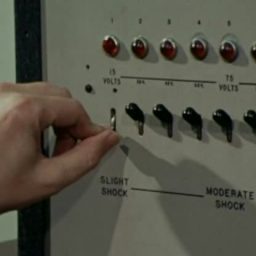
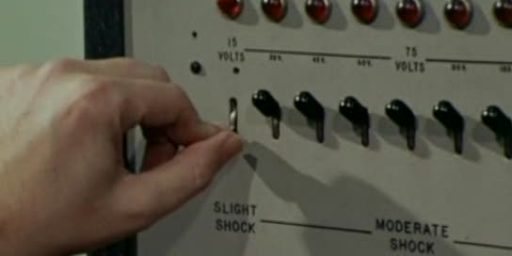
Political Vitriol and Political Violence
The relationships between inflammatory rhetoric and political violence is complicated.

“Heated Political Rhetoric” And The Giffords Shooting
The tragic shooting of Congresswoman Gabrielle Giffords and 19 others in Arizona has started another debate about political rhetoric. It’s a stupid debate, and it’s utterly pointless.


Palin ‘Target’ Graphic in Perspective
Palin’s infamous “target” poster recycles a theme used by both parties over the years.
In (Partial) Defense of Ezra Klein
I don’t like it when things my allies say are misquoted and attacked; it’s no better when my allies do it.
Antonin Scalia: The Constitution Does Not Bar Discrimination Against Women
In a new interview, Justice Antonin Scalia says that the 14th Amendment does not bar discrimination against women, whether it’s done by public or private entities. He couldn’t be more wrong.

The Constitution, Politics, And The Eternal Hamiltonian-Jeffersonian Battle
Constitutional ambiguity is as old as, well, it’s as old as the Constitution itself




Coburn and the Lifespan of Republics
Do republics expire after 200 years due to fiscal irresponsibility?
Obama Wants to Give America Back to Indians!
President Obama is supporting the UN Declaration on the Rights of Indigenous Peoples. Is this the end of America?
The Problem that Barbour has Conjured
What the Haley Barbour situation illustrates is that we, as a country, have not fully accepted or dealt with our own past.


Afghanistan Still America’s Forgotten War
Unless you paid close attention, you probably missed most of the coverage of the war in Afghanistan in 2010.

The Individual Mandate And America’s Ongoing Debate Over The Role Of Government
The battle over the individual mandate is really just nothing more than the latest round in a batter that has been ongoing for 221 years.
Ranking the 2012 Contenders: Communications Skills
Are Marco Rubio, Haley Barbour, and Mike Huckabee the favorites to win the White House?


Triangulation: What Is It? Does It Even Exist?
Several smart center-left commentators argue that President Obama is not triangulating. At least one argues there’s no such thing.
Michael Bloomberg Says He Isn’t Running For President
New York Mayor Michael Bloomberg says he isn’t running for President, but he’s sure acting like a guy who’s at least thinking about it.

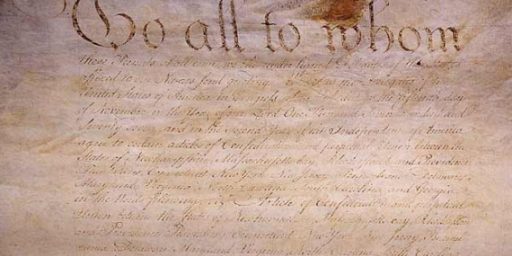
On the Role of States in our Constitutional Order
Sorting out, to some degree, the role of the states in our constitutional order.

Repeal Amendment’s Practical Application
If 33 states can muster support to kill a law, how would it have gotten enacted to begin with?


Classified Information and Journalistic Ethics
The two English language newspapers who have been Julian Assange’s accomplices in disseminating stolen secrets defend themselves.
The Real Deficit-Reduction Math
There is a simple mathematical equation that explains why deficit reduction is so difficult.
Only 46% Know Republicans Won the House
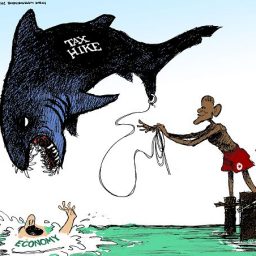
Only 46 percent of Americans know that Republicans will have a majority only in the House when the new Congress convenes in January.
Sarah Palin: I Am Engaged In Deliberations About Running For President
Yet another sign that the GOP’s biggest nightmare may actually end up coming true.
Obama: One and Done?
Democratic consultants Doug Schoen and Pat Caddell offer some free advice for President Obama. It’s worth every penny.
Murkowski Continues To Lead In Write-In Count, Miller Camp Grows More Desperate
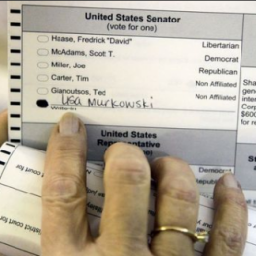
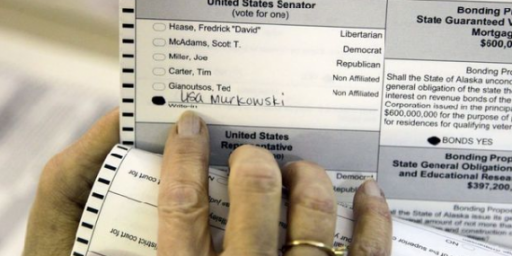
As the counting of write-in ballots in Alaska continues to go in Lisa Murkowski’s favor, the Miller campaign is getting more desperate in its ballot challenges.


A Comparative Fact Regarding the Death Penalty that Gives One Pause
Of the five countries that use the death penalty the most, only one is a democracy.
Jim Webb: The Last Of The Reagan Democrats
Virginia Senator Jim Webb is the last of a dying breed of Democrats, but his party may need him if it wants to remain competitive anywhere outside of a Blue State.
Republican Comeback Plan Worked?
A longish NYT postmortem titled “Democrats Outrun by a 2-Year G.O.P. Comeback Plan” attributes Tuesday’s Republican victories to a January 2009 PowerPoint presentation. But structural factors were more important.


Realignment Elections
While Matt Yglesias is right that talk about “Realignment” after a single election is ridiculous, there have indeed been realigning elections in U.S. history.

Democracy At Its Best
A Chicago voter is less than thrilled with the political slate for which he’s voting today.
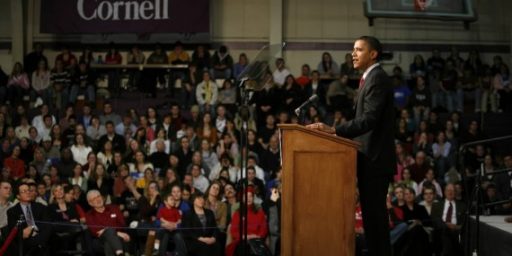
Young Voters Feel Abandoned By Obama
The younger voters that flocked to Barack Obama two years ago feel let down. They need to grow up.
Bad Day at the Think Tank
The Onion spoofs life at a think tank with Boy, I Really Thought Like Shit Today.”