Reporting for the NYT, David Halbfinger explains, “Why Israel’s Ex-Army Chief’s Next Mission Could Be Mission Impossible.”
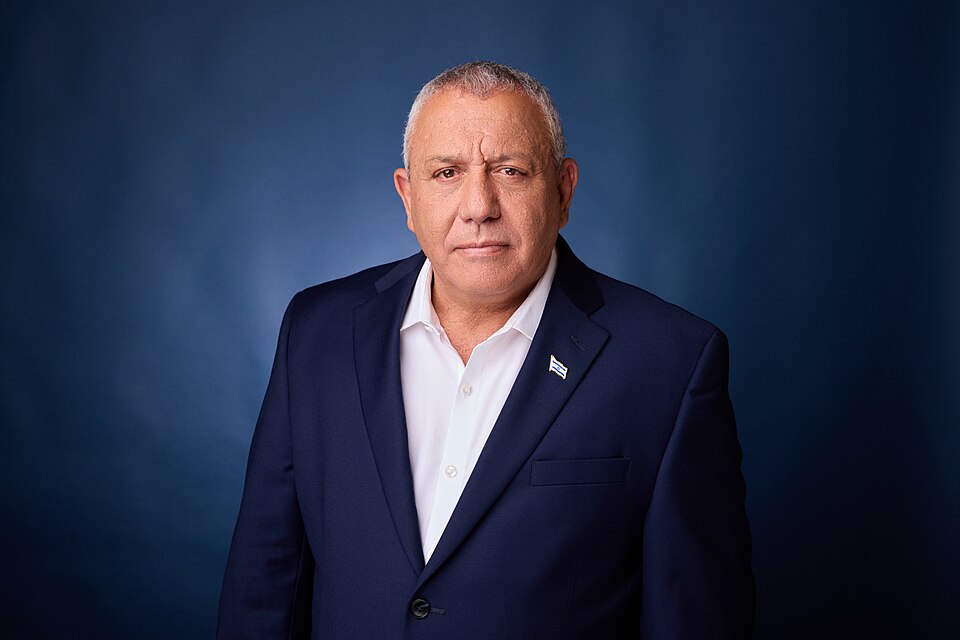
Gadi Eisenkot, Israel’s former military chief, is all but certain on Sunday to be given a chance to form a new government, after he was recommended for the task by parties that won 67 seats in the 120-seat Parliament.
But completing that mission and replacing Prime Minister Benjamin Netanyahu may well be the toughest assignment of Mr. Eisenkot’s career so far.
The ideologically and ethnically diverse factions that recommended him for prime minister include left-wing, right-wing, centrist and predominantly Arab parties. Most would have to break seemingly ironclad campaign promises in order to unite behind Mr. Eisenkot, no matter how he arranges them into a governing coalition.
But the pressure is on him and his allies to do just that because the alternatives, in their view, are far worse.
What alternatives, you might ask?
A failure to form a government could send Israel to another round of elections. It would leave Mr. Netanyahu in his job as prime minister in the meantime, with all of the advantages of incumbency. And the opposition would be unlikely to perform as well as it did in October, when thousands of expatriate Israelis flew home to vote.
So, essentially, anything but breaking his pledge and forming a coalition that includes Arab parties leaves Netanyahu in power?
A unity government in which Mr. Eisenkot and Mr. Netanyahu share power, such as by taking turns as premier, seemed far-fetched before Election Day and seems unthinkable now. Some of Mr. Eisenkot’s campaign promises left wiggle room, but he was adamant in saying that Mr. Netanyahu, as the person with ultimate responsibility for defending the country on Oct. 7, 2023, when it suffered its worst attack in history, was unfit to continue in government.
But maybe Netanyahu has subsequently redeemed himself, showing the appropriate humility after being so obviously rebuked by the electorate?
Since the election, Mr. Netanyahu’s efforts to delegitimize the result — by accusing Arab parties of stealing votes — have hardened those views.
Oh.
And then there’s this:
And the lopsided result of the U.S. midterm elections underscored the urgency of replacing Mr. Netanyahu, opposition leaders have argued: Israel’s standing with lawmakers in both the Democratic and Republican parties is so dismal, and Mr. Netanyahu so loathed, that only a new prime minister could possibly begin to repair it.
Which brings us back to Eisenkot.
“Israel is already in the midst of a dangerous diplomatic tsunami,” Mr. Eisenkot said on Friday. He added that a situation in which Mr. Netanyahu “continues to exercise authority over Israel’s security system and law enforcement agencies is dangerous and must not be allowed to continue for even one more day.”
Well, it’s definitely going to continue for at least one more day. And the only way to get him out of power quickly is to come to terms with the Arab parties.
But what kind of government can Mr. Eisenkot form?
He starts with 48 members of Parliament, thanks to his own center-right Yashar party (21), Naftali Bennett and Yair Lapid’s centrist Together party (12), Yair Golan and the left-wing Democrats party (8), and Avigdor Liberman’s right-wing but secular Yisrael Beiteinu (Israel Our Home) party (7).
That is more than Mr. Netanyahu’s coalition can count on: After an ultra-Orthodox party, United Torah Judaism, refused to recommend him for prime minister, Mr. Netanyahu’s coalition has only 46 seats.
The magic number, by the way, is 61.
To form a bigger coalition, let alone a majority in Parliament, Mr. Eisenkot’s options include partnering with the ultra-Orthodox parties, which together have 13 seats, or the Arab parties, which won a record 19 seats.
48 plus 13 is exactly 61, which leaves zero breathing room. 48 plus 19 is only a bit more comfortable at 67 seats.
Either route is deeply problematic, according to opposition lawmakers, operatives and advisers, most of whom insisted on anonymity to discuss coalition talks.
But of course.
Until a new government is formed, Mr. Netanyahu remains a caretaker prime minister. But Parliament is another story. Lawmakers will be sworn in on Tuesday, and Mr. Eisenkot is working to arrange for the election of a new speaker to replace Amir Ohana, a Netanyahu loyalist.
If he is successful, that could put Mr. Eisenkot’s allies in charge of key legislative committees. And it could allow his anti-Netanyahu bloc to begin enacting legislation — fulfilling key campaign promises and demonstrating Mr. Eisenkot’s ability to get things done.
But wouldn’t electing a new speaker also take 61 votes? How does that happen without forming a coalition?
Oh, and it turns out that it’s not just that it would be political suicide for a Jewish prime minister to bring Arabs into the government of a state whose founding principle is Zionism. The Arabs don’t want to join!
Mr. Eisenkot this past week began speaking of the need to form a “national emergency government” — an important rhetorical shift.
“If it’s an emergency, you do things you wouldn’t do otherwise,” said Nimrod Novik, a senior fellow of the Israel Policy Forum who was an adviser to Shimon Peres when he was prime minister.
The Arab parties’ 19 seats would give Mr. Eisenkot a solid majority, but bringing them into a government could cost him other allies.
For now, the question is moot: The Joint List, an amalgam of three smaller Arab parties that together won 11 seats, has ruled out joining a government, though it could provide support from the outside and enable a minority government to function. The United Arab List, or Raam, which won eight seats, has not. But Mr. Eisenkot has insisted that any party joining his government must declare Hamas a terrorist organization.
Raam’s leader, Mansour Abbas, has refused to do so, though he condemns all terrorist acts. But he did say on Thursday that Hamas and all other Palestinian factions should be disarmed.
To his credit, Netanyahu has been working toward that goal. His methods have proven unpopular. A plausible alternative methodology has not been advanced.
Even if Mr. Abbas were to satisfy Mr. Eisenkot, however, Mr. Liberman, the Yisrael Beiteinu leader, has repeatedly ruled out a government that includes Arab parties or even relies on their support from the outside.
That leaves relying on the ultra-Orthodox, or Haredi, parties.
Which, again, would be the bare minimum number of seats needed for a majority.
This, too, is fraught with peril. The most important issue for the Haredim is to protect their young men, who now account for about one in four draft-age teenagers, from conscription into the military and punishment for draft evasion. But with the Israeli Army overstretched, a core campaign promise of Mr. Eisenkot and his opposition allies was to compel Haredi men to share the sacrifice of defending the country.
It’s an outrageous policy, and one outlawed by Israel’s High Court of Justice–unanimously!—in 2024. And, indeed, repeatedly before that.
Mr. Liberman has now chosen to break that promise but not his vow to keep Arab parties out of government.
On Friday, he wrote on social media that while he remained dead set on replacing Mr. Netanyahu, avoiding new elections and spurning any partnership with the Arab parties, “on all other issues, it is permissible and desirable to be flexible and compromise, and to understand that you cannot have it all. This includes the issue of the conscription law as well.”
Uh huh.
Mr. Eisenkot was not entirely absolutist in his campaign rhetoric about drafting the ultra-Orthodox, but Mr. Bennett, of the Together party, was adamant about it and would have to accept going back on that pledge.
Mr. Eisenkot could also find it difficult to strike a deal with the Haredi party leaders, who are far more experienced at coalition negotiations than he is, and whose voters have grown steadily more right-wing and nationalist in recent years.
This has always been the fatal flaw of the Israeli system: the tail too often wags the dog.
With 48 votes to Mr. Netanyahu’s 46, Mr. Eisenkot said on Friday that he planned to form a minority government, at least initially. That would mean that the Arab and ultra-Orthodox parties abstain from the vote to form the government.
But he also said he would invite every political party — without exceptions — to join his government, now or later, provided it embraced his terms: recognizing Israel as a Jewish and democratic state, accepting the values in the Israeli Declaration of Independence, requiring universal national military or civilian service, and agreeing that Hamas is a terrorist organization that must be dismantled.
So, the Arabs and ultra-Orthodox are welcome, so long as they renounce the policies around which their parties exist?
Mr. Liberman, however, is again standing in the way. On Friday, he ruled out forming a government with anything less than a 61-seat majority.
Gayil Talshir, a political science lecturer at The Hebrew University of Jerusalem who is advising the opposition, said it was unclear whether Mr. Liberman really wanted Mr. Eisenkot to be successful.
Oh, it’s pretty damned clear.
Mr. Liberman has complained publicly that Mr. Eisenkot ended his campaign by cannibalizing support for his allies in a way that Mr. Liberman contends cost both Yisrael Beiteinu and the anti-Netanyahu bloc several seats.
Ms. Talshir said Mr. Liberman may fear the wrath of his right-wing voters if he agrees to a partnership with Arab parties.
He also may be angling to take a shot at becoming prime minister himself.
This is the guy whose party won 7 seats, the fewest in the coalition. Eisenkot’s won 21 seats.
Should Mr. Eisenkot fail to form a government, Mr. Netanyahu would be given a chance next. But if he failed, there would be a short period before new elections are called in which anyone in Parliament — including Mr. Liberman — could become prime minister by enlisting the support of 60 other lawmakers.
I can’t imagine Eisenkot’s bloc would go along with that. And, even if they did, the ultra-Orthodox and Arab issues that Eisenkot faces won’t disappear.
On Friday, Mr. Eisenkot appeared to allude to Mr. Liberman’s resistance — and possible ulterior motives.
“Anyone who seeks to delay or sabotage the formation of a government for personal rather than substantive reasons,” he wrote on social media before the start of the Sabbath, “will be remembered by history as someone who failed to rise to the occasion and failed to act to save Israel in a time of national emergency. They will not be forgiven.”
Should they manage to put together a coalition, I predict it will not last long.