The Economist (“An unrestrained Israel is reshaping the Middle East“):
Israel’s 15-month assault on Gaza has battered Hamas; it can no longer mount a serious attack. Hizbullah, a Shia militia in Lebanon, is also reeling after Israel pummelled it, too. In addition, the overthrow of Bashar al-Assad, Syria’s dictator, has cut Hizbullah’s main supply line to Iran. The “ring of fire” around Israel that Iran had created by funding such militias has burned down to embers. And Israel has withstood Iranian missile attacks and smashed Iranian air defences in retaliation.
In years past, Israel might have been content to stop there. But its current leaders favour an unbridled assertion of power, some for pragmatic reasons, others for ideological ones. They are seizing territory beyond their borders, advocating further strikes on Iran and contemplating the outright annexation of Palestinian land. The goal appears to be regional hegemony. But the doubts about such an approach remain the same as when Mr Netanyahu first endorsed the life of the sword: can Israel sustain an indefinite war—and should it?
Israel’s changing approach to Gaza shows how its strategic ambitions have grown. During the war’s first year it was reluctant to occupy much territory within the enclave. Instead, the idf seized a buffer zone inside its borders, and two corridors that bisected it, but little else: the army feared a prolonged counter-insurgency. Then came a six-week ceasefire with Hamas, agreed in January, which was meant to buy time to negotiate a permanent end to the war.
On March 18th Israel abandoned the ceasefire and resumed attacks on Gaza. It is gearing up for a fresh ground offensive. Lieutenant General Eyal Zamir, the new IDF chief, has promised more aggressive tactics. Israel plans to depopulate large parts of the strip and lay siege to anyone who remains in them. It also intends to hold territory. Israel Katz, the defence minister, has warned the occupation may be permanent. These plans have not yet been implemented, but if they are, they will escalate an already bloody war, which has claimed more than 50,000 lives in Gaza.
In the West Bank, meanwhile, the army is waging its biggest offensive in decades. More than 40,000 Palestinians have been displaced from four refugee camps in the north of the territory. Mr Katz has said that Israeli troops might remain in those camps for the rest of the year. Far-right lawmakers are pushing ahead with plans to expand Jewish settlements, which are illegal under international law. On March 23rd the security cabinet voted to legitimise 13 “outposts”, wildcat settlements that had been built without the government’s approval. The right hopes to persuade Donald Trump, America’s president, to back their plans to annex part or all of the West Bank, which would make it impossible to create a Palestinian state.
Elsewhere, Israel has occupied a swathe of Syrian territory (see map), including Mount Hermon, the region’s highest point. It seems to have no intention of leaving. Israel is courting the Druze, a minority group concentrated in southern Syria. It may hope to fracture Syria into a federation of autonomous ethnic statelets; some Israeli commentators have urged the Druze to secede. Israel still occupies five hilltops in southern Lebanon, although it promised to withdraw from them in late January under the terms of its ceasefire with Hizbullah.
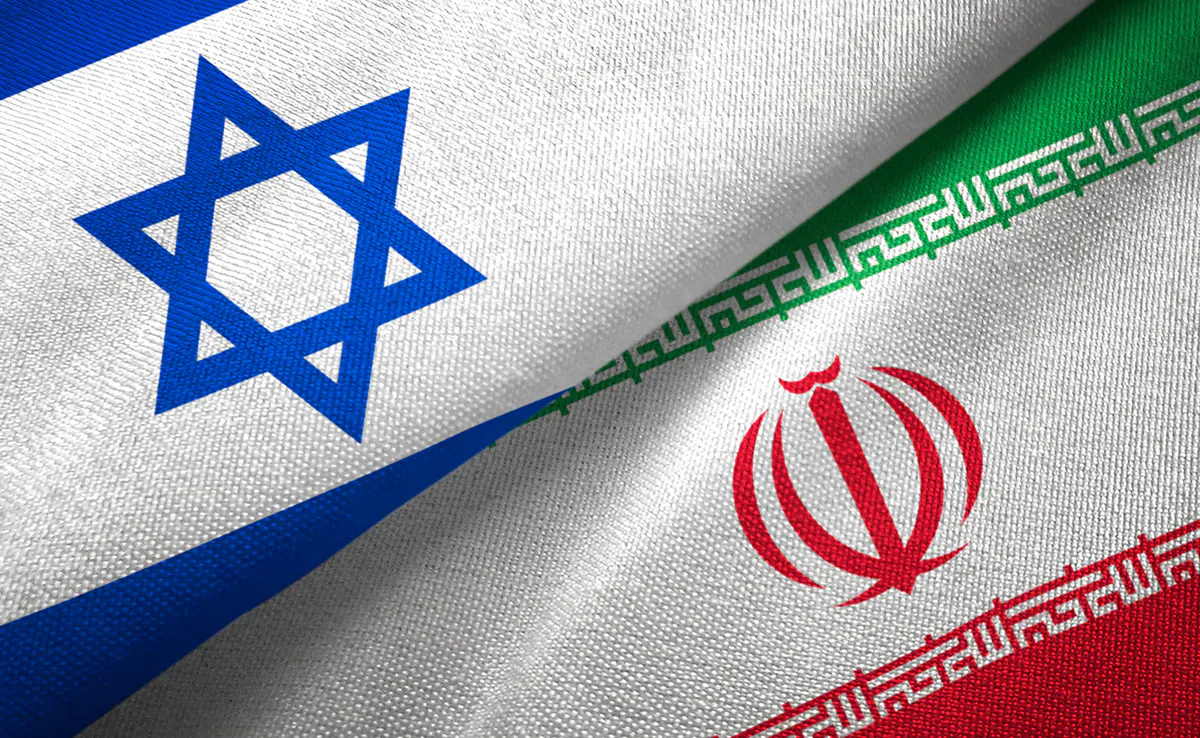
Then there is Iran. Mr Netanyahu has dreamed for years of conducting military strikes on Iran’s nuclear facilities. He is energetically lobbying America’s government to bless such an attack and ideally to join in. America’s spies believe that Israel is likely to act within six months.
There’s a lot more to the piece, including speculation that Netanyahu is driven by domestic politics (keeping hard-right parties in his coalition) and personal (staying out of prison) considerations.
Catching up on the War on the Rocks “Net Assessment” podcast this morning, the gang asked “Will Israel Strike Iran?” It was based on a recent piece in the magazine by Michael Allen, former senior director for counterproliferation strategies on the National Security Council, asking, “Will Israel and the United States Diverge on Iran?“
The setup:
Israel’s recent military success has left Iran uniquely vulnerable, but for how long? Prime Minister Benjamin Netanyahu celebrated President Donald Trump’s reimposition of “maximum pressure” sanctions, but unless that pressure yields Iranian concessions soon, U.S. and Israeli national interests may diverge. The first Trump administration concluded that the Joint Comprehensive Plan of Action was a flawed agreement and withdrew from the deal. In his second term, it seems that Trump is willing to give time to find a tightened and lasting diplomatic solution to curbing Iran’s nuclear program — time Israel may not have. If Iran poses an existential threat to Israel, how long can it wait for maximum pressure to bear fruit?
There are a number of variables contributing to Israel’s current sense of urgency. First, the overthrow of the Bashar al Assad regime, Iran’s ally, has allowed Israel to strike Syrian air defenses that would threaten Israeli fighters on their path to Iran. Now, any operation against Iran is less likely to be detected before Israeli fighters enter Iranian airspace. In addition, Israel’s October 2024 raid against Iran destroyed its three remaining Russian-made S-300 surface-to-air missile systems. According to a former U.S. official, “Iran is essentially naked” — nearly defenseless against future air strikes.
But Iran has options to harden its defenses. 25-year oil-for-security accord between Iran and China is flourishing. Iran has received Chinese precursor chemicals essential for rebuilding its ballistic missile program and solid rocket fuel production. Also, an Iranian-Russian strategic partnership has deepened since Russia’s renewed invasion of Ukraine. Iran supplies thousands of drones to Russia and helped Russia open its own drone factory. In exchange, Iran is seeking to upgrade to Russia’s S-400 system, some variants of which are equipped with radars that can defeat stealth technology used by fifth-generation fighters like the F-35. The New York Times reported in August 2024 that “two Iranian officials … confirmed that Iran has made the request [for advanced air defense systems] and said Russia has started delivering advanced radars and air-defense equipment.” Although the timing is unclear, an improved Iranian air defense may soon be online. Israel would want to strike before then while it still enjoys the element of surprise.
Second, Iran’s primary deterrent against attacks on its nuclear facilities — the threat of retaliatory strikes by proxy forces — has been crippled. In southern Lebanon, Israel degraded Hizballah’s massive stockpiles of missiles and rockets by up to 80 percent, which could have devastated Israel in a matter of minutes. Israel now has greater freedom of action to target Iranian nuclear facilities without fear of a fierce Iranian-sponsored terrorist invasion if Israel bombed Iran. Yet, recent reports indicate that Hizballah is already rebuilding by recruiting new fighters and rearming. Israel’s ambassador to the United Nations warned “there have been several attempts to transfer weapons and cash to Hizballah.” Thus, it is clear that despite the collapse of the Assad regime, Syria will remain the primary smuggling route. Iran’s proxies might be weak now, but they may not be forever. Israeli strategists may want to exploit Iran’s current weakness before it rebuilds its terrorist proxies.
Third, based on Iran’s unsuccessful October attack, Israel has proven it can absorb Iran’s best shot. Since many of the ballistic and hypersonic missiles were intercepted or inaccurate, Iran’s attack exposed that its arsenal is less of a deterrent for Israel. But Iran still has thousands of ballistic missiles, receives technical assistance from Russia, and claims to be developing “new special missiles.” As a recent report argued, Iran will likely “double down” on ballistic missiles, seeking ways to achieve greater accuracy and penetrate enemy air defenses.
Finally, and most importantly, Iran is on the precipice of nuclear breakout. On Feb. 14, 2025, the International Atomic Energy Agency warned that Iran may be close to achieving irreversible gains. Indeed, it would likely soon have about 250 kilograms of uranium enriched to 60 percent, just short of the level typically needed to produce a weapon. With over 90 kilograms produced since December 2024 alone, the increased supply of near-weapons-grade nuclear material could be used to create “several” crude nuclear devices in a matter of months, not years. Alternatively, Iran could choose to produce fewer bombs using less enriched material, trading quantity for quality.
While Netanyahu no doubt has personal and political considerations, being ruthless in pursuit of his vision of Israel’s national security has been a signature going back to his first stint as prime minister, almost three decades ago. It seems obvious that, if he thinks a strike against Iran’s nuclear facilities will be successful, he’ll do it with or without US support.
Going back to his first administration, President Trump has consistently avoided wider escalations in the Middle East, including prematurely withdrawing forces from the counter-ISIL fight in Syria. But he’s also been enthusiastic about precision strikes as on-offs, whether it was the Solemani assassination, the dropping of the MOAB on Assad’s forces, or the recent strikes against the Houthis. I seriously doubt that he would allow US forces to join in on a strike inside Iranian territory but doubt he would exert any significant pressure on Netanyahu to refrain from doing so.