OTB relies on its readers to support it. Please consider helping by becoming a monthly contributor through Patreon or making a one-time contribution via PayPal. Thanks for your consideration.

Saturday’s Forum
13
Comments
Categories
Tags
13 responses to “Saturday’s Forum”
-
Good post over at Balloon Juice with many good linkies, mostly to CNN, good discussion on the front page.
“BJ”
Some things aren’t reversible
The Dardanelles are open for transit, First Lord of the Admiralty Winston Churchill said. “The only thing prohibiting transit in the straits right now is the Ottomans shooting at the fleet,” he said. “It is open for transit should the Ottomans not do that.”
-
Perhaps of interest, a large survey of Trump supporters with a four part taxonomy:
MAGA hardliners – 29% of Trump voters.
Anti-Woke conservatives – 21%.
Mainline Republicans – 30%.
Reluctant right – 20%.That last group should be gettable. On it’s face the “Mainline Republicans” should be gettable, but if they still say they’re Republicans after the last ten years? However, the Balloon Juice post links to a Chicago Sun-Times story subhead,
Donald Trump’s base is hate-filled and dangerous, but it is not the majority. Nor is it half of the country.
There’s a link to the full report, 80 some pages. However it’s a lot of whitespace and simple graphics. I’ll get back to it, but at a quick skim much of it revolves around “woke”. There’s a page where the study writers and quoted respondents fail to meaningfully define “woke”, which says to me it’s more of a felt thing than a reasoned thing. It would seem that a century and a half after the Civil War U.S. politics still largely revolves around race. Le sigh.
I’ve commented that GOPs have established a strong and successful identity while Ds have not. This study seems to show the GOP identity is largely defined in opposition to “woke” Dems/libs/progressives. And it’s a really nasty political problem because it’s not us, it’s the FOX/GOP parody of us.
-
@gVOR10:
And it’s a really nasty political problem because it’s not us, it’s the FOX/GOP parody of us.
Yes and no. We need to face up to the fact that we have, for quite some time now, acted and sounded like over-educated, entitled, out-of-touch, humorless scolds. We handed them the football and they ran with it. They exaggerated but there was still a lot of truth in their depictions.
Why is this so fucking hard for liberals to face up to? Are we incapable of error? Is it simply impossible that we should be to blame for anything? It’s 100% their fault, not 99%? Or 90%? We did absolutely nothing wrong? Nothing?
I’ll quote Marc Maron again: “We annoyed the average American into fascism.” Maron is far left, he’s just not deaf or blind. Listen to the comics, they are so much more clued-in than average people. It is ridiculous for us to note that large numbers of people hate ‘woke’ but because they can’t precisely define it, it must not be real. If they feel it it’s a real feeling, by definition, that’s how feelings work. Does it mean they are objectively right? No, because feelings are not objective. But it does mean they feel, and people act on feelings.
If we go forward with the idea that we are 100% blameless, that we did nothing at all to engender this hostility, and continue to act as we have acted in the past, we’re going to keep losing. People do not like to be talked down to. They don’t like to be lectured.
This is me talking to writers and producers trying to reach kids: Rule #1 do not fucking condescend, do not fucking lecture, kids hear it and they fucking hate it. That’s what we’ve been doing to the American voter: talking down, condescending, lecturing, using ‘teacher voice.’ And the result is that despite everything, somehow the generic Blue vs. Red polls show us up by a pitiful 4 to 5%. As bad as things are, way too many people still feel like they cannot find a home in the Democratic Party. That is not about issues or policy it’s about feels. We repel people and we need to stop doing that.
-
-
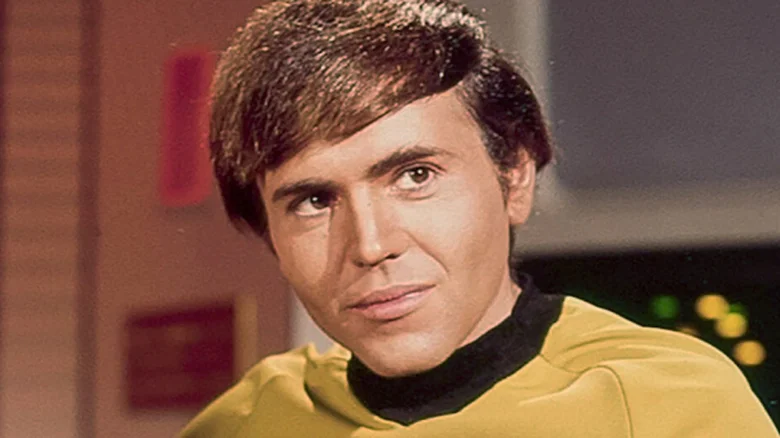
I’ve been watching Starfleet Academy. While it’s–quite obviously–not targetted at my ARRP-qualified demographic, I’ve been enjoying it (with caveats).
I want to dispute Michael Reynolds on one important point[1]:
He says that YA stories *can’t* include adults. A look at YA-targeted media proves that false. Buffy had an old British guy as a mentor, and took place in a high school (and later college) with plenty of adults.
90210 took also took place within the context of a school–and all the appropriate adults.
Hell… Star Wars wouldn’t have happened without Obi Wan and Yoda. You can’t get much more “adult” than Yoda.
There are two ends to the spectrum: teens trying to survive without adults and teens growing despite adults. And then you have the hybrid: teens learn from–but butt heads with–adults and grow to be better and stronger and become leaders.
ST: Starfleet Academy is taking this last approach. I think it’s appropriate for the show. I think it’s appropriate for the audience. And I think it’s the right approach to reach a new, younger, audience.
Young people today are never going to find themselves in a situation without adults. That’s not a scenario that is going to speak to them.
They *are*, however, going to find themselves in situations where they are “under authority”, and need to know that sometimes you need to listen to those who’ve gone through it before, and sometimes you need to step up and do what needs to be done–even if “authority” doesn’t agree.
Michael? You’re pushing a fantasy world. ST: Academy is putting real-world scenarios into a sci-fi context. And I say this as someone (unlike you) who has spent a couple decades teaching 12-18 year old students.
Seriously? If you put most 12-18 year olds in a situation without any adults, they’d probably starve to death within a week.
ST:SA is a well-written, well-acted, and well-produced show.[2]
All that being said: The show is hit-or-miss for me. It’s Star Trek, so I like it (Discovery never happened, and we will not talk about it). I cringe at a lot of the YA stuff, but not enough to turn me off.
But… Holly Hunter. OMG! Holly Hunter!
And Robert Picardo. And Oded Fehr. And Gina Yashere. And Tig Notaro.
Did I mention Holly Hunter? That woman has aged like a fine bourbon. Her portrayal of Nahla Ake makes her My Favorite Captain™–surpassing Kirk of my youth, and Sisko of my adulthood.
Seeing Hunter in this role makes me think of the first movie I saw her in–Always. I saw the old, but very elegant and attractive, character of Hap and thought “She reminds me of Audrey Hepburn”. Turns out? It was Audrey Hepburn (the most elegant woman to have ever lived; Fight me! (Bernadette Banner is #2)). Holly Hunter at 31 was pretty and fun. Holly Hunter at 67 is sneaking up on Audrey Hepburn.
—
[1] I’m not multi-million-dollar YA author, but I do have a degree (and 4 decades of experience) in theatre–which required in-depth understanding and critique of stories. Michael: You have a lot of knowledge and experience in a very specific type of story in a very specific genre. You extend that experience into contexts where it doesn’t apply. And you believe that your success in that one niche makes you an expert outside of it.
Would you like to discuss the details, context, and social relevance of “Hedda Gabler”, or “The Cherry Orchard”, or Vaclav Havel’s “Audience”? Give me a week to re-read them, and I’ll go head-to-head.
[2] Yeah… the last two episodes of s01 were terrible from a writing standpoint. And… Once again, the writers fail to understand that space is three-dimensional. The bombs will make a ring around Federation space blocked to warp travel? Oh gee darn. It’s not like we can go up or down to bypass that “ring”. Did none of the writers of this series watch “The Wrath of Khan”?!
-
FCC Chair Carr is threatening broadcast licenses if outlets don’t fall in line with Trump.
“Broadcasters that are running hoaxes and news distortions – also known as the fake news – have a chance now to correct course before their license renewals come up,” Carr posted on X Saturday. “The law is clear. Broadcasters must operate in the public interest, and they will lose their licenses if they do not.”
What Fatso calls “fake news” or “a hoax” is almost always about facts that he doesn’t like.
“Right before our eyes” as they say. -
Chatbots are fueling delusional thinking.
Ok, to me, this is proof the I in AI doesn’t really mean “intelligence.”
Sure, it’s hard to deal with delusions. as the piece notes, if you tell a delusional person they’re wrong, they may withdraw from you and become more isolated. But if you encourage their delusions, you’re not doing them any favors either.
LLMs are a reflection of the great average of what’s found on the internet and the culture at large. Little of that involves actual applied psychology or psychiatry. Do you know how to deal effectively with a delusional individual? Neither do I. I very much doubt encouraging their delusions in a sycophantic manner is appropriate.
All these models seldom admit not to know something, and they encourage continuing engagement. And no matter how delusional someone may be, they are intelligent enough to steer the bots responses for validation.
The bots don’t even know or understand anything. The people who run the companies that keep pushing these things on everyone do know and understand such things. They just don’t care.
-
-
@Kathy:
A major problem of the current general AI based on scraping the internet, with little to no ability to evaluate source validity, is that the internet is actually sadly limited.If i were running the models, I’d bargain hard for access to the complete academic journals and digitised library sources.
And then set about working out a way of ranking said books and articles perceived expert value based on academic reviews and citations.Using the open internet, it’s a minor miracle the answer to all queries is not: “Cats! And porn.”
What AI does seem to be useful for is analysing very large data-sets for patterns, and working massive statistical mathematical problems.
As well as burping out basic code when given usable structured inputs.More generalised usefulness requires a much more validated data-base, ie human input.
Or an AI capable of “reasoning” without input data flagging; which so far simply is not happening. -
@Michael Reynolds:
Funny, this.
Some forty years ago, I recall saying to a friend something like:
“The problem the Labour Party has is a lot of its younger activists insisst on treating the electorate like children, or sinners. People generally don’t like being preached at, or talked to like schoolkids who need to do their homework.”It may actually be the case, and gawd knows I often think the average citizen could do with a sound slap and being told to “wake up!”
But you garner few votes that way, in a democracy.
Avoid preaching, address basic economic and order/security concerns, enact legal equality, enable economic growth, and the rest is gravy.Obviously there’s still a lot to argue about re priorities and policies.
But flog just don’t lecture at people and demand they “forsake your wickedness and come unto righteousness” because they are liable to tell you to piss off. -
@JohnSF:
There’s no intelligence to Ai, no judgement, not even common sense, but that0s programmed into them; what we call guardrails. There isn’t even expertise.
-
@Kathy:
Precisely.
It seems so far to be little more than statisical matching, plus the ability to output that matching in grammatically parsed terms.
But it it’s just running according to rules derived from the data-set and the “guardrails”.
OK, deriving rules from the data-set is both impressive, and useful.
In some respects it’s the basis of a lot of science.But there’s zero capacity for questioning the validity of the input data, or actual reasoning absent preset guardrails and such.
Given that, the current AI models would be far more useful if they could access the massive corpus of human knowledge and information-ranking they simply don’t have access to.As I said, were I a trillonaire tech-bro, i might be inclined to pay a little attention to that rather obvious knowldge gap.
But being a mere librarian, what do I know?