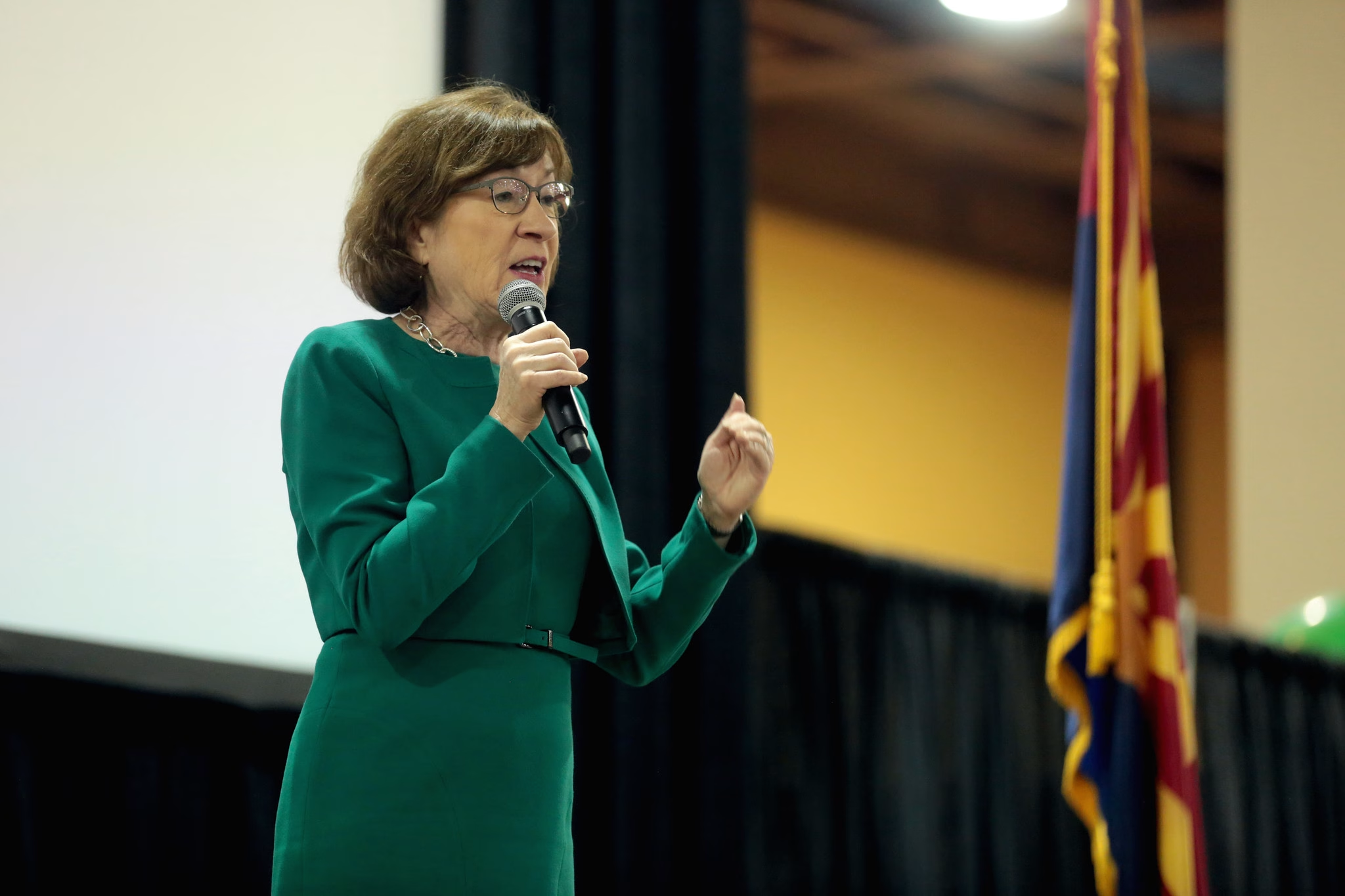
So, the title question emerges because of the following from the Kansas Reflector: US Sen. Roger Marshall leaves paper trail in Florida while calling Kansas home.
U.S. Sen. Roger Marshall established deeper roots than previously disclosed in Sarasota, Florida, where he had a vacation home that he traveled to on official business and said he used for visiting family.
Marshall and his wife put down roots in Sarasota, hosting fundraising events, obtaining real estate and fishing licenses and filing paperwork from the coastal Florida town while the senator worked in Washington, D.C., and claimed Kansas as home.
[…]
Marshall has faced persistent scrutiny throughout his time in the Congress for his transience in Kansas. Public records show his wife has held a Florida real estate license for half of her husband’s Senate term and has another license application pending. Records also show Roger Marshall has held fishing licenses in Florida since 2019 and used a P.O. Box in Kansas as his primary personal mailing address.
[…]
The family appears to own more valuable assets in Florida than Kansas, paying roughly five times as much in property taxes in the Sunshine state than the Sunflower state during Marshall’s time in the U.S. Senate, according to county property records in both states.
Marshall has claimed the rural Stafford County house as his home base for years, while voting records show his ballot is mailed to a P.O. Box that is also used as his official campaign committee mailing address.
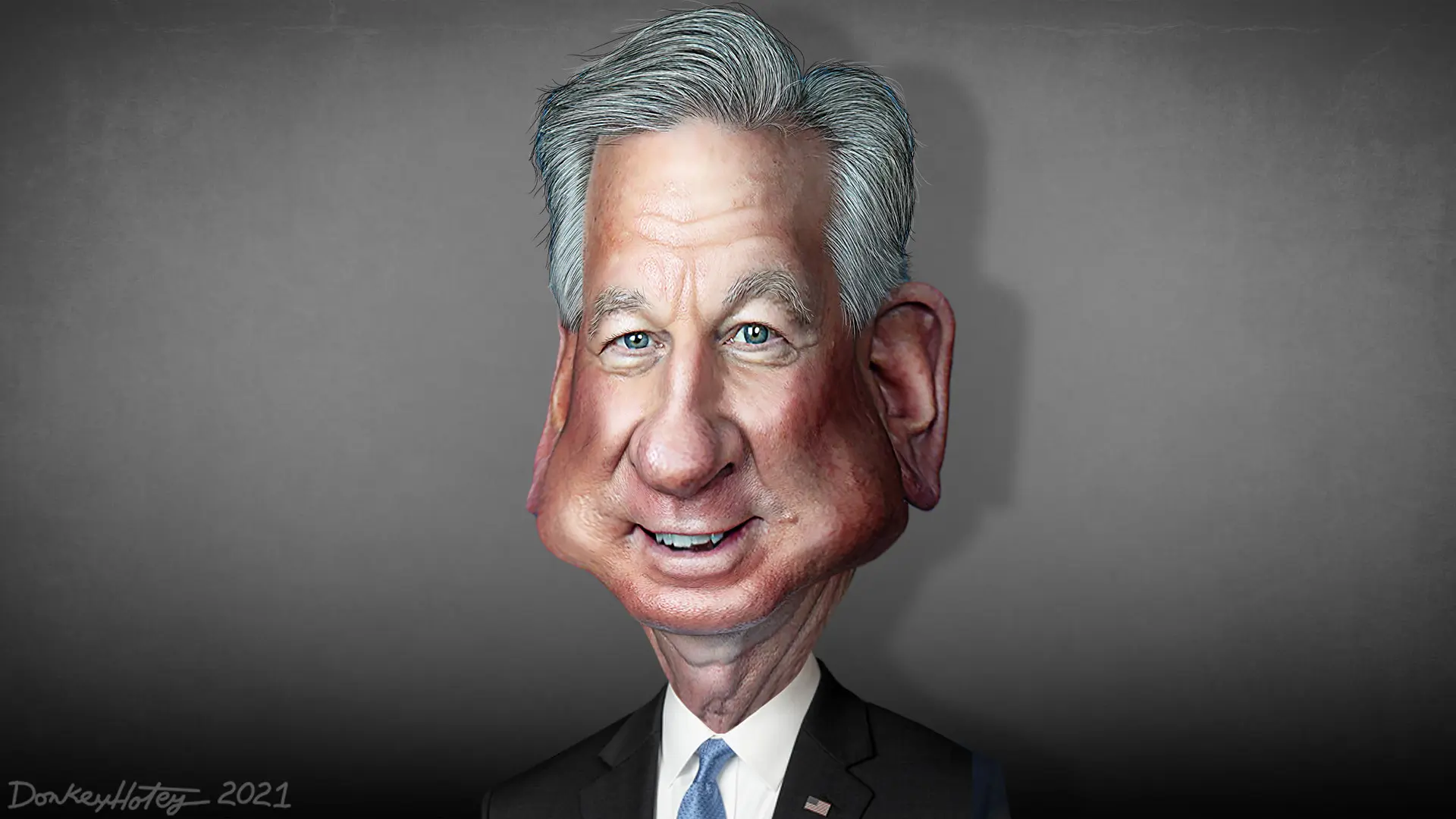
This is a familiar situation, as one of my Senators, Tommy Tuberville, also appears to reside in Florida (and, indeed, in a way that is less ambiguous than Marshall’s situation).
Then there was the question of Pennsylvania Senator candidate, and now US Senator, David McCormick lived in Connecticut. And speaking of Pennsylvania, when Mehmet Oz ran against John Fetterman, there were questions about whether Oz wasn’t really a New Jersey resident.
I would note that all of these cases are Republican. The closest Democratic example I can come up with is Hillary Clinton in 2000 when she ran for Senate in New York. However, the main difference there is that she overtly moved to New York to very publicly run for office. There wasn’t any question that she lived somewhere else.
As I noted in a lengthy post on Tuberville’s residency issue (as it pertains to him running for governor), I don’t have strong views on the residency issue. From the perspective of democratic theory, there is no particular reason why a person living in Florida can’t serve as US Senator from another state, assuming that this is transparently known and understood by the voters. That last part is key. If voters really don’t care about residence and they can factor that into their decision, assuming that there are not specific legal strictures involved
It is the case, of course, that the US Constitution does require Senators to be residents of their state, although it does not designate for how long. Is one day enough? Does it have to start when you run? When you win? Do you have to reside there all six years?
And, to be fair, a lot of this discussion becomes hair-splitting. Does one need simply a mailing address? A rental? A mortgage? When does a vacation home become a primary residence?
Still, given the insistence by many on the right that states have unique representational needs that are somehow seperate and qualitatively different than the collective interests of the people who live within their borders, surely that means that the Senators ought to have deep ties to their states, yes?
It seems to me that if Tuberville and Marshall can spend most of their time in Florida, that maybe Alabama and Kansas don’t need as much special attention as some continue to argue is the case.
Really, in a country wherein it is possible to be in NY in the morning and CA that afternoon, and for people of means to own homes in multiple locations, what does residency even mean? Moreover, what is the actual argument that states are so special that that they have to have unique representation of their geographic space?
Or, at a minimum, if those who think that states do deserve such attention, where is the outrage over how little some members of the Senate seem to take their responsibilities?
Just for kicks, there is another Alabama case, via WSFA: Lawsuit filed looking to remove Republican Lt. Gov. candidate John Wahl from ballot over residency.
The lawsuit cites a Tennessee driver license that Wahl obtained on Dec. 2, 2020, which was registered to the name ‘Nehemiah Ezekiel Wahl.’
The lawsuit says Wahl would not have been able to get the driver license without providing a Tennessee address.
According to the filing, Wahl would have had the Tennessee license until at least April 11, 2023, when they saw Wahl was pulled over for speeding and handed the license to an Alabama state trooper.
The filing also alleges Wahl was pulled over for speeding by an Alabama state trooper on June 24, 2025. However, they say for that stop, he had an Alabama driver license with the name ‘Nehemian John Wahl.’
According to the filing, Wahl was pulled over again on June 30, 2026, and presented a license with the name ‘Nehemiah Ezekial John Wahl.’
The plaintiffs allege that Wahl did not receive an Alabama driver license until “some time after January 27, 2023″ based “on information and belief.”
On top of all of that, there was the whole ID bit, as detailed by MSNOW: Trump-backed candidate for Alabama lieutenant governor haunted by use of invalid voter ID.
Concerns about the validity of Wahl’s ID were renewed this weekend when another primary challenger, Alabama Secretary of State Wes Allen, posted a video to Facebook accusing Wahl of having voted with a “homemade fake ID.”
The story centers on reporting in 2022 from AL.com that Wahl was permitted to vote in 2020 using an ID card he made himself, which he said had been “authorized” by the state auditor, Jim Zeigler, so that Wahl could work as a volunteer on the office’s reputedly understaffed media team. Ziegler repeated to the Alabama Daily News this week that he “approved the ID as State Auditor, and it was professionally printed by a vendor — not homemade.”
Wahl’s tale is not so much about representational questions (save that, like, Tuberville, he likely isn’t eligible under the state constitution to hold office), but one that highlights the hypocrisy of many in the GOP over voter ID and “electoral fraud.”
Wahl is almost certainly going to be elected Lt. Governor in November.
And FWIW, the Alabama Supreme Court ruled in a lawsuit challenging Tuberville’s residency that they could not rule until after he was elected, because only then would there be some harm to adjudicate. I confess to finding this maddening insofar as if the state constitution is explicit about qualifications of office, it would seem that should bar an ineligible candidate from running in the first place. The Court argued that it was first up to the voters. However, by that logic, a non-citizen could run, win, and be installed as governor until such a time as the courts ruled on their eligibility.
I will say again: Tuberville could easily clear up the issue, but the fact that he won’t leads me to believe that he can’t prove the requisite seven years of residency in the state, especially since it seems as if he voted in Florida at least once during that period, which would mean he committed voter fraud if he was, in fact, an Alabama resident.