Federal Budget Deficit Set To End Fiscal Year Near $1 Trillion, And Continue Growing
The Federal Budget Deficit is set to end the Fiscal Year close to $1 trillion, and to continue growing after that.
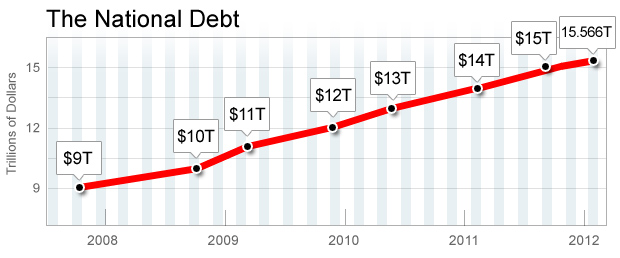
The National Debt has passed $21,000,000,000,000 for the first time in history just as the nation begins its return to the era of trillion dollar budget deficits.
The Federal Government will borrow more than $1 trillion this year for the first time in more than a half-decade.
The Federal Reserve sees the economy staying relatively the same for the foreseeable future, which is both a good and bad thing.
The first estimate of economic growth in the first three months of 2018 beat expectations slightly, but it doesn’t bode well for the immediate future.
Republicans spent the eight years of Obama Administration railing against fiscal irresponsibility. Now that they have power, they’re the ones being fiscally irresponsible.
With Republicans fully in control in Washington, their concerns about the budget deficit seem to have disappeared.
In addition to deadlines on the Federal Budget and DACA, Congress also has to deal with the debt ceiling at some point in the next month.
November’s Jobs Report was stronger than expected, but there are several caveats to keep in mind.
The Senate passed a tax cut bill last night, but it leaves a lot to be desired.
House Republicans unveiled their tax reform bill today, but its fate is far from clear.
It’s been two years since John Boehner stepped down as Speaker, and he’s got a few things to say about his former colleagues and the state of American politics.
Perhaps it’s time to consider getting rid of the debt ceiling entirely.
Kamala Harris has joined Bernie Sanders’ call for creation of a single-payer healthcare system.
A new poll shows that most Americans want Republicans want to move on from their failed effort to ‘repeal and replace’ the Affordable Care Act.
For the third time since December,, the Federal Reserve has raised interest rates.
In addition to everything else on its plate, Congress will have to revisit raising the debt ceiling again sometime this summer.
The first scorecard for President Trump’s first economic quarter in office isn’t exactly very good.
The Trump Administration is out with a tax plan, but it’s seriously lacking in details.
For only the third time since the Great Recession ended, the Federal Reserve Board has raised interest rates.
Budget hawks in the GOP face a showdown with Donald Trump’s spending ambitions this year that will likely decide whether we’ll ever get spending under control.
The election of an anti-austerity government in Portugal is raising some concerns.
Yesterday, Paul Ryan spoke out against the procedure under which the new budget deal was negotiated. Today, he announced that he’ll vote for it anyway.