Strait Numbers
Versus strait rhetoric.
As I noted in my comment on James Joyner’s post, I think that what we are seeing out of Trump is a rhetorical skill that he has had his entire career, which is convincing some number of gullible customers to buy what he is selling. And, I think, to often convince himself.
Trump steaks! Trump vodka! Trump University! Trump sneakers! Trump Bibles! Trump casinos!
It is all hype disconnected from reality.
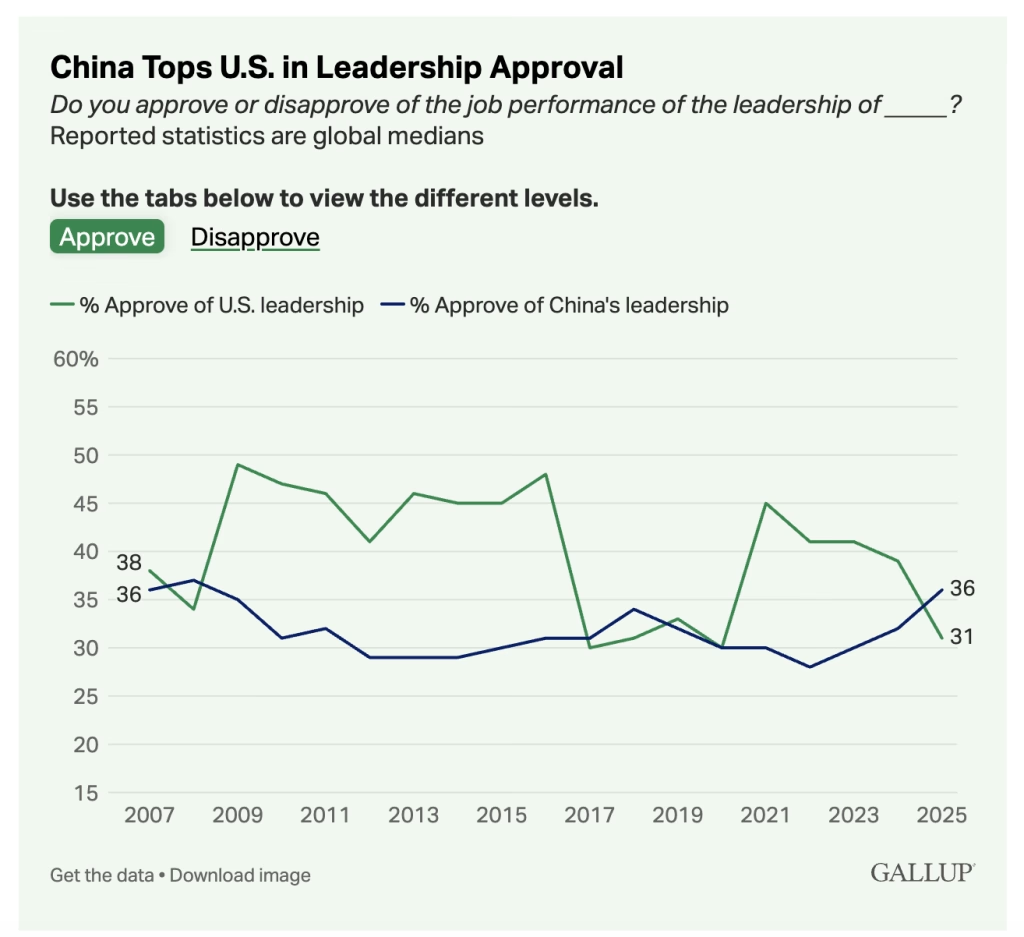
He does it with his whole “Golden Age” rhetoric that I think most of us treat as annoying background noise. He told TPUSA last night about how respected we are as a country worldwide because of his presidency, yet anyone who can read polling knows that this is not true.
But the Golden Age shtick and the puffery about our global reputation give supporters a safe harbor to dock their feelings. Plus, it is all so amorphous that supporters, at least, can pretend that it is true. I mean, the S&P 500 just hit a record! What are you doomers complaining about? I mean, do you want the Iranians to have a nuke?
This morass of rhetoric brings me to the Strait of Hormuz. I don’t think I am exaggerating when I say that every morning since April 8th, the headline portion of Morning Edition has contained some variation in whether the Strait is open, closed, partially opened, totally shut down by the US, totally shut down by Iran, opened back up, and so forth.
I am a news junkie who writes daily about politics, and I can’t keep track of what the alleged state of the Strait is. Imagine if you are a regular person (a normal, well-adjusted type), how does one even try to make sense of all of this?
Worse, these news reports are mostly generated via social media posts made by Trump, as augmented by various back-channel communications from Iran. There are no formal briefings of any consequence. There are precious few reporters on the ground.
All of this means that one’s likely understanding of the war is being filtered, like everything else, through partisan filters for the bulk of the population.
The problem for Trump is that there are empirical facts that do filter into the population, like the price of gasoline at the pump. Some voters, even Trump voters, do notice those big numbers on the side of the road and on their credit card receipts.
Nonetheless, it is kind of stunning the degree to which a lot of people seem to have decided that all of this war is just background noise, including a lot of investors on Wall Street.
CNBC argues it is because investors have decided that Trump will stand down and that 6-to-12 months from now, all will be back to normal. We shall see.
But I keep coming back to this in my mind:
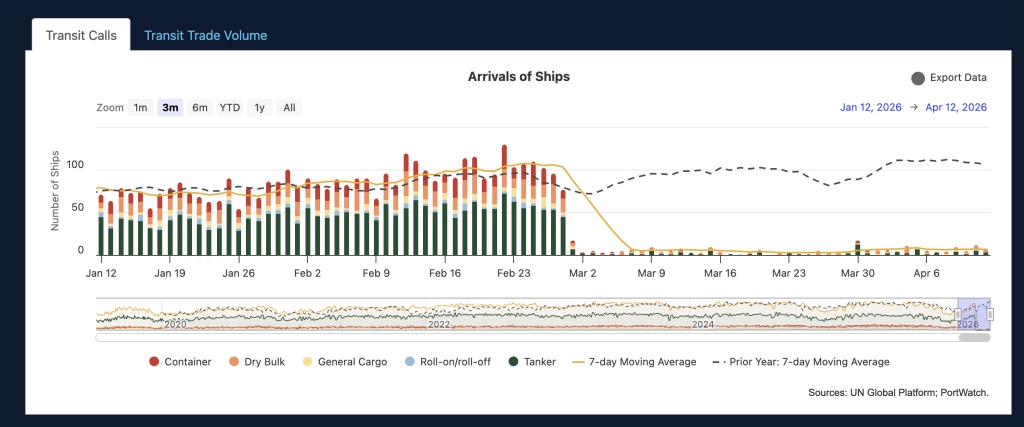
So, from an empirical point of view, the Strait has been essentially closed and remains essentially closed. And while I do understand that it matters on the margins which ships can transit, the issue really isn’t so much who is closing the thing, but that the transit of ships remains insanely low.
This is not sustainable for the Gulf States or the global economy. Wall Street can pretend like it doesn’t matter for a while, I guess, and Trump can declare victory, even if, objectively, we are worse off than when all of this started. But at some point, this is going to matter unless it resolves cleanly and quickly.
We do remember the way the disruption of global supply chains during COVID affected us all, right?
Right?
Sigh.
See this piece from the Atlantic Council: 15 charts that explain why the Strait of Hormuz shutdown matters for the global economy, which I commend in full. I would note that the immediate effects of all of this, as per the charts in the piece, show that the main immediate impacts are on countries other than the US, often hitting allies hard (jet fuel in Europe, for example). And yes, while shortages will affect other countries more acutely, prices for commodities are set globally, so the pain will come to our shores (as it already is at the pump).
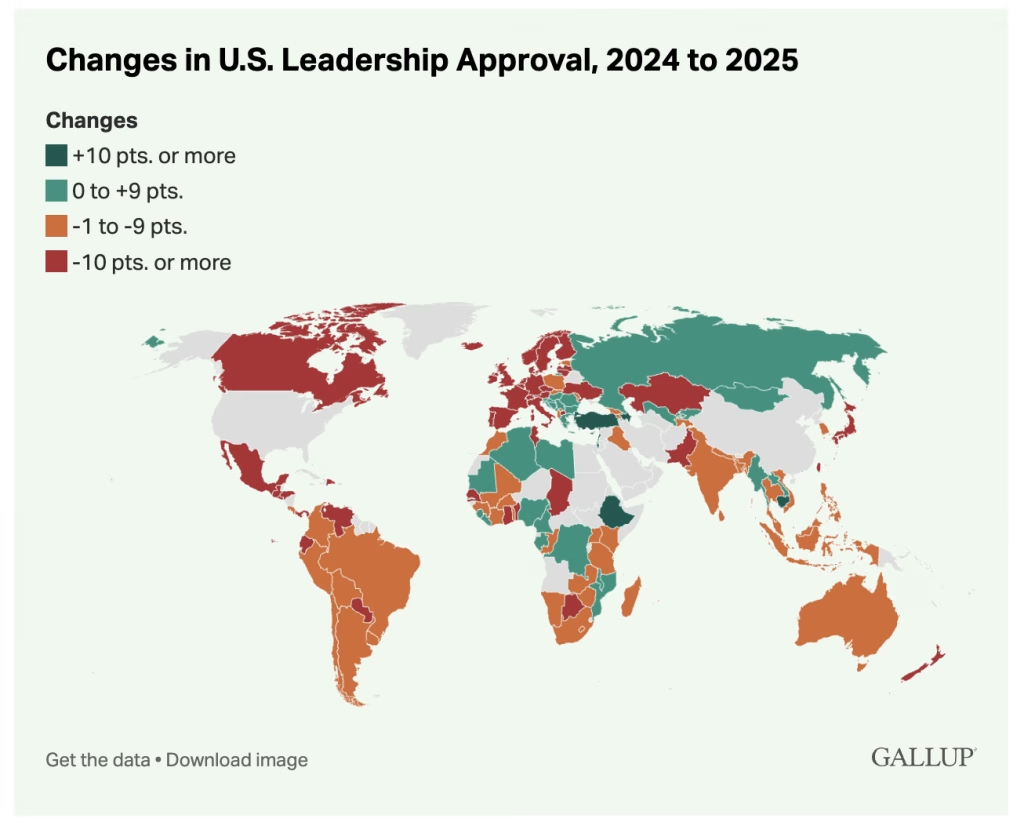
Still, all of that underscores how much of a lie it is that Trump has made the US more respected globally; there is little doubt that we are more reviled than has ever been the case.
Indeed, Gallup published the following earlier this month:
Here’s one chart from the piece worth noting, which reminds me of this story from the AP in open tabs: AP Exclusive: Europe has ‘maybe 6 weeks of jet fuel left,’ energy agency head warns.
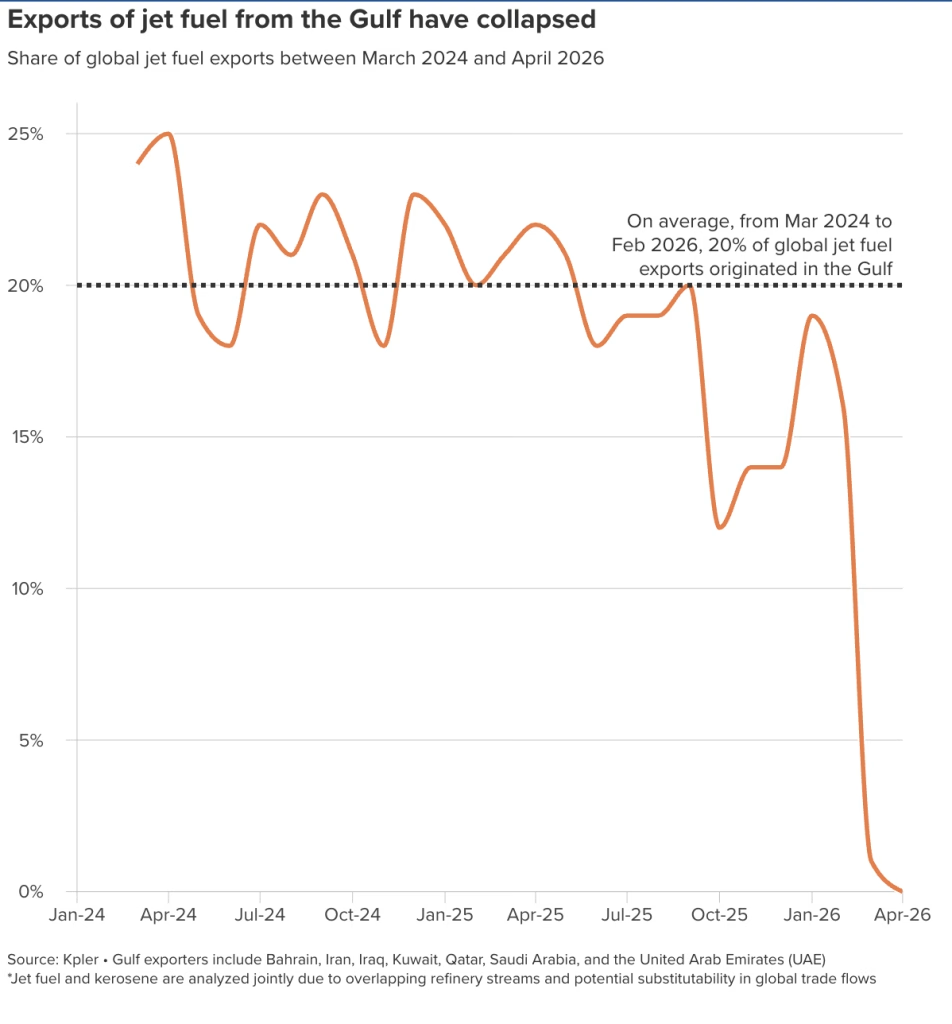
Maybe all of this is an illusion spun by the Kafaybe Master, or maybe he TACOs out soon, but at some point, it seems likely that reality is going to fully assert itself.

While Trump is Trump, it’s his environment (the GOP, mainly, even though though it’s a bit broader than that) that allowed his bullshitting to become the problem that it is.
I mean, if we all would have agreed that the emperor has no clothes, we wouldn’t be in this flaming mess.
I’m no insider, so I don’t know if there is some sort of continuous connection, but this infamous Rove(?) quote already has it all:
Going from there to Trump seems… inevitable.
First time a tragedy, second time a farce.
Regarding the market. At one time the stock market was dominated by individual investors managing portfolios either by themselves or with an adviser, in today’s market, those investors would be/are gone. Today, most investment is managed by institutional investors and while they can make money on the dips, they need the markets to rise on a regular basis. If the market keeps falling then those who have invested with the institution will pull their money out and it may never come back. So the investment pros grab at straws, anything that appears optimistic becomes a buy signal.
As I mentioned in the Blockade post, we’re living in a García Márquez moment of magical realism. In the Times(?) this AM, an article talked about the late 60’s documentary The Sorrow and the Pity being a apt description of our current times, that we collectively want the horror to pass and try to keep everything as “normal” as possible hoping that it will.
Americans, in the bowels of Christ, I beseech thee, stop conflating the stock market with the economy.
I am not a historian, a political scientist, economist or anything like that, I consider myself a retired lunch bucket Democrat. So here’s my question in all seriousness as a non-expert. At what point does the rest of the developed world get together and tell us and Israel to go to hell and make a deal with Iran that doesn’t take us into consideration?
@Kingdaddy:
It’s not the economy. It’s a casino. And given Fatso’s history w casinos…
The following is an AI generated response…