Doing a little research and came across this:
“The conception of political equality from the Declaration of Independence, to Lincoln’s Gettysburg Address, to the Fifteenth, Seventeenth, and Nineteenth Amendments can mean only one thing-one person, one vote”–Justice William O. Douglas, writing for the majority in Gray v. Sanders (1963).
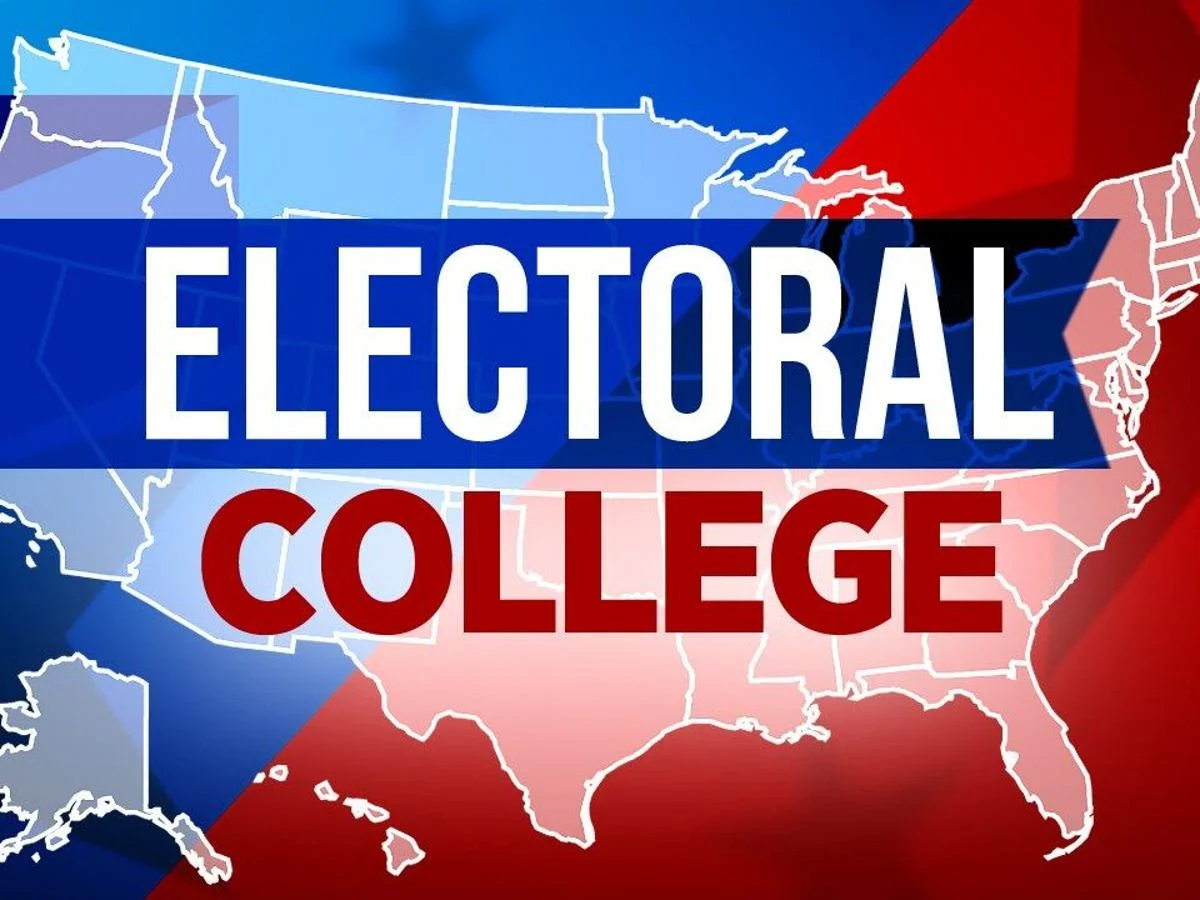
This was, interestingly enough, in the context of a system in the state of Georgia that allocated more electoral power to rural counties at the expense of urban counties–i.e., a situation in which certain voters had more electoral power than others. I am not noting this because it is legally significant to the ongoing debate electoral college, but it is certainly philosophically relevant.
Also, for trivia reasons, this is the case wherein “one person, one vote” originates, and not Baker v. Carr (1962).