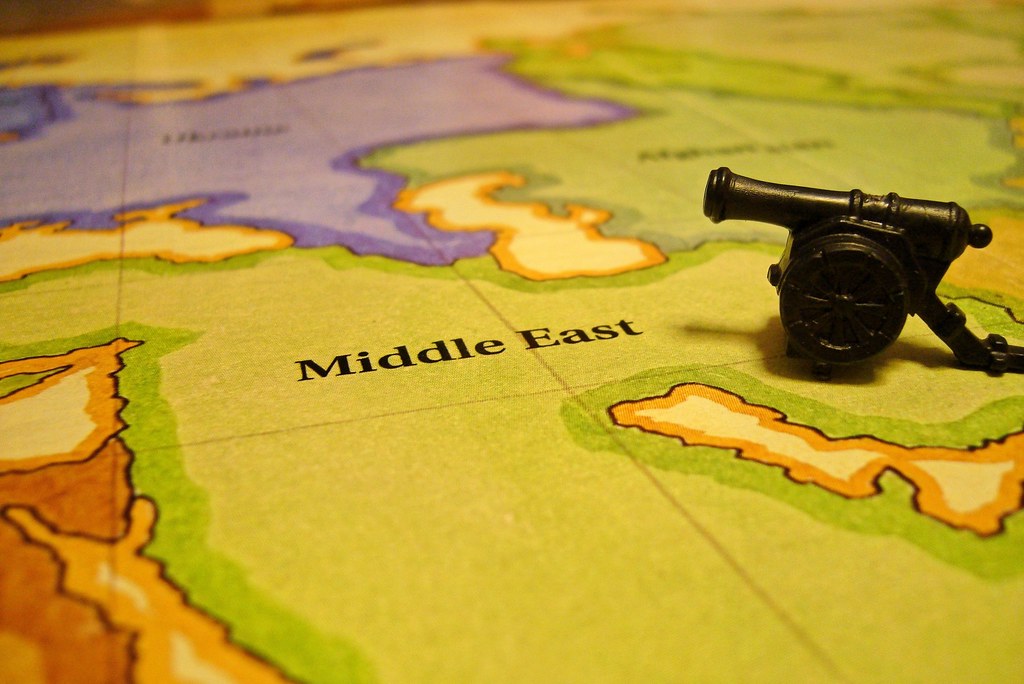

The Atlantic headlines Yochi Dreazen’s latest missive, “From Urinating to Koran-Burning, the U.S. Can’t Stop Infuriating Afghans.” My instinctive reaction: Why are Afghans so easily infuriated?
Dreazen is right as far as he goes:
The violent protests that erupted in Afghanistan on Tuesday amid reports that American forces burned copies of the Koran are the latest in a series of self-induced wounds for the NATO alliance. The current phase of the long and unpopular war appears to be following a grimly predictable pattern. When there seems to be a smidgeon of good news, NATO troops commit a public relations blunder to overshadow it.
There’s no question that this is a blunder that undermines the NATO mission. General John Allen, the commander of the NATO mission in Afghanistan, quickly issued a statement offering “my sincere apologies for any offense this may have caused” to “the noble people of Afghanistan” and promising ”this was NOT intentional in any way.”
Yet, despite this groveling, two days of rioting–which have already claimed at least seven innocent lives–have ensued.
There’s no doubt of that. Yet, surely, mass murder and mayhem is a far greater outrage than carelessly treating left behind books and papers?
Martine van Bijlert, director of the Afghanistan Analysts Network, explains that, “The demonstrations are a combination of religious outrage, pent-up frustration and groups wanting to stir trouble. It is difficult to predict how bad things will get; this will depend largely on who manages to control – or hijack – the expressions of anger.”
While applauding the swiftness of contrition in statements by Allen and others, she warns “they are unlikely to placate those who were determined from the outset to make as much noise as possible, or those who feel they have already heard so many apologies in the past.” She also notes “the bewilderment felt by many Afghans (and foreigners) that after ten years of efforts in Afghanistan there was apparently still no understanding of how inflammatory mistakes like that are.”
Indeed, there have been enough riots and deaths over the years caused by Muslims outraged over various perceived sleights to their faith that the lesson should be crystal clear by now. Just last year, angry mobs murdered twelve innocents at the UN compound in Mazar-i-Sharif because a self-styled pastor burned a Koran in Gainesville, Florida–some 8000 miles away. Back in 2005, seventeen people were killed in rioting over a report–later debunked–that American soldiers had flushed a Koran down a toilet at a Guantanamo Bay, Cuba prison. Afghanistan was also a principle site of protest in 2006–and subsequent flareups of the controversy–over the printing of some cartoons making sport of the Muslim prophet Muhammed in the Danish Jyllands-Posten and various other European newspapers.
From a public policy standpoint, then, NATO, the US Government, and other outsiders in Afghanistan are absolutely right to bend over backwards to avoid inflaming the sentiments which lead to destruction and loss of life.
At the same time, however, it’s reasonable to wonder what we have gotten out of more than a decade of investment–including 1901 US and 2901 total NATO Coalition deaths–in an effort to forge, as President Obama put it in his speech at West Point, a “partnership with Afghanistan grounded in mutual respect – to isolate those who destroy; to strengthen those who build; to hasten the day when our troops will leave; and to forge a lasting friendship in which America is your partner, and never your patron.”
Aside from hastening the day when our troops leave, none of those goals seem any closer than they were in 2001.
Photo: Getty Images