

WaPo (“Secret Pentagon memo on China, homeland has Heritage fingerprints“):
Defense Secretary Pete Hegseth has reoriented the U.S. military to prioritize deterring China’s seizure of Taiwan and shoring up homeland defense by “assuming risk” in Europe and other parts of the world, according to a secret internal guidance memo that bears the fingerprints of the conservative Heritage Foundation, including some passages that are nearly word-for-word duplications of text published by the think tank last year.
The document, known as the Interim National Defense Strategic Guidance and marked “secret/no foreign national” in most passages, was distributed throughout the Defense Department in mid-March and signed by Hegseth. It outlines, in broad and sometimes partisan detail, the execution of President Donald Trump’s vision to prepare for and win a potential war against Beijing and defend the United States from threats in the “near abroad,” including Greenland and the Panama Canal.
The document — setting out a prioritization framework for senior defense officials and a vision to execute that work — also instructs the military to take a more direct role in countering illegal migration and drug trafficking.
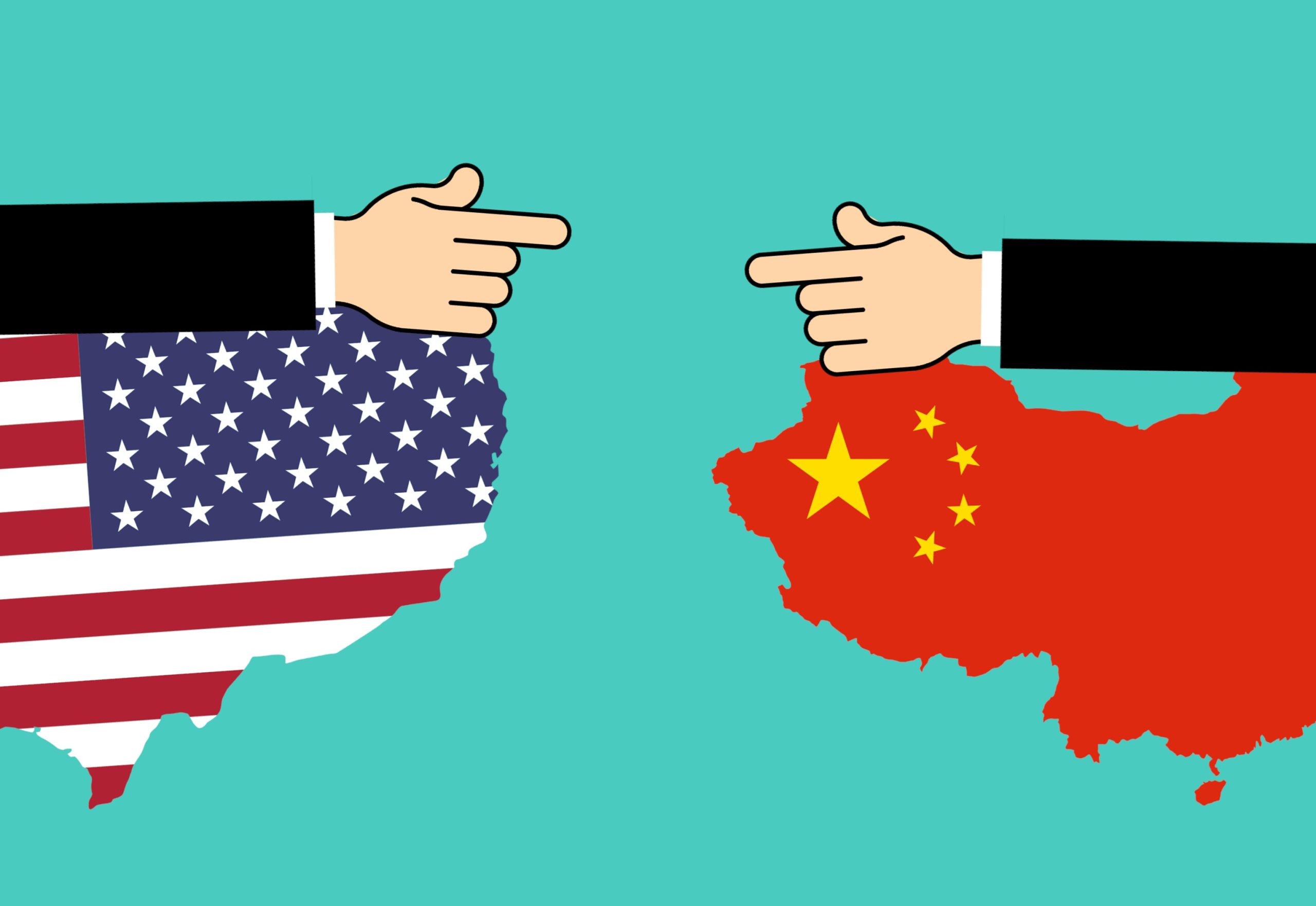
The first Trump administration and the Biden administration characterized China as the greatest threat to the U.S. and postured the force to prepare for and deter conflict in the Pacific region. But Hegseth’s guidance is extraordinary in its description of the potential invasion of Taiwan as the exclusive animating scenario that must be prioritized over other potential dangers — reorienting the vast U.S. military architecture toward the Indo-Pacific region beyond its homeland defense mission.
The Pentagon will “assume risk in other theaters” given personnel and resource constraints, and pressure allies in Europe, the Middle East and East Asia to spend more on defense to take on the bulk of the deterrence role against threats from Russia, North Korea and Iran, according to the guidance.
The agency will shift focus to counterterrorism missions against groups with the capability and intent to strike the U.S., the guidance says, signaling that it will deprioritize militants in the Middle East and Africa who are regionally destabilizing but don’t have ambition to launch international attacks.
“China is the Department’s sole pacing threat, and denial of a Chinese fait accompli seizure of Taiwan — while simultaneously defending the U.S. homeland is the Department’s sole pacing scenario,” Hegseth wrote. Its force planning construct — a concept of how the Pentagon will build and resource the armed services to take on perceived threats — will consider conflict only with Beijing when planning contingencies for a major power war, it says, leaving the threat from Moscow largely attended by European allies.
Where the Biden administration’s 2022 National Defense Strategy emphasized alliances in countering Russia’s aggression, calling “mutually-beneficial Alliances and allies … our greatest global strategic advantage,” the Hegseth interim guidance says NATO must take on “far greater” burden sharing because the U.S. will be reluctant to provide forces with its priorities focused elsewhere.
I’m hesitant to comment on classified documents that have been leaked to the press but, in this instance, there have been plenty of public signals. Most notably, the nomination of Bridge Colby as the Undersecretary of Defense for Policy, who has been advocating precisely this for years.
One of my longstanding critiques of these documents, and especially the public-facing versions of them, is that they purport to offer a strategy but in reality fail to do so. Mostly, this is because, while they list priorities, they don’t couple that with what it is we won’t do.
So, for example, the Trump 45 strategy articulated that we were moving away from global terrorism as our primary focus to strategic competition with China and Russia.* But, in reality, we continued to devote considerable resources to counterterrorism and other regions.**
The Biden strategy evolved slightly, deeming China the “pacing challenge,” Russia an “acute threat,” and Iran, North Korea, violent extremist organizations, climate change, and pandemics “persistent threats.” But, even with a defense budget just shy of a trillion dollars annually, we simply couldn’t resource all of those threats.
Because of its small size and tradition of relative austerity, the Marine Corps was far and away the service that leaned most heavily into this strategy. With his July 2019 Commandant’s Planning Guidance and the ensuing Force Design 2030, General David Berger radically reshaped his service for a future fight in the Indo-Pacific, divesting legacy assets in order to “reinvest” elsewhere. He did so despite a huge backlash from retired Marine generals and others.
It appears that the Trump 47 administration is following suit. They have already signaled, from the very top, that they do not consider Russian revanchism a threat to American interests. And they’ve sent mixed signals on Iran and North Korea.
The move definitely has its critics.
The guidance was provided to congressional national security committees, where Republicans and Democrats have described it as confusing, according to a congressional aide who reviewed the document. It calls for withdrawing from a presence in most of the world, including the Middle East, but the administration has focused on demonstrating firepower and deterrence against the Houthis in Yemen and pressuring Iran, the aide noted.
“There’s tension between ‘We want American strength and military dominance in the world, and we want to be everywhere, but also nowhere,’” the aide said, speaking on the condition of anonymity to discuss sensitive documents. “And that’s inconsistent and going to be difficult for them to design a strategy around.”
The interim guidance is nine pages. Several passages throughout are similar to a longer 2024 report by the Heritage Foundation, some of which are nearly identical, according to The Washington Post’s analysis of both documents. One of the Heritage report’s co-authors, Alexander Velez-Green, is now in an interim role as the Pentagon’s top policy official.
The Heritage report, published in August, recommends that the Pentagon prioritize three core issues: Taiwan invasion deterrence, homeland defense, and increased burden sharing among allies and partners — which the Hegseth guidance mirrors. The congressional aide said it was readily apparent to Capitol Hill staff that the document bore the influence of the conservative think tank.
That a think tank is having a significant influence on a new administration’s policies is not problematic in and of itself. Indeed, that’s rather the point of think tanks. The then-new Center for a New American Security was a major source of officials for the incoming Obama administration in 2009, and many other officials were drawn from other think tanks, including the Atlantic Council, where I worked at the time.
Alas,
Trump as a presidential candidate denied that Heritage’s Project 2025 plan, which set out a far-right transition agenda across the entirety of the federal government, was a blueprint for his second term. But his policies and appointments — including the Pentagon guidance — have made clear that Heritage’s plans have been deeply influential in the first months of his administration.
It turns out Project 2025 was indeed the playbook for much that has happened on the domestic side. It shouldn’t be a shock that the same is true on the defense and foreign policy side. That this was steadfastly denied during the campaign is problematic, at least to the extent elections are about voters having a say about how they will be governed.
Maj. Gen. Garrick Harmon, the head of strategy and plans at Africa Command, recommended to staff that they read the Heritage report as part of a discussion of how to align their priorities with the newPentagon guidance, according to a command staff member who spoke on the condition of anonymity to discuss internal deliberations. Another official within the command distributed a copy of the Heritage report, the staff member said.
The recommendation did not appear partisan in nature, the staff member said, adding that the similarities suggest the Pentagon’s document was partly inspired by the Heritage report and that the information could be complementary to understanding Hegseth’s guidance.
Africa Command declined to comment on internal discussions but said the staff meets with experts on Africa to inform planning, said Kelly Cahalan, a spokesperson for the command. “The staff also regularly reads and shares publicly available research and reports,” she said. “As with all prudent military planning, we are continually leveraging the latest research to assess and develop our strategy.”
Reports that AFRICOM will be consolidated back into European Command have been rampant. That has been on the table for awhile. While I can preach it either way, there are strong arguments that Africa is a major part of the chessboard of competition with China.
Hegseth recently visited the Pacific region to emphasize his priorities against China, telling service members in Guam that they are “the tip of the spear” for U.S. military operations.
The new Pentagon guidance fora “denial defense” of Taiwan includes increasing the troop presence through submarines, bombers, unmanned ships, and specialty units from the Army and Marine Corps, as well as a greater focus on bombs that destroy reinforced and subterranean targets. The plan also calls for improving defense of U.S. troop locations in the Indo-Pacific, generating pre-positioned stocks and improving logistics.
While emphasizing support to deter a Chinese attack on Taiwan, the document also calls for “pressuring” Taipei to “significantly increase” its defense spending. Trump and his allies have criticized Taiwan as underinvesting in its own defense, urging the self-ruled democratic island to spend up to 10 percent of its GDP on military readiness — a proportion well above what the U.S. and its allies spend on defense.
Since taking office, he has dodged the question of whether the U.S. would allow Beijing to take the island by force.
In fairness, strategic ambiguity on that question has been a hallmark of US policy since our opening to the PRC more than half a century ago. President Biden’s declaration that we would indeed defend Taiwan was widely viewed as a gaffe and hurriedly walked back by his staff.
But, in truth, despite the reports on the classified interim guidance (I have yet had access), I have wondered going back to the first Trump administration whether we would actually go to war to defend Taiwan. I had no such doubts under Biden.
And this is worrisome, if not entirely surprising:
Hegseth’s guidance acknowledges that the U.S. is unlikely to provide substantial, if any, support to Europe in the case of Russian military advances, noting that Washington intends to push NATO allies to take primary defense of the region. The U.S. will support Europe with nuclear deterrence of Russia, and NATO should only count on U.S. forces not required for homeland defense or China deterrence missions, the document says.
A significant increase in Europe sharing its defense burden, the document says, “will also ensure NATO can reliably deter or defeat Russian aggression even if deterrence fails and the United States is already engaged in, or must withhold forces to deter, a primary conflict in another region.”
While I share the administration’s frustration that our richest European allies have underinvested in their own defense for decades, I nonetheless view our commitment under Article 5 of the North Atlantic Treaty as a bedrock of our foreign policy. If that’s no longer the case, we’re simply not the world power that we have been for more than a century.
______________________
*The classified version made clear that China was a higher priority than Russia. Which, again, I’m comfortable writing in a public forum because that was widely understood in the unclassified space.
**In fairness, insiders understood that the priority shift would happen gradually rather than immediately.









