
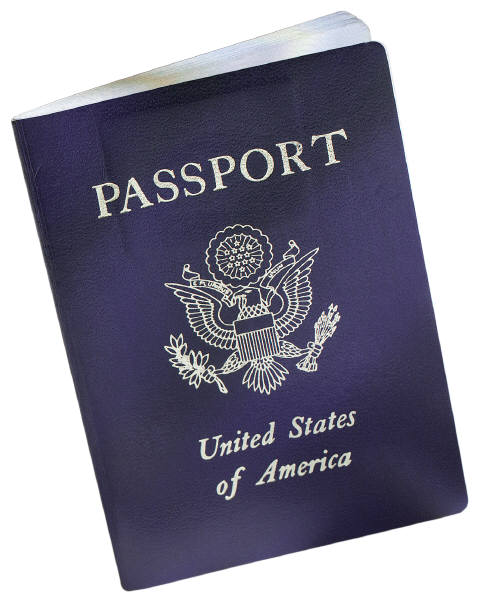
 A small but growing number of Americans are renouncing their citizenship because the tax burden outweighs their perceived benefit:
According to government records, 502 expats renounced U.S. citizenship or permanent residency in the fourth quarter of 2009 — more than double the number of expatriations in all of 2008. And these figures don’t include the hundreds — some experts say thousands — of applications languishing in various U.S. consulates and embassies around the world, waiting to be processed. While a small number of Americans hand in their passports each year for political reasons, the new surge in permanent expatriations is mainly due to taxes.
Considering that an estimated 3 to 6 million Americans currently reside abroad, the number of renouncements is small. But expatriate organizations say the recent increase reflects a growing dissatisfaction with the way the U.S. government treats its expats and their money: The U.S. is the only industrialized nation that taxes its overseas citizens, subjecting them to taxation in both their country of citizenship and their country of residence.
“Their income and wealth are generated largely outside the U.S., so why does the U.S. get a slice of that?” says Phil Hodgen, a California-based international tax attorney who helps Americans in the expatriation process. “More and more people see no long-term benefit to retaining U.S. citizenship.”
Apparently, measures put in place to prevent Americans and American corporations from hiding assets overseas has made the process much more onerous.
While I’m a critic of our complicated tax code, I’m not sure why those who wish to retain the rights and privileges of American citizenship while living abroad shouldn’t be asked to pay into the kitty with the rest of us. After all, they get to vote in our elections, have the protections of the American consulate, and the benefits of an American passport. Further, in most cases at least, they’re not being double-taxed; there’s an exclusion up to $94,000 for money that’s taxable in the host country.
I’m reminded of the JK Rowling “manifesto” widely circulated among the left blogs a few days back (see Kevin Drum, Matt Yglesias, and Chris Bertram)
I chose to remain a domiciled taxpayer for a couple of reasons. The main one was that I wanted my children to grow up where I grew up, to have proper roots in a culture as old and magnificent as Britain’s; to be citizens, with everything that implies, of a real country, not free-floating ex-pats, living in the limbo of some tax haven and associating only with the children of similarly greedy tax exiles.
A second reason, however, was that I am indebted to the British welfare state; the very one that Mr Cameron would like to replace with charity handouts. When my life hit rock bottom, that safety net, threadbare though it had become under John Major’s Government, was there to break the fall. I cannot help feeling, therefore, that it would have been contemptible to scarper for the West Indies at the first sniff of a seven-figure royalty cheque. This, if you like, is my notion of patriotism.
But, of course, Rowling chose to continue living in her homeland whereas the American expats are domiciled and earning their living abroad. It may simply be the case that, after some lengthy period of time, living abroad loosens the bond one feels to one’s homeland.









