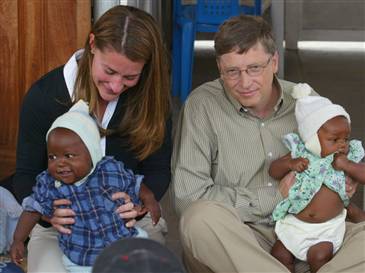
 After reading an interview about Bill Gates’ plans to hook up Third World farmers with Coca-Cola, Matt Yglesias observes,
What always leaves me scratching my head about uber-rich philanthropists is why so many of their activities are so depoliticized. The state plays an enormous role in the economy and in people’s lives—much larger than any foundation ever could—and one of the biggest ways someone with a lot of money can impact the world is by using the money as a lever to move states.
[…]
But the biggest thing cutting developed world farmers out of the supply chain for Coca-Cola and others isn’t a logistic issue, it’s developed world agricultural policy. In the US, for example, Coke is made with high-fructose corn syrup thanks to barriers to importing sugar and subsidies for the growing of corn. This kind of thing is incredibly difficult to change even though you’d be hard-pressed to find serious policy analysts who think it’s a good idea. It’s incredibly difficult to change because the interest group pressure is all on the side of US corn and sugar producers. But that’s the kind of dynamic the richest man on the planet could conceivably change.
Matt’s probably right that public policy plays at least as large a role as infrastructure and other non-political barriers in Third World poverty and other problems that Gates and other philanthropists are trying to solve. But there are some obvious barriers to addressing the issues on that front.
First, there’s a reason public policy on any given issue is what it is. There are interest groups aligned to fight for the status quo, who’ll fight back hard against Johnny Come Latelies without the inside connections. And once policy has inertia, it’s incredibly messy to change it.
Second and relatedly, picking political fights makes enemies and makes it harder to raise money and achieve goodwill.
Third, the more one’s organization moves into the realm of lobbying and otherwise trying to change public policy, the harder it is to maintain tax exempt status.
Fourth and relatedly, until last week’s Supreme Court decision, it’s quite possible that our campaign finance laws provided additional obstacles to spending vast sums trying to change policy. Certainly, to the extent that it involved trying to elect candidates favorable to change and oust existing politicians who were barriers to change, it has been historically quite difficult.
Of course, I’m not a billionaire philanthropist and there may be a half dozen other explanations I haven’t considered.