

CNN (“CDC ends recommendations for social distancing and quarantine for Covid-19 control, no longer recommends test-to-stay in schools“):
The US Centers for Disease Control and Prevention says the nation should move away from restrictive measures such as quarantines and social distancing and focus on reducing severe disease from Covid-19.
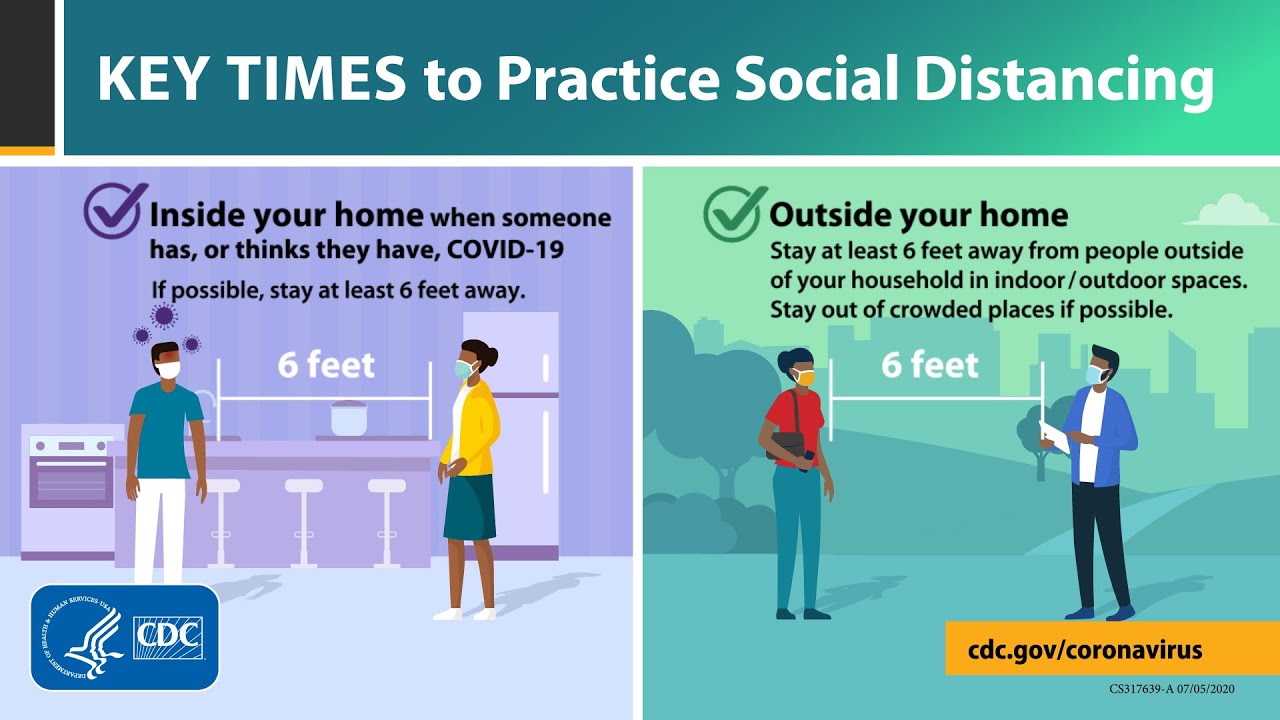
In new guidelines released Thursday, the agency no longer recommends staying at least 6 feet away from other people to reduce the risk of exposure — a shift from guidance that had been in place since the early days of the pandemic.
The shift is a sign of how much has changed since the beginning of the pandemic more than two years ago. Nearly the entire US population has at least some immunity through vaccination, previous infection or, in some cases, both.
“The current conditions of this pandemic are very different from those of the last two years,” Greta Massetti, who leads the Field Epidemiology and Prevention Branch at the CDC, said Thursday.
“High levels of population immunity due to vaccination and previous infection and the many available tools to protect the general population, and protect people at higher risk, allow us to focus on protecting people from serious illness from Covid-19.”
The new CDC guidelines say contact tracing, another hallmark during the pandemic, should be limited to hospitals and certain high-risk group-living situations such as nursing homes, and the guidelines de-emphasize the use of regular testing to screen for Covid-19, except in certain high-risk settings like nursing homes and prisons.
The new guidance also does not advise quarantining people who’ve been exposed to Covid-19 but are not infected.
But the guidance does keep some measures the same. It encourages testing for people with symptoms and their close contacts. It also says people who test positive should stay home for at least five days and wear a mask around others for 10 days. It also continues to recommend that people wear masks indoors in about half the country.
The new guidelines also tailor advice on isolation for people who became very sick from Covid-19. People with moderate symptoms — such as shortness of breath — and those who were hospitalized should stay home for at least 10 days. People with compromised immune systems should now talk to their doctor about ending their isolation after an infection.
The social distancing recommendation should have ended quite a long time ago. It was a perfectly reasonable hypothesis in the early days but we’ve long since understood that being six feet away from someone in an indoor space did essentially nothing.
As a matter of pure science, a lot of the rest makes little sense. The pandemic is more widespread now than it was a few months ago. Anecdotally, while we had essentially zero cases of COVID in among our students and faculty in the first two years of the pandemic, it seems to be spreading like wildfire lately. After having avoided it in our large blended family for so long, my oldest stepdaughter had a mild case last month. Thankfully, none of the rest of us were infected.
But, as I’ve been saying for a long time now, public health is as much about politics as science. And the public has long since been “over” the pandemic, treating it as simply a fact of life to be lived with.
Once the mask mandate in the schools ended last March, I let my daughters—both of whom are fully vaccinated–go without. I got a constant stream of emails from the school about contract tracing because someone on the school bus or they passed in the halls had tested positive. For my oldest, who started middle school last year, it was almost comical, with two or three “close contacts” a day. Given that they’re both healthy and vaccinated, I essentially did nothing with the information. It would have been idiotic to pull them out for days at a time every time there was a contact. They’re either in school or they’re not.
It seems that the CDC has figured out that this is where we are now.
The changes are an acknowledgment that SARS-CoV-2 may be with us for the long haul. They aim to help people live their lives around Covid-19 with minimal disruptions to work and school. They are also more risk-based, advising people who are at higher risk for severe illness to take more personal precautions than others.
“I think they just overall come into alignment with what people are doing anyway,” says Dr. Peter Chin-Hong, an infectious disease specialist at the University of California at San Francisco.
Chin-Hong thinks some states, like California, will continue to go beyond the CDC’s guidance in their own recommendations, but by and large, he thinks these reflect the prevailing attitudes toward the pandemic. He sees it as a move by the CDC to try to regain the public’s trust.
A recent survey from the Annenberg Public Policy Center shows that most Americans (54%) are no longer masking indoors, and about 4 in 10 say they’ve fully returned to their pre-pandemic routines — up from 16% in January.
“What the CDC is, in my opinion, trying to do, they are trying to still be relevant, and maybe when they say something, people will listen to them instead of being completely 180 degrees away from what behavior is anyway,” Chin-Hong said.
Bill Hanage, an epidemiologist at the Harvard T.H. Chan School of Public Health, agrees that the new guidance shows that the CDC is trying to meet people where they are.
“I think that this is a point where you actually have to sort of get real and start giving people tools they can use to do something or not. Because otherwise, people will just will not take you seriously,” Hanage said.
I think that’s right. Not everyone agrees with the new guidelines, of course.
Other experts, however, feel that the new guidelines don’t go far enough to correct scientific missteps in previous guidance.
“This revision does not go anywhere near enough to correct the problems of flawed recommendations and lack of evidence,” said Dr. Eric Topol, a cardiologist at Scripps Research Institute in La Jolla, California, said in an email to CNN. Topol has been critical of the CDC for months, saying it wasn’t strict enough with its isolation policies for people with Covid.
Topol is likely also right. The current policy—which we followed with my stepdaughter—was to isolate for six days. That may well not be adequate in all cases. Realistically, though, once people are asymptomatic and test negative, it’s really hard to ask them to quarantine longer. Indeed, it would likely backfire, making people reluctant to report that they’ve been infected to begin with.









