
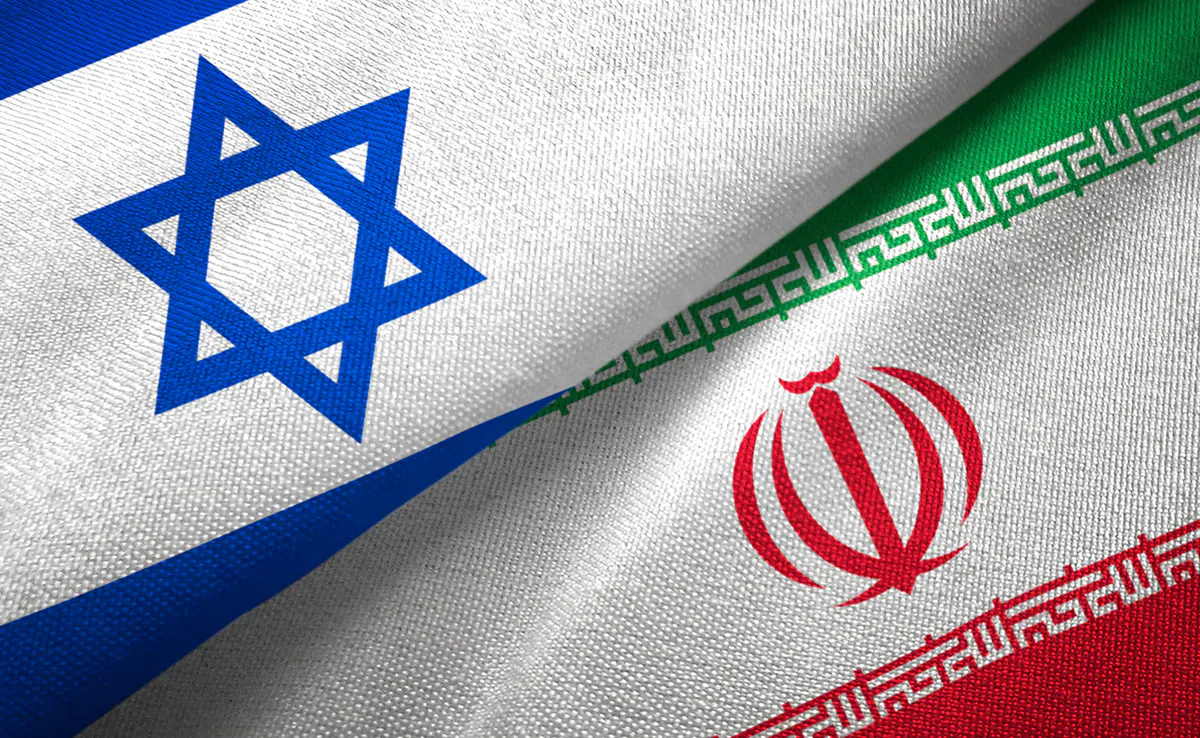

The Economist (“Trump says the war is over. How 14 bombs may change the Middle East.“):
He came, he bombed, he ended the war—or so President Donald Trump wants the world to believe. Two days after a fleet of stealthy American bombers struck deeply buried Iranian nuclear facilities, Mr Trump announced a “complete and total” ceasefire in the war between Israel and Iran. “I would like to congratulate both Countries, Israel and Iran, on having the Stamina, Courage, and Intelligence to end, what should be called, ‘THE 12 DAY WAR,’” he wrote on his Truth Social site.
Reports said Mr Trump had first secured Israel’s agreement to the ceasefire, then sent the proposal to Iran via Qatari intermediaries. Mr Trump said Iran would halt hostilities first, followed by Israel 12 hours later. Each side “will remain PEACEFUL and RESPECTFUL,” he explained. He later told NBC News he expected the ceasefire to last “forever”. Shares rose and oil prices fell as Iran’s foreign minister said there was no formal deal but said Iran would stop if Israel did. But as the deadline expired an early morning volley of Iranian missiles was reported to have killed three people in southern Israel, in what it must be hoped was a defiant final salvo.
[…]
Three questions now hang over the region: can the ceasefire hold; will there be a follow-on diplomatic deal to restrict Iran’s nuclear programme; and will the Middle East become more stable after the war?
Begin with the ceasefire. Neither Israel nor Iran have formally confirmed the cessation of hostilities, but both have good reason to stop fighting. The theocratic Iranian regime has long chanted “Death to America”, but has for decades sought to avoid a direct confrontation with the superpower, preferring instead to rely on proxy militias and occasional diplomacy. It is unpopular at home, its armed forces seem powerless against Israel, and its allies across the region have been weakened. With America’s entry into the war, Iran may now prefer to lick its wounds.
As for Israel, it is unlikely Binyamin Netanyahu, the prime minister, will defy Mr Trump after hailing his historic military intervention. Moreover, Israeli military sources reckon they have destroyed nearly all of the targets on their list. Indeed, some suggested Israel might declare victory and stop attacking Iran, even without a formal ceasefire. Mr Netanyahu may now feel he has achieved a legacy-defining victory against Israel’s arch-enemy. Mr Trump, for his part, will not want the war to drag on, having reassured Americans that he was not getting them into another “forever war” after those in Iraq and Afghanistan, which he has long denounced.
As for the nuclear programme, Iran will not unlearn the technology it has mastered. Humiliated and resentful, the supreme leader, Ayatollah Ali Khamenei, could yet decide that his regime needs nuclear weapons for survival. Even if most of its facilities have been destroyed, the programme might resume in secret. The International Atomic Energy Agency (IAEA) says it does not know the whereabouts of Iran’s official stock of 400kg of highly enriched uranium (HEU), concentrated to 60% purity. If Iran has hidden enrichment centrifuges, it could make weapons-grade fissile material (usually 90%) relatively quickly. That would be enough for ten bombs.
[…]
Last is the broader question of regional stability, and whether it can be established for as long as the revolutionary mullahs remain in power in Tehran. If Israel detects a clandestine nuclear programme, it will feel compelled to return, with or without American help. It will also want limits on Iran’s conventional weapons, and its support for militias, after more than a year spent fighting the regime’s allies and proxies, and parrying missiles from Iran, Lebanon and Yemen.
Some in Israel and America think calm can ultimately be guaranteed only by the downfall of Mr Khamenei. On June 23rd Israel tried to undermine the regime’s instruments of repression by bombing the notorious Evin prison and the headquarters of the Basij militia that has suppressed anti-regime protests. Iranians did not heed Israel’s calls for them to rise up against the ageing mullahs. That was always fanciful while the bombs fell. But if the fighting ends, and Iranians begin to count the cost of the ayatollah’s errors, there might still be a backlash. Until then, Israel and Arab allies will want America to keep underwriting the security of the region.
The token nature of yesterday’s attack on American facilities in Qatar—broadcast in advance and careful not to kill any Americans—was clearly a face-saving measure aimed at the domestic audience. Iran has signaled time and again that, while they’re happy to have their proxies kill Israelis and Americans, they have no interest in serious direct conflict. They’re painfully aware that they are weaker than the Israelis and dwarfed by the Americans; indeed, that’s why they resort to asymmetric means to begin with.
Thus, the decidedly unorthodox nature of President Trump’s social media posts on the matter notwithstanding, we seem to have gotten away with bombing their nuclear facilities, something that administrations have seriously contemplated going back at least two decades and decided was too risky. Time will tell how much the program was set back.
I remain skeptical that regime change is coming. Khameini is 86, so presumably not going to be Supreme Leader much longer. But there’s no reason to think that an IRGC whose sole purpose is to safeguard the regime will stage a coup.
Despite there being growing opposition from the masses, the collective action problem of toppling a government with a brutal security force is huge. Further, while there is likely majority support for something other than a totalitarian Islamist government, the opposition is wildly factionalized. So, while they agree they want something else, they don’t agree on what. While Reza Pahlavi, son of the late shah, is tanned, rested, and decidedly ready, one imagines his support base in Iran is small, indeed.
UPDATE:
AP:
President Donald Trump says both Israel and Iran violated ceasefire terms with attacks following an early Tuesday deadline to cease hostilities.
Trump made the comments to reporters at the White House before departing for the NATO summit at The Hague. He expressed disappointment about the continued attacks.
“They violated it but Israel violated it too,” Trump said. He added, ”I’m not happy with Israel.”
The celebrations may have been premature.









