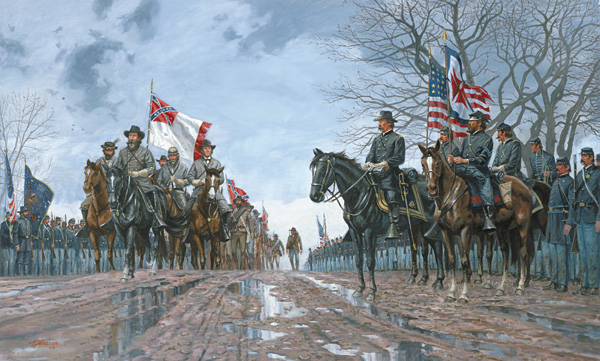
Inevitably, the events of this past weekend in Charlottesville have reopened the debate over memorials to Confederate Generals and other officials in public places and the proper way that this part of American history should be memorialized and discussed. In a way, of course, this is a debate that never really went away since this has been a contentious issue for quite some time now. Most recently, though, it was brought into the public consciousness by the senseless murder of nine people in a historically African-American church in Charleston, South Carolina by a man with clearly racist motivations. That event led to a debate over the Confederate Battle Flag that was still flying on the grounds of the South Carolina Capitol Building in Columbia, something that finally came to an end in the wake of the Charleston murders. In the days as weeks that followed, similar debates sprang up elsewhere in the country and led to the removal of Confederate symbols from public places in Alabama and other states as well as decisions by private retailers to remove merchandise depicting the Confederate Battle Flag from their shelves. The debate also spread to other symbols of the Confederacy spread all over the South and even in national parks such as the Gettysburg Battlefield in Pennsylvania. Most recently, that debate has seen events such as the removal of statutes to Confederate Generals in New Orleans, Lousiana as well as debates over the issue across the country, including in Charlottesville where the statue of Robert E. Lee became the gathering point for the Neo-Nazi and alt-right groups that came to that city in Central Virginia from all over the country.
Writing about the issue at National Review, Rich Lowry, who serves as the editor, argues that it’s time for the Confederate monuments to be taken down:
The monuments should go. Some of them simply should be trashed; others transmitted to museums, battlefields, and cemeteries. The heroism and losses of Confederate soldiers should be commemorated, but not in everyday public spaces where the monuments are flashpoints in poisonous racial contention, with white nationalists often mustering in their defense.
Some discrimination is in order. There’s no reason to honor Jefferson Davis, the blessedly incompetent president of the Confederacy. New Orleans just sent a statue of him to storage — good riddance. Amazingly enough, Baltimore has a statue of Chief Justice Roger Taney, the author of the monstrous Dred Scott decision, which helped precipitate the war. A city commission has, rightly, recommended its destruction.
(…)
For supporters of the Confederate monuments, removing them from parks and avenues will be a blow against their heritage and historical memory. But the statues have often been part of an effort to whitewash the Confederacy. And it’s one thing for a statue to be merely a resting place for pigeons; it’s another for it to be a fighting cause for neo-Nazis. Lee himself opposed building Confederate monuments in the immediate aftermath of the war. “I think it wiser,” he said, “not to keep open the sores of war, but to follow the examples of those nations who endeavoured to obliterate the marks of civil strife and to commit to oblivion the feelings it engendered.” After Charlottesville, it’s time to revisit his advice.
In a similar vein Ramesh Ponnuru, who is also a senior editor at National Review, writes at Bloomberg that it’s time to bury the Confederacy for good:
They may call themselves “white nationalists,” but the adjective nullifies the noun. In Charlottesville, Virginia, few of them hoisted American flags. They marched under banners the United States took up arms to fight. Their stated cause was preserving a statue of a man who committed treason against our country: Robert E. Lee.
Confederate flags, statuary and memorials have defenders who wish to have nothing to do with neo-Nazis or white supremacists. They say that they mean to honor the valor of Confederate soldiers rather than the cause for which they bled. Or they say that we should have visible and uncensored reminders of our history. If Lee statues go, they ask, will Monticello be next? Mount Vernon?
(…)
Those who defend Lee statues and worse often say they are motivated by “heritage not hate.” There is no reason to doubt them. But the meaning of a public symbol is not a private possession. They may tell themselves that the statue should stay to honor Lee’s (allegedly) conciliatory behavior after the war. Can they really tell black people who interpret it differently — who look at that statue, erected in the same period as “The Birth of a Nation” and the second Ku Klux Klan, and see a public display of contempt for their dignity and rights — that their reaction is absurd? The marching racists were vile and stupid. But they weren’t crazy to treat the statue as a vestige of white supremacy.
There are, as always, prudential considerations. Removing memorials will cost city governments money. The Charlottesville experience could be read either to suggest that Confederate statues must be taken down to keep white supremacists from having a rallying point, or that trying to take them down gives them one.
But our deliberations should not dwell too long on these cretins. The South has and deserves its pride, but it ought not center it on the most shameful moment in its history. The statues and the flags should come down. They will come down, as Southerners of all races come to see that this cause, too, is better off lost.
Lowry and Ponnuru are, of course, on the correct side of this argument. There is quite simply no good reason why the symbols of the Confederacy, which was defeated in battle more than 150 years ago, should continue to exist in places of honor or respect anywhere in the United States. While they may represent people or events that occurred in the past, they do so largely without any context with regard to their meaning or what the Confederacy and the men who created it actually stood for. Instead, they send a message to the public, and most especially to members of minority groups, that the truth of that history should be forgotten and the men who represented it are deserving of honor and respect rather than the contempt that history should justly have for them. Additionally, these spots not only provide a gathering spot for the haters and bigots who flocked around the statue of General Lee this past weekend, they also do exactly what the opponents of their removal claim we shouldn’t be doing, whitewashing history.
Those who have an alternate view of history will claim that secession and the Civil War were about something other than slavery, or at least not primarily about slavery. Instead, they claim that other issues such as tariff policy, the economy, political power in Washington, which was slowly shifting away from the South notwithstanding its power in the Senate, and the debate over so-called “states rights.” While it’s true that these issues played some role in the relationship between the North and South in the ante bellum years, it was clearly the debate over slavery and its expansion into the western territories that drove the dynamic of that relationship, and it was the desire to protect that “peculiar institution” that led to the creation of the Confederacy. American political history from the founding until the firing of the first shots at Fort Sumter is full of that history, including the Fugitive Slave Act, the Compromise of 1820, the Missouri Compromise, the battles over Kansas between forces for and against slavery, John Brown’s raid on Harper’s Ferry, and the Election of 1860 itself. It’s worth noting, though, that the secession of South Carolina and the states of the Deep South was not prompted by any overt act by the United States, but by the fact that Abraham Lincoln, who wasn’t even necessarily an abolitionist himself, was elected President. The fact that Lincoln could not have done much of anything to threaten slavery in the South thanks to the fact that Congress, and especially the Senate, was firmly in the control of Southern politicians, was seemingly not sufficient for the group of elitists and pro-slavery radicals who pushed the secession movement. What did push the movement, though, was slavery and racism. One need only read the Secession Resolutions themselves, or the words of the man who became the Vice-President of the Confederacy, Alexander Stephens: (emphasis mine)
The new constitution has put at rest, forever, all the agitating questions relating to our peculiar institution African slavery as it exists amongst us the proper status of the negro in our form of civilization. This was the immediate cause of the late rupture and present revolution. Jefferson in his forecast, had anticipated this, as the “rock upon which the old Union would split.” He was right. What was conjecture with him, is now a realized fact. But whether he fully comprehended the great truth upon which that rock stood and stands, may be doubted. The prevailing ideas entertained by him and most of the leading statesmen at the time of the formation of the old constitution, were that the enslavement of the African was in violation of the laws of nature; that it was wrong in principle, socially, morally, and politically. It was an evil they knew not well how to deal with, but the general opinion of the men of that day was that, somehow or other in the order of Providence, the institution would be evanescent and pass away. This idea, though not incorporated in the constitution, was the prevailing idea at that time. The constitution, it is true, secured every essential guarantee to the institution while it should last, and hence no argument can be justly urged against the constitutional guarantees thus secured, because of the common sentiment of the day. Those ideas, however, were fundamentally wrong. They rested upon the assumption of the equality of races. This was an error. It was a sandy foundation, and the government built upon it fell when the “storm came and the wind blew.”
Our new government is founded upon exactly the opposite idea; its foundations are laid, its corner- stone rests, upon the great truth that the negro is not equal to the white man; that slavery subordination to the superior race is his natural and normal condition. This, our new government, is the first, in the history of the world, based upon this great physical, philosophical, and moral truth. This truth has been slow in the process of its development, like all other truths in the various departments of science. It has been so even amongst us. Many who hear me, perhaps, can recollect well, that this truth was not generally admitted, even within their day. The errors of the past generation still clung to many as late as twenty years ago. Those at the North, who still cling to these errors, with a zeal above knowledge, we justly denominate fanatics. All fanaticism springs from an aberration of the mind from a defect in reasoning. It is a species of insanity. One of the most striking characteristics of insanity, in many instances, is forming correct conclusions from fancied or erroneous premises; so with the anti-slavery fanatics. Their conclusions are right if their premises were. They assume that the negro is equal, and hence conclude that he is entitled to equal privileges and rights with the white man. If their premises were correct, their conclusions would be logical and just but their premise being wrong, their whole argument fails. I recollect once of having heard a gentleman from one of the northern States, of great power and ability, announce in the House of Representatives, with imposing effect, that we of the South would be compelled, ultimately, to yield upon this subject of slavery, that it was as impossible to war successfully against a principle in politics, as it was in physics or mechanics. That the principle would ultimately prevail. That we, in maintaining slavery as it exists with us, were warring against a principle, a principle founded in nature, the principle of the equality of men. The reply I made to him was, that upon his own grounds, we should, ultimately, succeed, and that he and his associates, in this crusade against our institutions, would ultimately fail. The truth announced, that it was as impossible to war successfully against a principle in politics as it was in physics and mechanics, I admitted; but told him that it was he, and those acting with him, who were warring against a principle. They were attempting to make things equal which the Creator had made unequal.
The historical record is clear as to what the Confederacy was, and to display their banners or commemorate their leaders and Generals in anything other than a historical context is to give an implicit endorsement to those doctrines the same as if one were to file a Nazi Flag from their window.
Monuments, especially monuments in public places such as town squares and the like, are not history. They are celebration, adulation, and they send a message that the person or subject matter portrayed in the monument is worthy of esteem or celebration. There are no statutes to George III or General Cornwallis in public places in the United States because these were people who the united colonies fought against to assert, protect, and defend the independence of American colonists from Great Britain. Similarly, one does not see the Britsh erecting statues of George Washington or Thomas Jefferson, because those men were adversaries who rebelled from what was their home country to form a new nation and no monuments to anyone involved in the War of 1812 on the American side in Canada, for the same reason. Similarly, there is no reason for people who fought for a nation built on the twin evils racism and slavery in the United States, not even in the part of the country where they originated from. Instead, these monuments or their equivalents should be put in museums or other locations where they can be placed in the proper historical context. For those who might object, this would include places such as the countless number of battlefields across the South and in places such as Antietam in Maryland and Gettysburg in Pennsylvania. In these places, the monuments can be placed in appropriate context, as can the history of the Confederacy itself. To treat them in any other way is to whitewash history and try to persuade people to forget the evil that it represented.