
Walter Dellinger, a distinguished attorney who served as Acting Solicitor General during the Clinton Administration, argues persuasively that “Democrats’ obsession with redaction is obscuring the obvious: Trump committed high crime.”
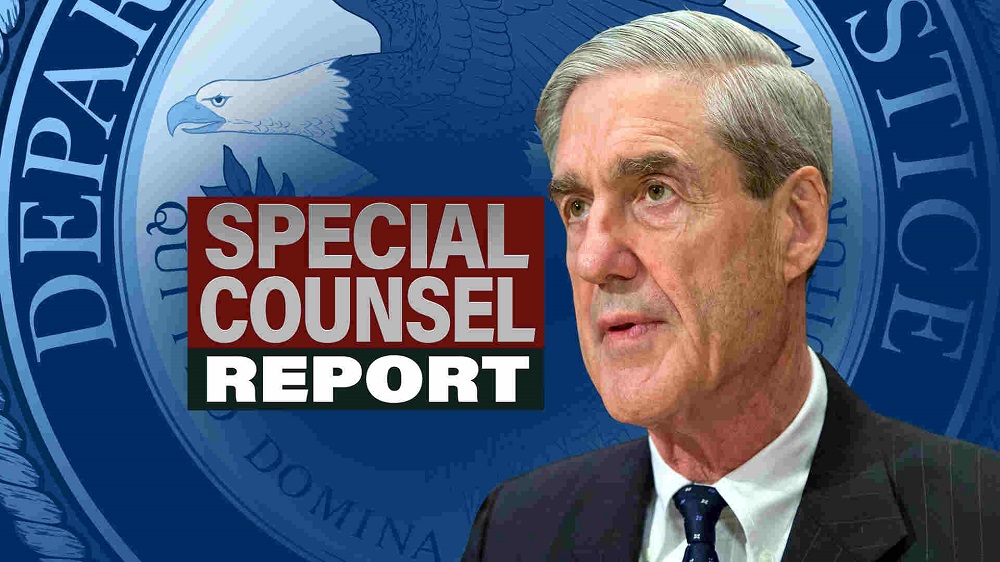
I have become increasingly concerned about how the country has received the Mueller report. The Republican talking point is that it exonerated the president. The message from the Democratic House, meanwhile, is that the report is inconclusive. Those responses, one mendacious, one tepid and both erroneous, have shaped public understanding. They have not only allowed the president falsely to claim vindication but also left the public without a clear understanding of just how damning the report is.Most Americans, understandably not having read the 448-page (redacted) report, may be influenced by how the principal parties have responded. If the report were, as the Republicans insist, an exoneration, one might demand to know how this unwarranted investigation got started in the first place, which is exactly how the GOP has proceeded to turn the conversation.
And if you thought the report was merely inconclusive, your natural reaction would be that you need to know more. You would say something like what many House Democrats are repeating endlessly: “We need to see the redactions” and “hear from witnesses” — suggesting that there is as of yet no sufficient basis for judging President Trump’s conduct.
The more I review the report, the more absurd and misleading the we-need-to-know-more response seems to be. And the more it seems to have contributed to public misunderstanding. How different would it have been if a unified chorus of Democratic leaders in Congress and on the campaign trail had promptly proclaimed the actual truth: This report makes the unquestionable case that the president regularly and audaciously violated his oath and committed the most serious high crimes and misdemeanors.Mueller’s extraordinary 2,800-subpoena, 500-search-warrant, two-year investigation fully established not merely crimes but also the betrayal of the president’s office: a failure to defend the country’s electoral system from foreign attack and acts of interference with justice that shred the rule of law. Congress doesn’t need to read more to announce what is obvious from what it should have read already.
While I agree with Dellinger that the findings are damning, I fear that the current political climate precludes a united front among Democrats doing much to persuade Republicans—or even independents. Still, he has a point:
My concern is that the House’s focus on process — such as requesting redacted material — constitutes a strong, implicit suggestion that what we have seen from Mueller is not enough to assess the president. That is just false. The report lays out in detail specific acts of obstruction by the president, as well as the extensive evidence that backs up those claims. More than 900 former federal prosecutors (including Republicans and Democrats) have publicly declared that, if anyone else had committed those same acts, they would be under indictment.
What will we say in the event the remaining 7 percent of text adds little or nothing to the overwhelming case of presidential wrongdoing already made out by the report? By not having begun impeachment proceedings or taken other strong action, Democrats may have conceded the debate over the Mueller report’s conclusion. Democrats are fighting on process grounds where the White House has some plausible arguments and where winning may add little or nothing to what we already know.
It’s virtually an axiom in politics that, when you’re fighting over process, you’ve already lost. So, what would Dellinger suggest?
The burden, the House should assert, is now clearly on the president to show (if he can) where the report is inaccurate and why it is not the basis for severe condemnation and sanction of the president.
I’m not one to second-guess Nancy Pelosi. She is the greatest majority leader of the House of Representatives in my lifetime. I could be convinced that an impeachment inquiry has its own time for ripening. Or that in the end some form of censure is the better disposition in light of intransigent Republican control of the Senate.All I am saying is that every day we should have been shouting from the rooftops: “The president is failing to defend democracy from attack”; “The president’s campaign welcomed and encouraged Russia’s efforts to change our election results”; “The president obstructed justice”; and “The president daily undermined the rule of law.” But we have instead been whispering in the hallways of Congress that “we need to see the redactions.” That emphasis is a mistake that needs to be (and hopefully can be) rectified.
Dellinger is implicitly arguing that the Republicans have outplayed the Democrats in the PR battle. And he’s right. Barr’s four-page letter set the tone for the debate that followed. While it was truthful in every detail, it was nonetheless deliberately misleading. Democrats have called him out on that but the stage for that was much smaller and it had minimal impact. And, yes, fighting over redactions rather than proclaiming what we already know outrageous has been foolish.
Still, Pelosi has made the judgment—in which I concurred at the time and continue to believe correct—that impeachment isn’t worth the fallout considering the near-inevitability of acquittal in the Senate. While I’m sympathetic to the argument advanced in the comments here by Michael Reynolds and more publicly by others that impeachment hearings would start to galvanize the nation against Trump, it would inevitably seen as a partisan exercise and could well ensure Trump’s re-election.
Beyond that, I believe the bigger factor in the public’s perception of the Mueller report—more than Barr’s deception or Democratic wonkery—is that the damning details emerged piecemeal over nearly two years. While the 400-page write-up was amazing in its scope, it offered no “smoking gun” that blew the case open. It was perceived as a nothingburger because we already knew almost all of what was in it. As someone (I believe Susan Hennessy) noted on an episode of the Rational Security podcast some time back, the press did their job too well.