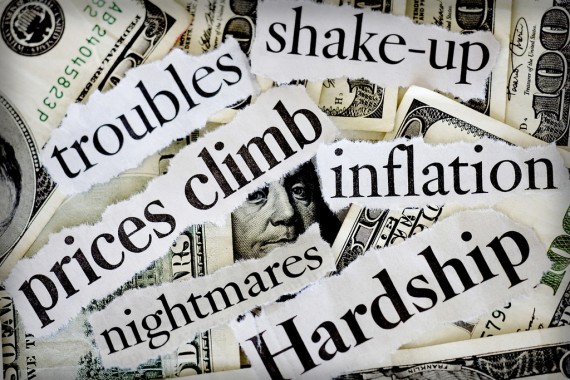

The economy may be recovering but voters don’t want to hear that, Democratic strategists warn.
AP (“Advice to Democrats: Don’t say ‘recovery’“):
Election-year memo to Democratic candidates: Don’t talk about the economic recovery. It’s a political loser.
So say Democratic strategists in a blunt declaration that such talk skips over “how much trouble people are in, and doesn’t convince them that policymakers really understand or are even focusing on the problems they continue to face.”
In addition, Stan Greenberg, James Carville and others wrote that in head-to-head polling tests the mere mention of the word “recovery” is trumped by a Republican assertion that the Obama administration has had six years to get the economy moving and its policies haven’t worked.
Coincidentally or not, Democrats have largely shelved the “R” word.
President Barack Obama’s only utterance of it in recent weeks was on April 8, and it was in the context of accusing Republicans of blocking progress on issues that “would help with the economic recovery and help us grow faster.”
Additionally, at a news conference on March 26 where they announced a campaign-season agenda, neither Senate Majority Leader Harry Reid, D-Nev., nor most of the other five lawmakers present uttered the word “recovery.”
[…]
In their memo for Democracy Corps and the Women’s Voices Women Vote Action Fund, the authors propose that to boost turnout among their target groups Democrats should back an economic agenda that “puts working women first,” and says that incomes are soaring only for CEOs and the top 1 percent of the country.
“As a start, Democrats should bury any mention of the recovery. That message was tested … and it lost to the Republican message championed by Karl Rove,” they wrote.
By traditional measurements, an economic recovery has been underway since partway through Obama’s first year in office.
The economy was shrinking when he was sworn in but turned positive in the third quarter of 2009. It has been growing since, although barely so at times. Unemployment, measured at 7.8 percent when Obama took office in January 2009, rose to 10 percent in October of that year until it began declining. It now stands at 6.7 percent, according to the Bureau of Labor Statistics.
At the same time, though, many of the jobs that have been created are lower-paying than the ones that preceded them. Long-term unemployment is at historically high levels, another factor that does little or nothing to reassure hard-pressed men and women that any recovery is helping their own pocketbooks.
Page Gardner of Women’s Voices, listed as a co-author of the memo, said in an interview that for unmarried women and other key parts of the Democratic coalition, “a message about the benefits of a recovery doesn’t really reflect their lives currently. The power of the women’s economic agenda and talking about equal pay for equal work, paid sick leave, and messages that go to their ability to make it themselves and help their families make it is very powerful, and that’s what they want to hear.”
Democrats are in a bizarre position, indeed. We suffered the largest economic calamity in generations at the tail end of a Republican administration and it’s been followed by the weakest recovery in generations under his Democratic successor. After five years, though, it’s Obama’s economy and he gets the blame for the remaining weakness rather than credit for the rebound.
Given that, it’s hard to see how the Women’s Voices strategy works. Arguing for major reforms at this stage is almost by definition an opposition platform. To the extent that people yearn for change, they’re not expecting it to come from the party that’s been in power for years.
Republicans are in an excellent position to bolster their majority in the House and narrow the gap in the Senate, if not retake the majority outright. In an off year, unlike a presidential year, they don’t even need a particularly persuasive alternative plan. Running on a “throw the bums out” platform is likely to be enough given public dissatisfaction with the status quo.
The caveat, though, is that the GOP can’t repeat the mistakes of 2010. While they gained 63 seats and took back the House of Representatives, recapturing the majority, and picked up six seats in the Senate, they gave away several seats by picking outlandish, extreme candidates that had zero general election appeal. The conventional wisdom is that the enthusiasm gap will propel Republicans to a strong showing. But the fear is that the zealots will choose the candidates, thus lowering the enthusiasm of more moderate Republican voters—and perhaps helping energize Democrats—in the fall.