 Futurist Joel Kotkin is swimming against the recent American decline tide in forecasting a world where China will still trail the United States as an economic power in 2050. Then again, as Matthew Yglesias points out, Kotkin thinks previous predictions of European preeminence proved “staggeringly off the mark,” even though the combined EU economy is now significantly bigger than ours.
As I point out in my New Atlanticist essay, “America’s Decline, Europe’s Anxiety,” we’ve had a lot of decline talk going back a least since Paul Kennedy’s 1987 masterwork Rise and Fall of the Great Powers. And China and Europe are undoubtedly growing relatively more powerful — especially with the dollar at an ebb.
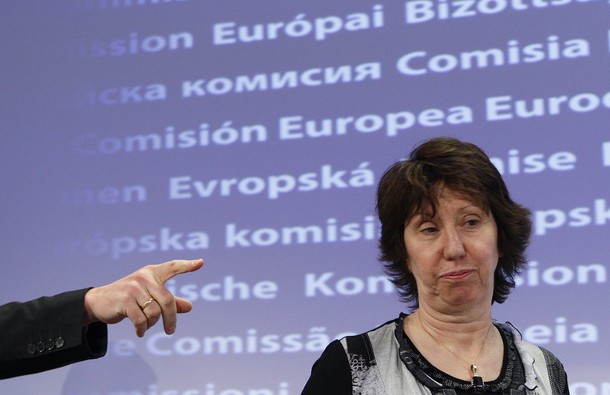
But there are other, important signs that Europe, in particularly, doesn’t quite believe the hype. For example, Leo Cendrowicz points out how unhappy they are to be playing second fiddle in, well, just about everything.
In Brussels and other capitals, officials bemoan the media images suggesting the U.S. is running the show and Europe is playing a marginal role. They’ve also complained loudly about U.S. heavy-handedness in sending troops to take over Port-au-Prince’s shattered airport. “This is about helping Haiti, not about occupying Haiti,” Alain Joyandet, France’s International Cooperation Minister, said after U.S authorities diverted a French medical flight to Santo Domingo. And on Sunday, Guido Bertolaso, the head of Italy’s disaster relief agency, called the U.S.-led efforts a “pathetic” failure that is turning a tragedy into a “vanity show for the television cameras.”
[…]
Europe also felt left out last month at the Copenhagen climate change summit when China and the U.S. hammered out the final deal on their own. Many saw this as a stinging rebuke since Europe had played a major role in putting climate change on the global agenda in the first place. Nor can the continent can’t point to any recent successes on the diplomatic front. E.U. efforts at resolving the split between the Greek and Turkish halves of Cyprus have yet to bear fruit. And the “E.U.-3” countries – Britain, France and Germany – have been unable to resolve the Iran nuclear problem with or without the help of the U.S. and China, despite five years of talks with Tehran.
When the United States starts complaining that it’s not getting enough attention in world affairs, I’ll start to take the decline talk a bit more seriously.