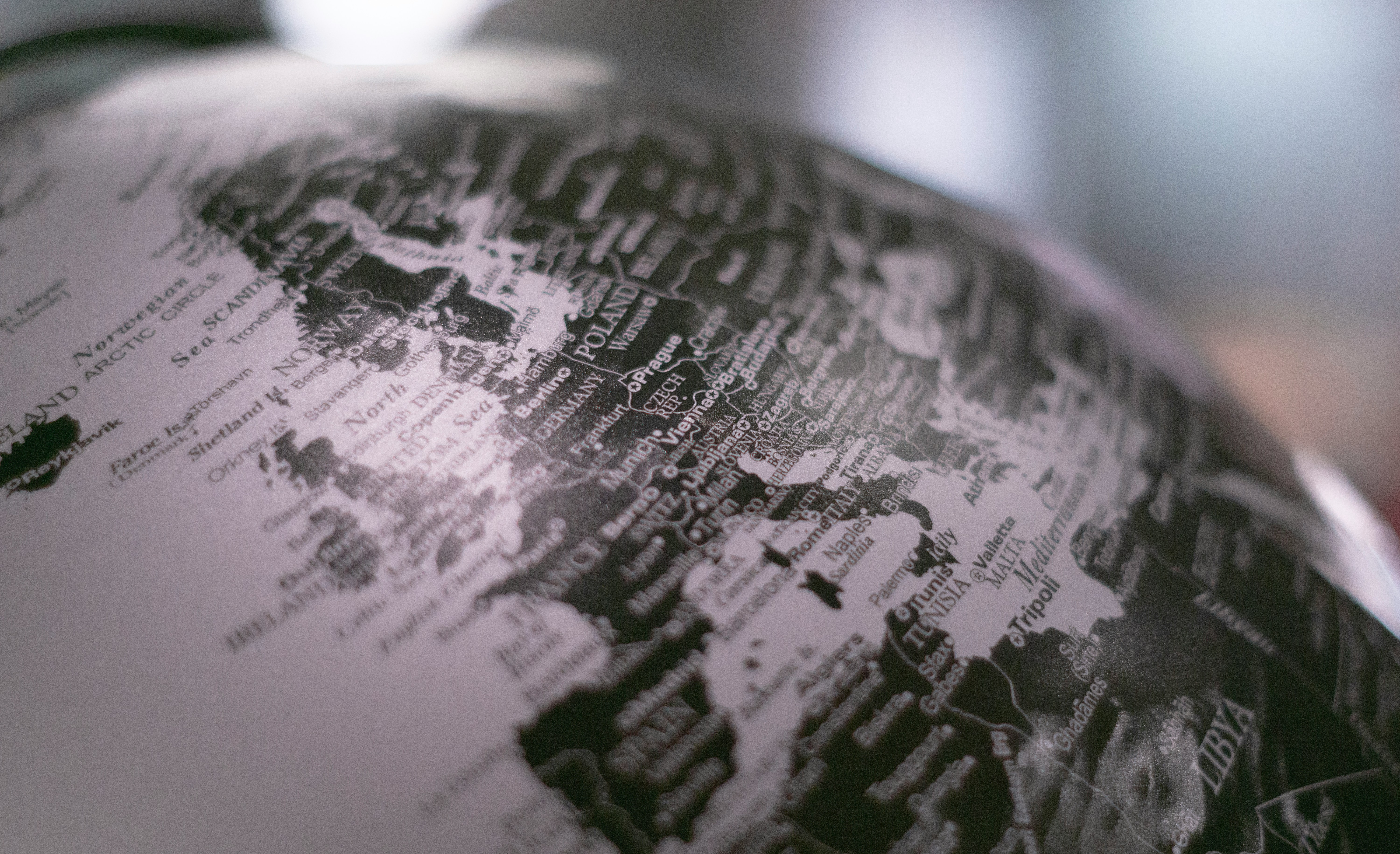
The National Intelligence Council has released its quadrennial strategic forecast, Global Trends 2030: Alternative Worlds. The Atlantic Council has also published a companion report, Envisioning 2030: US Strategy for a Post-Western World, which provides recommendations for the United States government to navigate new realities ahead and calls upon renewed American leadership to successfully tackle new global challenges.
Aside from helping edit the latter, I’m also blogging and tweeting on both reports over the next few days. My posts thus far:
Global Power 2030
Today’s Global Trends 2030 report by the National Intelligence Council predicts that, “By 2030, no country—whether the US, China, or any other large country—will be a hegemonic power.” Considering that this has already been true for quite some time, it’s a safe bet.
[…]
There are very good reasons to doubt that China or India will emerge as great global powers. Indeed, as the Atlantic Council’s Robert Manning puts it in his companion report, Envisioning 2030: US Strategy for a Post-Western World, “[T]he United States remains disproportionately the leading steward of the current global system. On most occasions when the world dials 9-1-1, it is the United States on the other end.”
The reasons for this are manifold but perhaps chief among them is that the United States has long wielded a substantial amount of what Harvard’s Joe Nye termed “soft power,” the ability to persuade others to follow through attraction rather than coercion. For Nye, this exists when “other countries—admiring its values, emulating its example, aspiring to its level of prosperity and openness—want to follow it. “
Shaping 2030 Today
The Global Trends 2030 report offers four starkly different alternative world systems a generation hence. US policy decisions in the next four years will greatly influence which of these comes to pass.
[…]
As principal author Robert Manning rightly puts it, “it will be human agency-how key actors, and most importantly the United States-adapt and respond to dynamic global trends that will determine whether we can avoid the worst and achieve the best.”
The report looks at several specific policy issues, some of which will be the subject of future posts in this series. But the overarching challenge is “how to preserve the successful operating principles of the international system” that has brought so much global advancement over the last seven decades “while revising the status quo to reflect new economic and political realities, new concerns about the efficacy of the system, new actors with divergent views, and new global pressures.”
[…]
It’s hard to have much confidence that a governing body that may well be about to drive over a “fiscal cliff” of its own making will muster the discipline to make hard choices that won’t pay off for decades. But the alternative is a future that’s much more bleak.