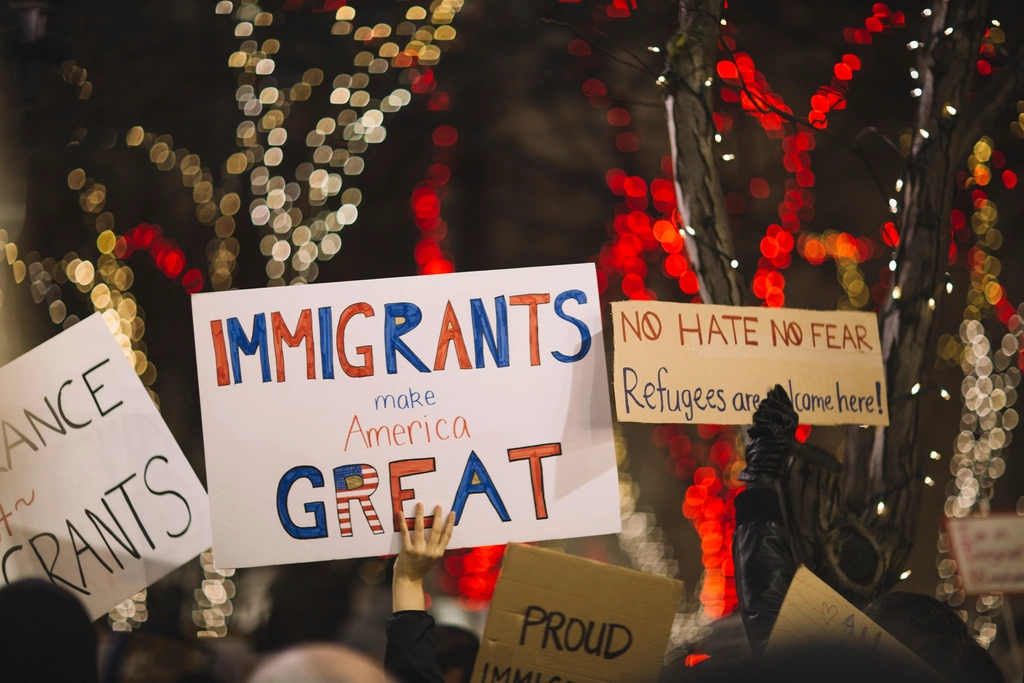
Immigrants make America Great

Jobs Americans Won’t Do

A side effect of the immigration crackdown that nobody could possibly have foreseen.

4

Comments

This morning’s episode of The Daily, “Trump’s Clashing Goals: More Housing, Fewer Immigrants” and the NYT article “Senior Living Facility in Distress as Immigrant Caregivers Are Forced Out” highlight a longstanding dilemma of our public policy. In both cases, which are by no means exhaustive, we see sectors where low-cost foreign labor predominates and is essentially not replaceable with U.S. citizens.

The caregivers example is somewhat less interesting. I strongly suspect the industry has always been relatively low-paying and unglamorous. So, immigrants from the Global South have displaced low-wage American workers, who presumably have moved on to jobs that pay somewhat better.

The housing story is more complicated. While the account here is largely anecdotal, it tracks other industries. Half a century ago, roofing and other residential construction jobs were done almost exclusively by Americans, mostly white men, with a high school diploma or less. The jobs were unionized and came with good pay and benefits. Starting in the 1980s, the combination of more industry-favorable labor laws and more generous immigration policies led to the gradual displacement of unionized Americans with at-will immigrants.

Morally, I’m somewhat squeamish about turning over our most dangerous and soul-draining jobs to immigrants. But it’s a longstanding path to citizenship and a better life for subsequent generations.

4 responses to “Jobs Americans Won’t Do”

  1. The loss of unionization and drop in wages and benefits is a major driver, but there are others. Twenty or so years ago we had a neighbor in Ohio who had a roofing business. He once observed that his crews were Hispanic mostly because he otherwise couldn’t find applicants who could pass a drug test.

    When we had our roof replaced after hurricane Ian there were three crews, a quick response tarping crew from the insurer, followed several weeks later by a tear off crew from the roofer, followed by a shingling crew. It took six months for most of the blue tarps around town to disappear. Without immigrants it would have been three years.

    1. A couple of thoughts…

      We get more massive hail damage events than we used to here. The six months rather than three years to recover is in part due to the actual roofing work having very low capital demands. Half a crew and their gear can drive up from Texas in a single small truck in a single long day. The “jobs Americans won’t do” are almost all jobs where no one has figured out how to use capital to replace the workers entirely.

      Many of the remaining jobs that don’t leverage capital investments are rather uniquely suited to intelligent quadrapeds with good balance and reflexes, opposable thumbs, a fine sense of touch (all over), and high quality binocular vision. Picking produce in the field or orchard is a challenging automation problem. Putting shingles on a roof likewise. Hands-on care for the elderly too.

      The other day I saw part of a video clip from a Chinese “AI” company. A classroom full of people sitting at benches, each wearing a sensor harness, doing various sorts of assembly. Not assembling actual products, but more of the flavor “take this pile of things and assemble the object shown in the picture”. The voice-over suggested they were generating training data, including lots of mistakes, for the neural networks.

      1. Also health care. Doctors will probably be partially displaced by AI before the people changing bed pans are.

  2. And on the other end of the spectrum, there are the jobs Americans can’t do.

    Texas invested billions to fight cancer. Abbott’s H-1B visas restrictions may stall research, some warn

    Texas spent billions recruiting scientists from around the world to turn the state into a cancer-research powerhouse. Now, nearly six months after Gov. Greg Abbott restricted public institutions’ use of the H-1B visa program, cancer advocates and immigration attorneys warn the policy could undercut that strategy.

    At MD Anderson Cancer Center, researchers holding H-1B work visas explore why tumors resist treatment, test new drugs and use artificial intelligence to analyze tissue cell by cell. Records obtained by The Texas Tribune show the Houston institution sponsors 277 workers through the program.

    Across Texas, 44 public universities, health centers and system offices reported sponsoring 3,332 H-1B workers to the Texas Workforce Commission. The higher education institutions had to detail their use of such employees as part of Abbott’s directive.

    these types of restrictions send “a chilling message that foreign-born researchers are less welcome” at a time when institutions already face difficulty recruiting and retaining young scientists.

Leave a Reply

This site uses Akismet to reduce spam. Learn how your comment data is processed.