The unrelenting attempts to get things named after himself are truly remarkable. The crass egotism is off the charts.
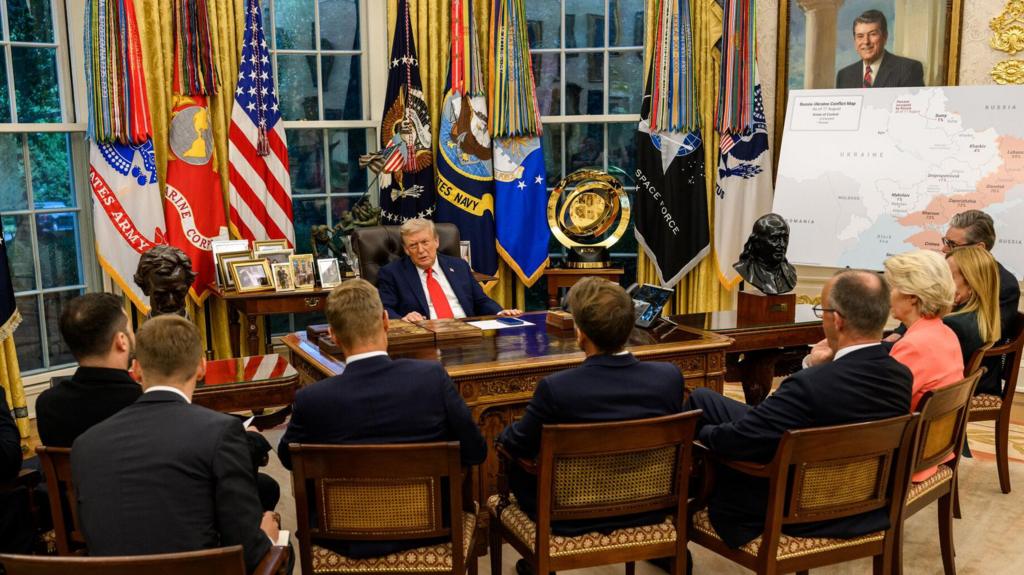
Also, it may be some bias in the way I am consuming clips, but lately it seems he is mostly sitting at his desk with some set of sycophants behind him and with the press in front of him. It all feels like yet another ego feed.
Steven L. Taylor is a Professor Emeritus of Political Science and former College of Arts and Sciences Dean. His main areas of expertise include parties, elections, and the institutional design of democracies. His most recent book is the co-authored A Different Democracy: American Government in a 31-Country Perspective. He earned his Ph.D. from the University of Texas and his BA from the University of California, Irvine. He has been blogging since 2003 (originally at the now defunct Poliblog).
Follow Steven on Twitter and/or BlueSky.
I am curious to see how he thinks they are building this promenade. There is a set of steps (the Watergate Steps) behind the Lincoln Memorial going down to the Potomac and it was intended to be a grand entry by boat into the city. But, as Trump says, there is now a major intersection of several major streets (city highways) that bisect the path from the Memorial down to the steps. Is this a bridge? And how is that going to look in relation to the Memorial, let alone his crazy arch?
He’s not even smart enough to get astroturf groups to hand over petitions with a million forged signatures begging the city and federal government to name it the Taco promenade. Or even to have one of his clown car cabinet suggest it.
“He’s trying to put his face on the money, did you see that?” said Senator Jon Ossoff. “He’s building a monument to himself.”
The senator went on to share why he thought Trump is trying to put his name on so many things.
He said: “But see, Atlanta, he’s doing these things now because no one will honor him when he’s gone, because he’s a failed president and a national disgrace.”
I have been tryna tell you, Trump is face-to-face with the Big D. And I don’t mean dick. He is acting exactly like a guy who sees the end is coming and is desperately striving for immortality.
Also, it may be some bias in the way I am consuming clips, but lately it seems he is mostly sitting at his desk with some set of sycophants behind him and with the press in front of him. It all feels like yet another ego feed./blockquote>
I’ve seen many clips with this arrangement as well but in the ones I’m seeing, he has dozed off…
lately it seems he is mostly sitting at his desk with some set of sycophants behind him and with the press in front of him
That’s usually been his custom in the Oval Office. He seems to revel in being the guy on the throne while all the courtiers stand respectfully. And it’s not just the media which comprises the audience. Once he placed EU leaders in a circle facing him like students at a seminar. At least they got to sit down. https://ichef.bbci.co.uk/ace/standard/1024/cpsprodpb/e2c2/live/81beb870-7cff-11f0-b048-e3872696e5df.jpg
Steve Bannon uses Nazi propaganda techniques to further Trump’s agenda. I believe Trump is using architecture, re-branding, and building structures that will that will be hard to erase are intended to inject his fascist tendencies into the United States’s social DNA.
His propagandists also draw from pop culture, particularly film. One example is the desecration of our national monuments similar to the destruction of national monuments in the series, “The Man in the High Castle.” See here and here.
My point is that more than egotism is at play. It’s actually a sophisticated propganda effort.
For example, from a Claude query…
Here are some fictional movie plot examples that illustrate how a populist leader might use architecture and social messaging as tools of power and influence:
Fictional Movie Plots: Architecture & Messaging as Political Tools
1. “The Golden Standard” (Political Drama)
A real estate mogul turned president commissions a series of massive public works — gleaming towers, ornate border walls, and gold-accented federal buildings — each unveiled with rallies and media spectacles. The film explores how the buildings become symbols of national identity to his base, while critics see them as monuments to ego. A young architect on the project grapples with her role as her designs are repurposed for campaign imagery.
2. “Fortress America” (Thriller)
A charismatic leader pushes a grand infrastructure bill, ostensibly for highways and bridges, but the real centerpiece is a series of fortified “community centers” in swing-state cities — brutalist structures designed to project strength. A journalist investigates how the architecture firm was chosen, uncovering a feedback loop between donor money, visual branding, and political messaging crafted to make voters feel protected and powerful.
3. “Mar-a-Lago on the Potomac” (Satire)
A sitting president attempts to relocate key government functions to his private resort, arguing it projects “class and success” that Washington’s old buildings lack. The comedy follows the bureaucratic chaos, while a deeper subplot examines how luxury aesthetics are weaponized to signal who belongs in the new political order — and who doesn’t.
4. “The Rally Ground” (Drama)
Set in a near-future America, a populist leader’s team discovers that holding rallies in specific architectural settings — airplane hangars, sports arenas, industrial warehouses — produces measurable surges in crowd energy and media coverage. A behavioral psychologist hired by the campaign begins to question her work as the settings grow more theatrical and the messaging more authoritarian.
5. “Walls & Words” (Documentary-style Drama)
Told through the eyes of a speechwriter and a structural engineer working for the same administration, the film draws a parallel between how language is constructed and how physical barriers are built — both designed to define an in-group, signal dominance, and reshape public perception. The wall becomes a metaphor that the speechwriter must constantly reinvent for new audiences.
Fictional Movie Plots: Trump’s Actual Initiatives as Film Narratives
1. “Classical Order” (Political Drama)
Based on Trump’s 2020 Executive Order on Federal Architecture, which mandated that new federal buildings return to classical and traditional styles (Greek columns, neoclassical facades), rejecting modernist design. The film follows a GSA architect forced to redesign a nearly-complete contemporary courthouse. She battles bureaucrats, lobbyists, and her own ambitions as the order becomes a culture war flashpoint — classical architecture framed publicly as “beautiful, dignified, and genuinely American.”
2. “The Wall” (Epic Drama)
A multi-year saga following the engineers, contractors, and border communities affected by the US-Mexico border wall project. The wall is portrayed not just as infrastructure but as a continuous campaign prop — each new mile of construction timed to rallies and media cycles. The film examines how the wall’s visual imagery (towering steel bollards, “see-through” design) was as carefully managed as any brand logo.
3. “Opportunity Zone” (Financial Thriller)
A deep dive into Trump’s Opportunity Zone program from the 2017 Tax Cuts and Jobs Act — tax incentives directing investment into designated low-income areas. The film follows a developer who exploits the zones to build luxury towers in gentrifying neighborhoods while the surrounding community sees little benefit, raising questions about whether the program was urban renewal or a tax shelter dressed in social messaging.
4. “1776” (Historical Satire)
Inspired by Trump’s 1776 Commission and his National Garden of American Heroes executive order — a proposed outdoor sculpture park featuring 250 statues of American figures. The film follows the chaotic White House committee tasked with choosing who gets a statue, revealing fierce internal battles over whose version of American identity gets literally cast in bronze and set in stone.
5. “The Permit” (Bureaucratic Thriller)
Based on Trump’s executive orders streamlining environmental reviews for infrastructure projects (roads, pipelines, federal buildings). A small-town mayor navigates the newly accelerated approval process to build a federally funded civic center — only to discover the real estate around it is being quietly acquired by donors. The building becomes a symbol of who the deregulation actually served.
6. “Rally Ground” (Immersive Drama)
Documents the deliberate stagecraft of Trump’s campaign rallies — the consistent use of airplane hangars, arenas, and industrial spaces draped in flags and branded signage. The film follows a campaign advance team as they scout and transform raw spaces into emotionally charged environments, exploring how spatial design, lighting, crowd placement, and signage were engineered to maximize loyalty and media impact.
Each initiative blends built environment with political identity — a consistent strategy of making ideas visible, physical, and monumental.
Architecture as propaganda — how physical spaces shape crowd psychology Branding over function — aesthetics chosen for messaging rather than utility Spectacle politics — the merger of entertainment, construction, and campaigning Belonging and exclusion — who the spaces are designed to welcome or intimidate Legacy building — using monuments to write one’s own historical narrative
I am curious to see how he thinks they are building this promenade. There is a set of steps (the Watergate Steps) behind the Lincoln Memorial going down to the Potomac and it was intended to be a grand entry by boat into the city. But, as Trump says, there is now a major intersection of several major streets (city highways) that bisect the path from the Memorial down to the steps. Is this a bridge? And how is that going to look in relation to the Memorial, let alone his crazy arch?
I am so off put by this group standing behind him with their hands respectfully (prayerfully?) clasped his they worship their golden (orange?) idol.
Not a chance I’d have posed any group for this particular headshot…
But to be honest, that’s probably the least offensive thing about this post’s subject. YMMV
He’s not even smart enough to get astroturf groups to hand over petitions with a million forged signatures begging the city and federal government to name it the Taco promenade. Or even to have one of his clown car cabinet suggest it.
@Flat Earth Luddite: They are all protecting their manhood. Unfortunately, it is too late.
Spot on.
“They want to call it the Trump promenade”. Are “they” in the room with us now?
What Fran Lebowitz said.
I have been tryna tell you, Trump is face-to-face with the Big D. And I don’t mean dick. He is acting exactly like a guy who sees the end is coming and is desperately striving for immortality.
There’s a compilation of the felon falling asleep going around, that has the WH going ballistic.
https://www.thedailybeast.com/white-house-explodes-over-viral-video-of-sleepy-donald-trump/
That’s usually been his custom in the Oval Office. He seems to revel in being the guy on the throne while all the courtiers stand respectfully. And it’s not just the media which comprises the audience. Once he placed EU leaders in a circle facing him like students at a seminar. At least they got to sit down. https://ichef.bbci.co.uk/ace/standard/1024/cpsprodpb/e2c2/live/81beb870-7cff-11f0-b048-e3872696e5df.jpg
The fat fuck couldn’t even take a walk on his own promenade!
Steve Bannon uses Nazi propaganda techniques to further Trump’s agenda. I believe Trump is using architecture, re-branding, and building structures that will that will be hard to erase are intended to inject his fascist tendencies into the United States’s social DNA.
His propagandists also draw from pop culture, particularly film. One example is the desecration of our national monuments similar to the destruction of national monuments in the series, “The Man in the High Castle.” See here and here.
My point is that more than egotism is at play. It’s actually a sophisticated propganda effort.
For example, from a Claude query…
Here are some fictional movie plot examples that illustrate how a populist leader might use architecture and social messaging as tools of power and influence:
Fictional Movie Plots: Architecture & Messaging as Political Tools
1. “The Golden Standard” (Political Drama)
A real estate mogul turned president commissions a series of massive public works — gleaming towers, ornate border walls, and gold-accented federal buildings — each unveiled with rallies and media spectacles. The film explores how the buildings become symbols of national identity to his base, while critics see them as monuments to ego. A young architect on the project grapples with her role as her designs are repurposed for campaign imagery.
2. “Fortress America” (Thriller)
A charismatic leader pushes a grand infrastructure bill, ostensibly for highways and bridges, but the real centerpiece is a series of fortified “community centers” in swing-state cities — brutalist structures designed to project strength. A journalist investigates how the architecture firm was chosen, uncovering a feedback loop between donor money, visual branding, and political messaging crafted to make voters feel protected and powerful.
3. “Mar-a-Lago on the Potomac” (Satire)
A sitting president attempts to relocate key government functions to his private resort, arguing it projects “class and success” that Washington’s old buildings lack. The comedy follows the bureaucratic chaos, while a deeper subplot examines how luxury aesthetics are weaponized to signal who belongs in the new political order — and who doesn’t.
4. “The Rally Ground” (Drama)
Set in a near-future America, a populist leader’s team discovers that holding rallies in specific architectural settings — airplane hangars, sports arenas, industrial warehouses — produces measurable surges in crowd energy and media coverage. A behavioral psychologist hired by the campaign begins to question her work as the settings grow more theatrical and the messaging more authoritarian.
5. “Walls & Words” (Documentary-style Drama)
Told through the eyes of a speechwriter and a structural engineer working for the same administration, the film draws a parallel between how language is constructed and how physical barriers are built — both designed to define an in-group, signal dominance, and reshape public perception. The wall becomes a metaphor that the speechwriter must constantly reinvent for new audiences.
Fictional Movie Plots: Trump’s Actual Initiatives as Film Narratives
1. “Classical Order” (Political Drama)
Based on Trump’s 2020 Executive Order on Federal Architecture, which mandated that new federal buildings return to classical and traditional styles (Greek columns, neoclassical facades), rejecting modernist design. The film follows a GSA architect forced to redesign a nearly-complete contemporary courthouse. She battles bureaucrats, lobbyists, and her own ambitions as the order becomes a culture war flashpoint — classical architecture framed publicly as “beautiful, dignified, and genuinely American.”
2. “The Wall” (Epic Drama)
A multi-year saga following the engineers, contractors, and border communities affected by the US-Mexico border wall project. The wall is portrayed not just as infrastructure but as a continuous campaign prop — each new mile of construction timed to rallies and media cycles. The film examines how the wall’s visual imagery (towering steel bollards, “see-through” design) was as carefully managed as any brand logo.
3. “Opportunity Zone” (Financial Thriller)
A deep dive into Trump’s Opportunity Zone program from the 2017 Tax Cuts and Jobs Act — tax incentives directing investment into designated low-income areas. The film follows a developer who exploits the zones to build luxury towers in gentrifying neighborhoods while the surrounding community sees little benefit, raising questions about whether the program was urban renewal or a tax shelter dressed in social messaging.
4. “1776” (Historical Satire)
Inspired by Trump’s 1776 Commission and his National Garden of American Heroes executive order — a proposed outdoor sculpture park featuring 250 statues of American figures. The film follows the chaotic White House committee tasked with choosing who gets a statue, revealing fierce internal battles over whose version of American identity gets literally cast in bronze and set in stone.
5. “The Permit” (Bureaucratic Thriller)
Based on Trump’s executive orders streamlining environmental reviews for infrastructure projects (roads, pipelines, federal buildings). A small-town mayor navigates the newly accelerated approval process to build a federally funded civic center — only to discover the real estate around it is being quietly acquired by donors. The building becomes a symbol of who the deregulation actually served.
6. “Rally Ground” (Immersive Drama)
Documents the deliberate stagecraft of Trump’s campaign rallies — the consistent use of airplane hangars, arenas, and industrial spaces draped in flags and branded signage. The film follows a campaign advance team as they scout and transform raw spaces into emotionally charged environments, exploring how spatial design, lighting, crowd placement, and signage were engineered to maximize loyalty and media impact.
Each initiative blends built environment with political identity — a consistent strategy of making ideas visible, physical, and monumental.
Architecture as propaganda — how physical spaces shape crowd psychology
Branding over function — aesthetics chosen for messaging rather than utility
Spectacle politics — the merger of entertainment, construction, and campaigning
Belonging and exclusion — who the spaces are designed to welcome or intimidate
Legacy building — using monuments to write one’s own historical narrative