
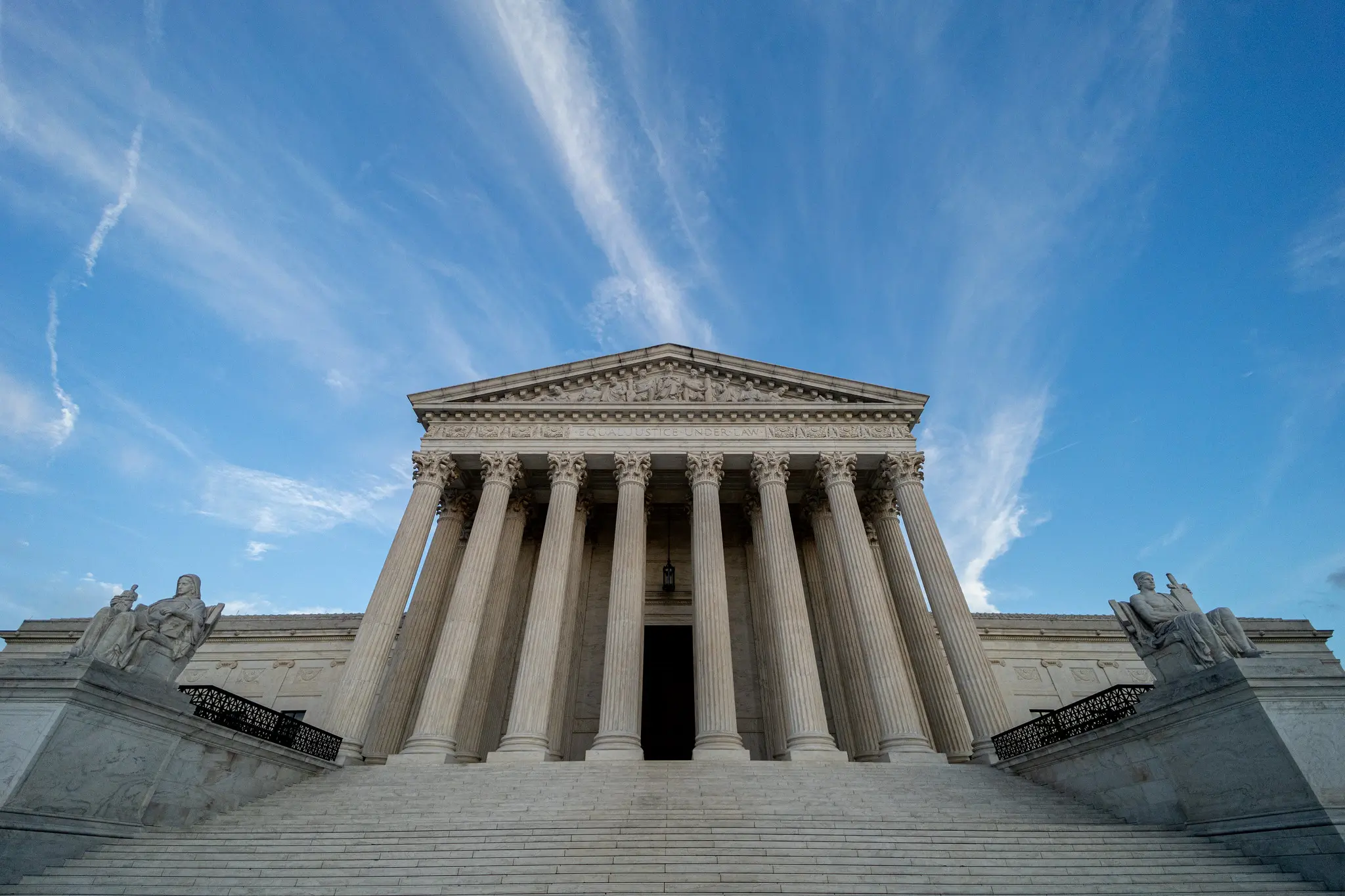
NYT (“At M.I.T., Black and Latino Enrollment Drops Sharply After Affirmative Action Ban“):
The Massachusetts Institute of Technology’s incoming class of 2028 saw a precipitous drop-off in the percentage of Black, Hispanic, Native American and Pacific Islander students, the university announced on Wednesday. It is M.I.T.’s first undergraduate class to be admitted since the U.S. Supreme Court’s decision last year banning affirmative action, and M.I.T. is the first major university to release statistics on the composition of its freshman class since the high court’s ruling.
For the incoming class of 2028, about 16 percent of students are Black, Hispanic, Native American and Pacific Islander, compared with a baseline of about 25 percent of undergraduate students in recent years, the announcement said.
The comparison to the class of 2027 was also dramatic. The percentage of Black students enrolled dropped to 5 percent from 15 percent, and the percentage of Hispanic and Latino students dropped to 11 percent from 16 percent. White students made up 37 percent of the new class, compared with 38 percent last year.
On the other hand, the percentage of Asian American students in the class jumped to 47 percent from 40 percent. (The percentages do not add up to 100, according to M.I.T., because students could declare more than one race.)
“The class is, as always, outstanding across multiple dimensions,” Sally Kornbluth, president of M.I.T., said in the announcement, adding, “What it does not bring, as a consequence of last year’s Supreme Court decision, is the same degree of broad racial and ethnic diversity that the M.I.T. community has worked together to achieve over the past several decades.”
Edward Blum, the founder of Students for Fair Admissions, the organization that successfully sued to end race-conscious admissions, welcomed the decision as proof that the Supreme Court ruling was having a positive effect.
“Every student admitted to the class of 2028 at M.I.T. will know that they were accepted only based upon their outstanding academic and extracurricular achievements, not the color of their skin,” Mr. Blum said in an email.
The contrast between the enrollment decline in Black and Hispanic students and the rise in Asian American students is consistent with the evidence in the two lawsuits against Harvard and the University of North Carolina, brought by Students for Fair Admissions.
The lawsuits argued that Black students, who on average scored lower on standardized tests, like the SAT, were being given a significant boost, while Asian students were being penalized. With the elimination of race-conscious admissions, Black enrollment could be expected to go down, and Asian American student numbers could be expected to go up.
Because it is a science heavy school, M.I.T. requires a very specific kind of educational preparation. Still, its admissions results could put pressure on other schools, particularly Harvard and the University of North Carolina, to demonstrate results consistent with those of M.I.T. Otherwise, they could open themselves up to critics who might say they found a way to defy the Supreme Court’s ban.
None of this is the least bit shocking, of course. Indeed, the whole argument for the program was that and admissions regime that was mostly based on test scores and grades would dramatically increase the percentages of white and Asian students in the class while lowering the number of Black and Hispanic entrants. Given that the lowest scoring diversity admits were still extraordinarily qualified, the schools argued that the advantages of the broader learning environment outweighed the harms to the Asian students, who would after all still get admitted to a great school.
Presumably, the minority students who would otherwise have gotten into MIT will win up at another great school. It’s not like going to Cal Tech or Rensselaer Polytechnic Institute instead will be a career handicap. But MIT and the Ivies will be significantly different campuses in the years to come.









