It is rare, indeed, in our polarized political atmosphere for the Senate to pass anything with significant bipartisan support. Yesterday, with the midterm elections fast approaching, a bill passed by a resounding 77 to 22 margin.
What issue prompted such a cooperative display while the incentives for partisan grandstanding are at a peak? Ending the ill-fated war in Iran, perhaps? Addressing the $40 trillion national debt and its mounting burden? Fixing a Social Security system about to collapse under its own weight?
No, silly. It was the sorry state of college athletics.
NYT (“Senate Resoundingly Approves Sweeping College Sports Measure“):
The Senate on Monday approved a sweeping remake of collegiate sports regulations in an effort to restore stability to an athletic landscape that has been upended by constant transfers, frequent shifts in conference membership and an infusion of money from wealthy boosters eager to lure top talent.
Known as the Protect College Sports Act, the bill passed by an overwhelming bipartisan vote of 77 to 22, making it one of the last major pieces of business to be tackled by lawmakers before the midterm elections. It was a bid by Congress to lay out significant new rules and standards governing popular college sports that are a mainstay of American life as well as a path to an education for student athletes.
Authors of the legislation, which faces an uncertain future in the House, said aggressive congressional intervention was necessary because a series of legal rulings had sowed chaos in college sports. They warned that the current financial path of colleges and universities was unsustainable, would decrease competition and could cause schools to jettison less popular sports that were not as lucrative as football.
[…]
The legislation would limit college athletes to one transfer before they would have to sit out a season, as they had in the past before court rulings opened the transfer “portal,” spurring thousands of athletes to try to change schools each year. It also would set eligibility at five years. It would protect the right of college athletes to receive compensation for their “name, image and likeness” and institute guarantees for scholarships and health care.
The measure also would grant the N.C.A.A., the governing body of college sports, a limited antitrust exemption while remaining silent on collective bargaining by student athletes. It attempts to discourage schools from jumping from conference to conference and it imposes new restrictions on agents for athletes.
“Sports is about any given Saturday,” said Senator Maria Cantwell of Washington, the lead Democratic sponsor of the bill. “It is not about whether you have a billionaire in your backyard. It is about whether you can coach and recruit and develop and maintain and have academic performance and have fairness.”
[…]
With the House scheduled to be in recess until after the midterm elections, there is at present no clear path for the legislation to pass before Congress reconvenes in mid-November. Whether Republican leaders would take it up after the elections is unclear. Lame-duck agendas can be notoriously tricky. But President Trump is an enthusiastic supporter of the legislation and could put pressure on the House to act.
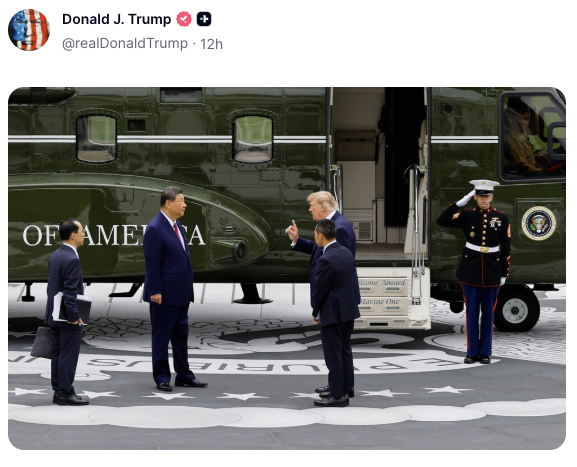
“This is a really big deal,” Mr. Trump posted on social media after the vote. “It will not only save college sports, it will save the colleges themselves.”
While the measure passed resoundingly, its critics are animated:
“It’s a bill for the control and power of the N.C.A.A. and member institutions,” said Senator Cory Booker, Democrat of New Jersey and a top opponent of the legislation. “It is not about athletes who are winning their rights, winning court cases, gaining leverage, and now are having that taken away from them.”
[…]
“The colleges and the conferences and the boosters flooded this place,” said Senator Christopher S. Murphy, Democrat of Connecticut another leading opponent of the bill. “It is a hard slog when the players have no money and no representation. Ultimately, this is going to be really bad for student athletes and destructive of the college sports model because these kids aren’t going to stick around very long if they are not getting paid what they are worth.”
Others said Congress should have stayed out of the fight.
“The people who oversee the post office now want to run college sports. What could go wrong?” said Senator Rand Paul, Republican of Kentucky. He said he doubted that the founding fathers ever envisioned that “Congress would one day be in charge of dictating the rules for college sports.”
ESPN’s Dan Murphy answers the obvious questions: “What is the Protect College Sports Act? What would the bill do?“
The Protect College Sports Act addresses myriad topics that are contributing to an unstable and often messy period for the college sports industry as it transitions to a more professional model for its biggest schools and most popular sports. The bill is the result of more than a half-decade of steady lobbying from the NCAA, conferences, their schools and other advocacy groups. It is the first bill on this topic to successfully pass either chamber of Congress and will move on to debate in the House of Representatives, where it could change.
[…]
The PCSA increases the amount of money schools can spend on direct payments to their players by $27.5 million, more than doubling the current $21.5-million spending cap. The bill does not include any provision that would require or encourage athletic departments to spend less money.
The bill does try to crack down on the common practice among wealthy teams of funneling “above-the-cap” money to their players by arranging endorsement deals that serve as de facto added payroll. Cantwell argues that a law that creates a hard cap on player payments will help stop the spending race.
The college sports industry tried to install a hard cap last June through the House Settlement, a deal that ended a series of antitrust lawsuits against the NCAA and its power conferences and established new rules about how athletes are paid. The leagues built a new enforcement group called the College Sports Commission to make sure the name, image and likeness deals athletes sign with groups other than their schools are legitimate endorsements.
So far the CSC has been unsuccessful because rich teams and boosters have not committed to following the rules they helped to negotiate in the House Settlement. Despite a cap of $21.5 million this year, roughly 30 football teams have a payroll of $30 million or more, according to industry sources that help facilitate player payments. About half of those teams have payrolls that exceed $40 million.
[…]
If the PCSA becomes law, the CSC would have more legal backing to be able to enforce those rules. Schools that circumvent the cap would risk violating federal law. However, it’s not clear if that increased power will be enough to stop the current methods for circumventing the cap, nor does it stop teams and their funders from potentially finding new loopholes to exploit.
Even if a new law does successfully cap direct payments to players, college sports programs have a long history of devising creative ways to spend money on things like facility upgrades or increased support staff to get an advantage over their rivals in recruiting. In a report published last week, Cantwell shared that from 2005 to 2023 (before schools began paying players directly) the college sports arms race caused increases of 322% in recruiting costs, 300% in sports equipment and “a whopping 370%” in coaching salaries.
The PCSA makes no effort to tamp down those costs or dissuade schools from continuing to spend beyond their means in any of those expense categories. The bill does create a commission that is tasked with studying “whether any intercollegiate sport should be subject to spending or cost limitations.” Cantwell did not respond directly to questions about why the bill made no effort to cap any athletics spending other than money directly flowing to players.
[…]
The authors of the PCSA have said they set out to maintain the current “big tent” format of FBS-level football by slowing conference realignment and providing an opportunity for multiple conferences to negotiate future TV rights deals as a group, a change that would likely increase the money flowing to those schools.
The bill prevents Power 4 conferences from growing beyond a total of 19 teams. The Big Ten currently has 18 teams. The SEC has 16. It would also force any school wanting to jump from one Power 4 conference to another to spend three years as an independent before joining the new league — although that waiting period would no longer apply after 2031.
These provisions were designed to keep the Big Ten and SEC — both of which have a sizable financial advantage over other conferences — from merging and creating a new “super league” that would create a permanent divide between them and the roughly 100 other FBS teams. After a June hearing on the bill, Cantwell said “we’re not going to let the most powerful and richest conferences dictate to the rest of America what’s going to happen to 500,000 athletes.”
However, during the next two months, the Big Ten and SEC withheld their support until lawmakers doubled the salary cap, giving their schools a path to maintaining their significant financial advantage.
[…]
Rather than leveling the playing field, which was what most college sports officials have repeatedly asked Congress to do, the new cap could end up cementing the gap between the haves and the have-mores with a federal law. Cruz declined multiple requests for an interview from ESPN for this story.
[…]
The PCSA directly addresses two of the most visible issues roiling coaches and fans in recent years: the increase in players transferring schools and the NCAA’s inability to enforce eligibility rules. The bill would allow athletes to transfer once during their career without having to miss a season, restoring an old NCAA rule that was struck down by legal challenges.
The bill also limits athletes to a five-year window to play college sports, which begins the year they turn 19 or the year they finish high school. Those eligibility requirements are identical to a new rule adopted by the NCAA in June. While several outgoing seniors have challenged part of the eligibility rules in lawsuits this summer, so far no one has raised a legal challenge to the new age-based limits. If the PCSA becomes law, the NCAA would have a stronger case to keep athletes in their late 20s out of college sports if any older players were to file lawsuits.
[…]
The PCSA would limit agent fees to a maximum of 5% of a player’s endorsement contract. NFL and NBA agents typically receive 5% or less of a player’s contract with his team. However, it’s not unusual for marketing groups that help pro players find legitimate endorsement deals to charge fees of 15-20%.
I’m a big fan of college football. And, even though I’m an alumnus and supporter of Alabama, which benefits considerably from the big-money landscape, I thought that Congress needed to get involved to resolve a situation created by expansive judicial interpretations of federal antitrust law. Sports leagues are unique in that their teams compete with each other on the field, but have a mutual interest in each other’s survival. And collegiate leagues also have an interest in ensuring their players finish their four-year degree.
Some of the changes here are unalloyed goods. Protecting uneducated teenagers from unscrupulous agents was an easy call. And keeping college kids, a minuscule percentage of whom will make a living as professional athletes, in school so they can graduate makes sense.
Beyond that, though, the bill doesn’t really fix much.
There’s still an open bidding war for coaches and nothing to stop them—as then-Ole Miss Coach Lane Kiffin did just last year—from signing with a competitor and leaving their players and fans in a lurch just as the playoffs are set to begin. But the NCAA could theoretically fix that by better synchronizing the schedule.
Limiting the conferences to 19 teams (thus, really, 18 since an odd number is really hard to schedule around) stops a bit of the bleeding, I guess, but does nothing to undo the damage to the Olympic sports (and even basketball) from decades of football-driven realignment.
As Murphy noted, it does nothing to stop the arms race for facilities, and the like, that most schools simply can’t afford.
Similarly, a $50 million salary cap does nothing to help most schools, who simply have no way to raise that kind of money, although it does at least level the playing field at the very top.
And, while I think allowing only one “free” transfer will redound to the benefit of most student-athletes (a handful benefit from the bidding wars; most enter the Portal only to find themselves unwanted or to land on yet another team where they’re not good enough to crack the depth chart), it still has the less-wealthy conferences serving as de facto feeder leagues for the big boys.