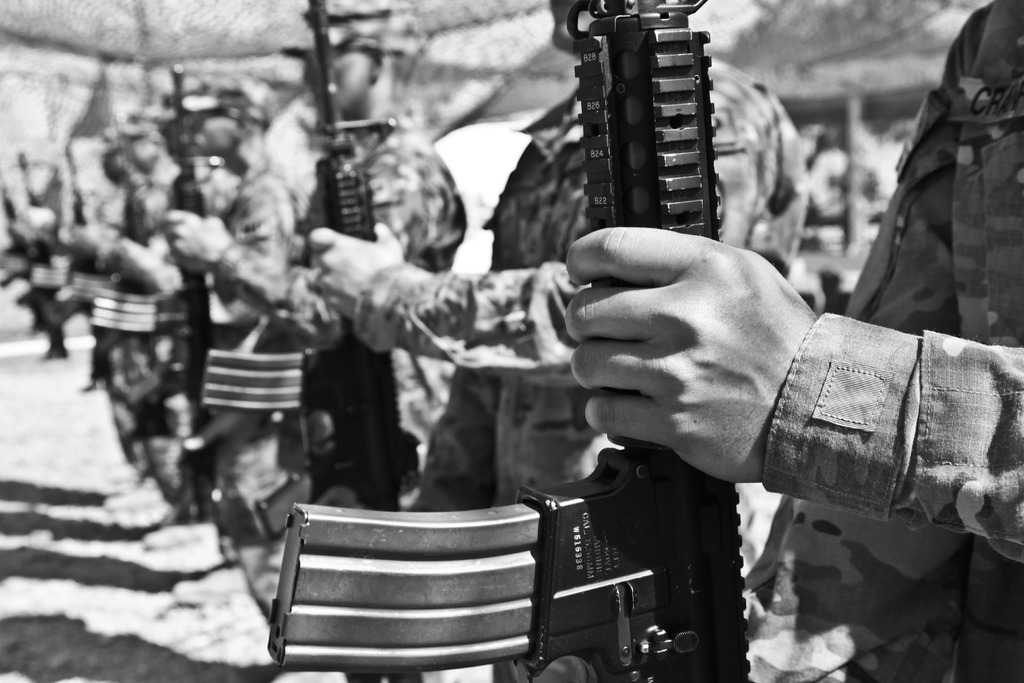
Reporters covering the wars in Iraq and Afghanistan are having an increasingly difficult time of getting stories onto the network news, Brian Stelter reports for the NYT.
According to data compiled by Andrew Tyndall, a television consultant who monitors the three network evening newscasts, coverage of Iraq has been “massively scaled back this year.” Almost halfway into 2008, the three newscasts have shown 181 weekday minutes of Iraq coverage, compared with 1,157 minutes for all of 2007. The “CBS Evening News” has devoted the fewest minutes to Iraq, 51, versus 55 minutes on ABC’s “World News” and 74 minutes on “NBC Nightly News.” (The average evening newscast is 22 minutes long.)
CBS News no longer stations a single full-time correspondent in Iraq, where some 150,000 United States troops are deployed. Paul Friedman, a senior vice president at CBS News, said the news division does not get reports from Iraq on television “with enough frequency to justify keeping a very, very large bureau in Baghdad.” He said CBS correspondents can “get in there very quickly when a story merits it.”
[…]
Coverage of the war in Afghanistan has increased slightly this year, with 46 minutes of total coverage year-to-date compared with 83 minutes for all of 2007. NBC has spent 25 minutes covering Afghanistan, partly because the anchor Brian Williams visited the country earlier in the month. Through Wednesday, when an ABC correspondent was in the middle of a prolonged visit to the country, ABC had spent 13 minutes covering Afghanistan. CBS has spent eight minutes covering Afghanistan so far this year.
As the Big 3 networks struggle to get people to watch their newscasts, they’re cutting expenses to the bone while focusing coverage primarily on the things that they think will garner the most viewers. That spells trouble for international coverage generally and war coverage in particular, because they’re very expensive enterprises. When the wars in Iraq and Afghanistan were new and primarily kinetic (i.e., about killing people and blowing things up) they made for exciting television. The slow, tedious, nearly invisible work of counterinsurgency and stabilization operations? Not so much.
This is exacerbated, too, by an exciting presidential race. People are naturally more concerned about who their next president will be than about the state of affairs in villages in distant lands they will never visit.
Hilzoy, though, isn’t buying that explanation.
“Viewer interest” isn’t static and unalterable. The media decides to hype stories all the time, and in so doing makes people care about things they wouldn’t care about otherwise. The war in Iraq has a lot more intrinsic interest than the death of Anna Nicole Smith, the vagaries of Paris Hilton, or any of the other completely inane stories that the networks somehow manage to find time for. It shouldn’t be beyond the imaginations of reporters and producers to find a way to bring that interest out.
And we ought to care. We are responsible for the present state of Iraq, and we ought to care what happens there. Besides, we have men and women risking their lives in Iraq.
I have no doubt that the world ought to work that way. But it doesn’t. Look at the most trafficked sites selling BlogAds. They’re dominated by celebrity gossip sites, with only a handful of giant community blogs breaking into the top echelons. Perez Hilton gets 52.6 million page impressions a week. DailyKos, by far the most popular political blog community (which, by the way, isn’t primarily about war coverage) gets 6.9 million. The top site with a foreign affairs angle, The Agonist, gets 548,000. Yes, people should be more interested in Afghanistan than Hollywood. But, alas, they’re not.
Beyond that, given the amazing amount of information available on the Internet and, yes, even television, it’s simply not the case that people interested in getting in-depth coverage of the daily happenings and intelligent commentary on the longer term trends in these conflicts can’t get it easily.