New Jersey has joined Massachusetts in having the state’s highest court rule that same-sex couples have the right to legally recognized unions.
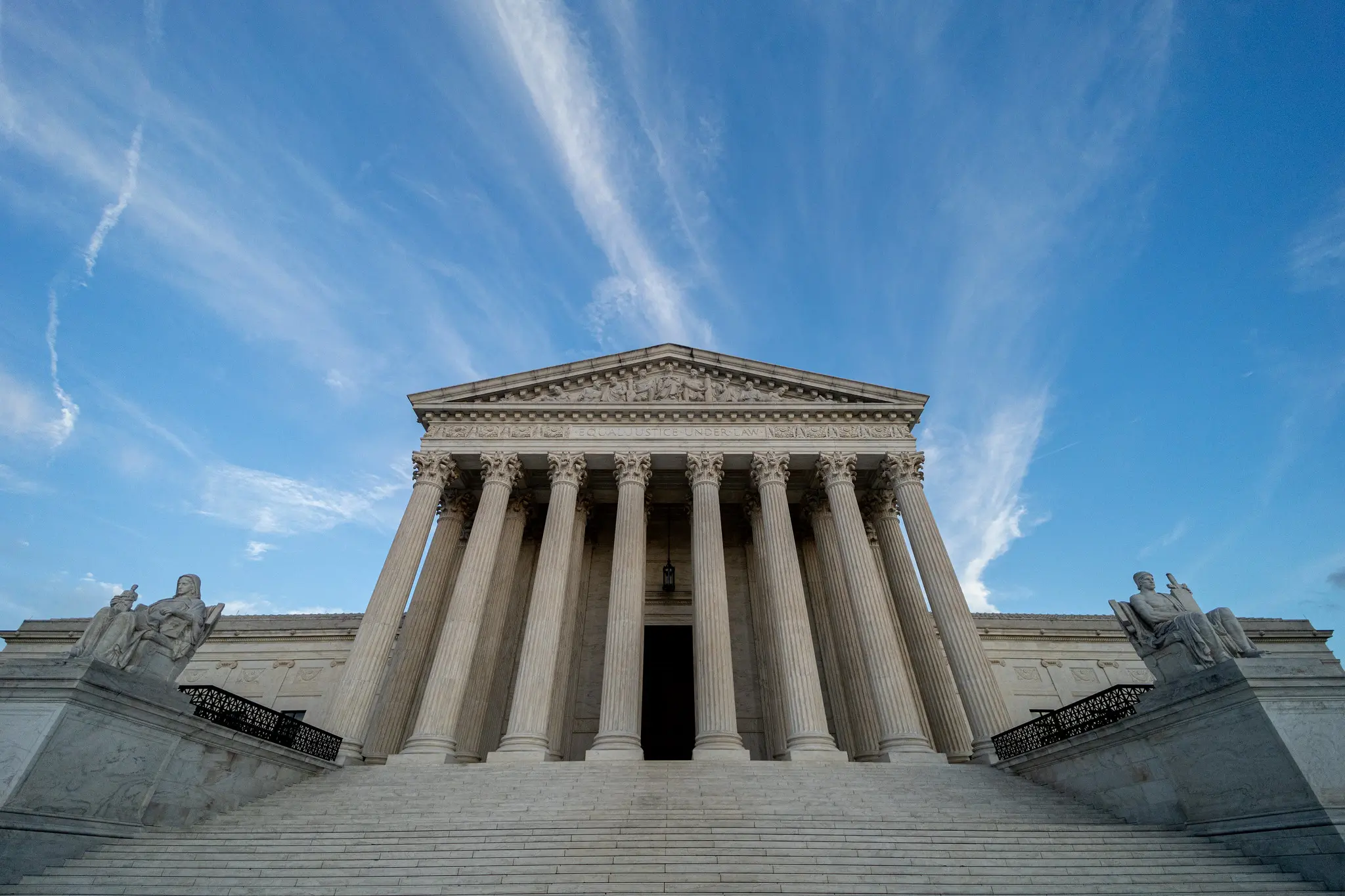
New Jersey’s Supreme Court ruled Wednesday that same-sex couples are entitled to the same rights as heterosexual couples. But the court left it to the Legislature to determine whether the state will honor gay marriage or some other form of civil union.
Advocates on both sides of the issue believed the state posed the best chance for gay marriage to win approval since Massachusetts became the only state to do so in 2003 because the New Jersey Supreme Court has a history of extending civil rights protections. Instead, the high court stopped short of fully approving gay marriage and gave lawmakers 180 days to rewrite marriage laws to either include gay couples or create new civil unions. (Opinion — pdf external link)
“The issue is not about the transformation of the traditional definition of marriage, but about the unequal dispensation of benefits and privileges to one of two similarly situated classes of people,” the court said in its 4-3 ruling.
New Jersey lawmakers voted to allow domestic partnerships in 2004, but they have been reluctant to delve into the sensitive issue of marriage.
I’m no expert in the New Jersey constitution and have not yet digested the ruling, so there may be some nuance I’m missing.
The concept of equal protection of the laws would seem to indicate that either 1) the state has a right to consider gender in making laws about marriage or 2) any laws about marriage passed by the state must be applied equally regardless of gender. It’s baffling to rule simultaneously that opposite-sex unions are constitutionally identical to mixed-sex unions but allow them to be treated differently under the law. This is, essentially, Plessy v. Ferguson all over again.
UPDATE: A quick perusal of the ruling doesn’t help. My interpretation of the ruling and its basis is correct:
HELD: Denying committed same-sex couples the financial and social benefits and privileges given to their married heterosexual counterparts bears no substantial relationship to a legitimate governmental purpose. The Court holds that under the equal protection guarantee of Article I, Paragraph 1 of the New Jersey Constitution, committed same-sex couples must be afforded on equal terms the same rights and benefits enjoyed by opposite-sex couples under the civil marriage statutes. The name to be given to the statutory scheme that provides full rights and benefits to same-sex couples, whether marriage or some other term, is a matter left to the democratic process.
So, the treatment must be “equal” although the name can be separate. The rationale?
In the last two centuries, the institution of marriage has reflected society’s changing social mores and values. Legislatures, along with courts, have played a major role in ushering marriage into the modern era of equality of partners. The great engine for social change in this country has always been the democratic process. Although courts can ensure equal treatment, they cannot guarantee social acceptance, which must come through the evolving ethos of a maturing society. Plaintiffs’ quest does not end here. They must now appeal to their fellow citizens whose voices are heard through their popularly elected representatives.
Well, no. Either the constitution provides for equal treatment or it does not. Statute doesn’t affirm constitutional rights; it must be in conformity. It’s certainly true that proclaiming two men or two women “married” does not guarantee social acceptance of their relationship. Then again, neither did the ruling in Loving vs. Virginia that forced states to nonetheless allow blacks and whites to marry. Social enthusiasm for the law is not generally a barrier to courts doing their constitutional duty.
One could argue, of course, that the New Jersey Constitution’s equal protection clause was never intended to wipe away gender distinctions in marriage. Indeed, I would argue that. But the majority of the state’s supreme court has just ruled otherwise but then not followed the logic of their own ruling. Most odd.
UPDATE: Eugene Volokh makes an interesting argument about the slippery slope created by taking intermediate steps even though one is opposed to later steps. His colleague Dale Carpenter agrees, citing the danger of the “unstable middle ground.”
New Jersey ran into trouble because, having started down the path to full equality for gay individuals and couples through a variety of state statutes and judicial decisions, the state could not give any good reason why it should continue to differentiate. For example, the court noted, the state has adopted a domestic partnership system that gives gay couples a list of rights also given to married couples.
[…]
It’s significant that no other gay-marriage case (with the possible and instructive exception of Vermont, where the court adopted similar reasoning) has been brought to a state supreme court in a state with as favorable a public policy toward gays as this one was: a broad set of antidiscrimination laws, domestic partnerships, second-parent adoptions, a hate crimes law, and so on. In this environment — where the state was committed to protecting gay people, sustaining gay couples, and facilitating gay parenting — it was both logically and practically difficult to hold on to the procreation and child-rearing rationales. The state had nothing left in defense of the rights gap except an unadorned “tradition” that the state itself had steadily undermined in its public policy.
The whole case, then, shows how unstable a middle ground can become in the hands of an aggressive court. The slope on that middle ground seems much more slippery for courts, which demand what they regard as principled reasons for any distinction, than it is for legislatures, which may refuse to budge for no reason other than that the votes aren’t there to do more or because of simple fiat. When legislatures act, they may grant 50 of the 1,000 rights of marriage now, another 25 rights next year, another 100 the year after that, and the rest whenever they get around to it, all without explaining why they’ve acted or failed to act. Courts have a harder time making these distinctions because judicial conventions mandate that they give reasons to support their opinions, and what principled reason could there be for giving 50 of the 1,000 rights of marriage but not another 25 or 100 or all of them? This is the slippery slope phenomenon Eugene points to. It’s not so much a legislative slippery slope as it is a judicial one.
Quite right. Such is a “living” constitution. Under a textualist reading of a constitution, its meaning is constant. Legislative acts would either be permissible or not; they would, however, have no impact on the constitution. If a constitution is organic, however, then judges will naturally read changed circumstances into it based on legislative acts.
Whatever one’s views on that issue, though, the end result can be perverse:
While the result in this case is surely a good one for gay families, it may chill experiments in other states where legislators might fear that they cannot move incrementally toward equality for gay couples without surrendering the judicial basis for any remaining distinctions. I doubt that’s really a great danger in most states, where courts tend to be less aggressive than New Jersey’s and where the standard rational-basis test should allow legislatures to proceed incrementally, but this opinion will surely be cited as a reason not to grant any rights to gay couples.
One would think.